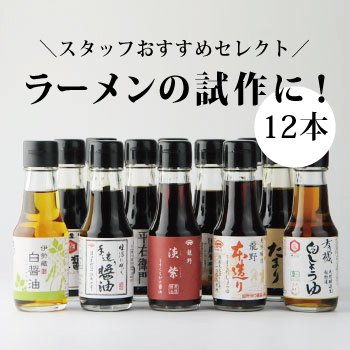


Recommended soy sauce set for ramen prototypes
包装:ご家庭用のみ
ギフト包装・のしは承っていません。

The first step towards your ideal ramen
"Which soy sauce has the strongest umami flavor?"
This is a question we often get from people looking for soy sauce for ramen. To be honest, all of the soy sauces sold at Shokunin Shoyu are basically "strong umami." This is because small breweries all over Japan are particular about the ingredients and spare no effort or time in preparing them. In other words, you can rest assured that the base of umami is already solid.
We asked the owner of a famous ramen shop about the key to getting closer to your ideal ramen. First, try adding soy sauce to the soup without making a base, and taste it. It's important to start by understanding the unique characteristics of each soy sauce. And don't mix a bunch of different soy sauces at once. If you mix them too much, the individual characteristics will become blurred, so start by making the most of one you like. Find a soy sauce that's right for you, and then adjust it to suit what's missing. It's true that all of Shokunin Shoyu's soy sauces have a perfect flavor. It would be a waste to mix them all together. In fact, we've heard from repeat customers that "this soy sauce tastes better when used alone."

Do you know the basics of soy sauce?
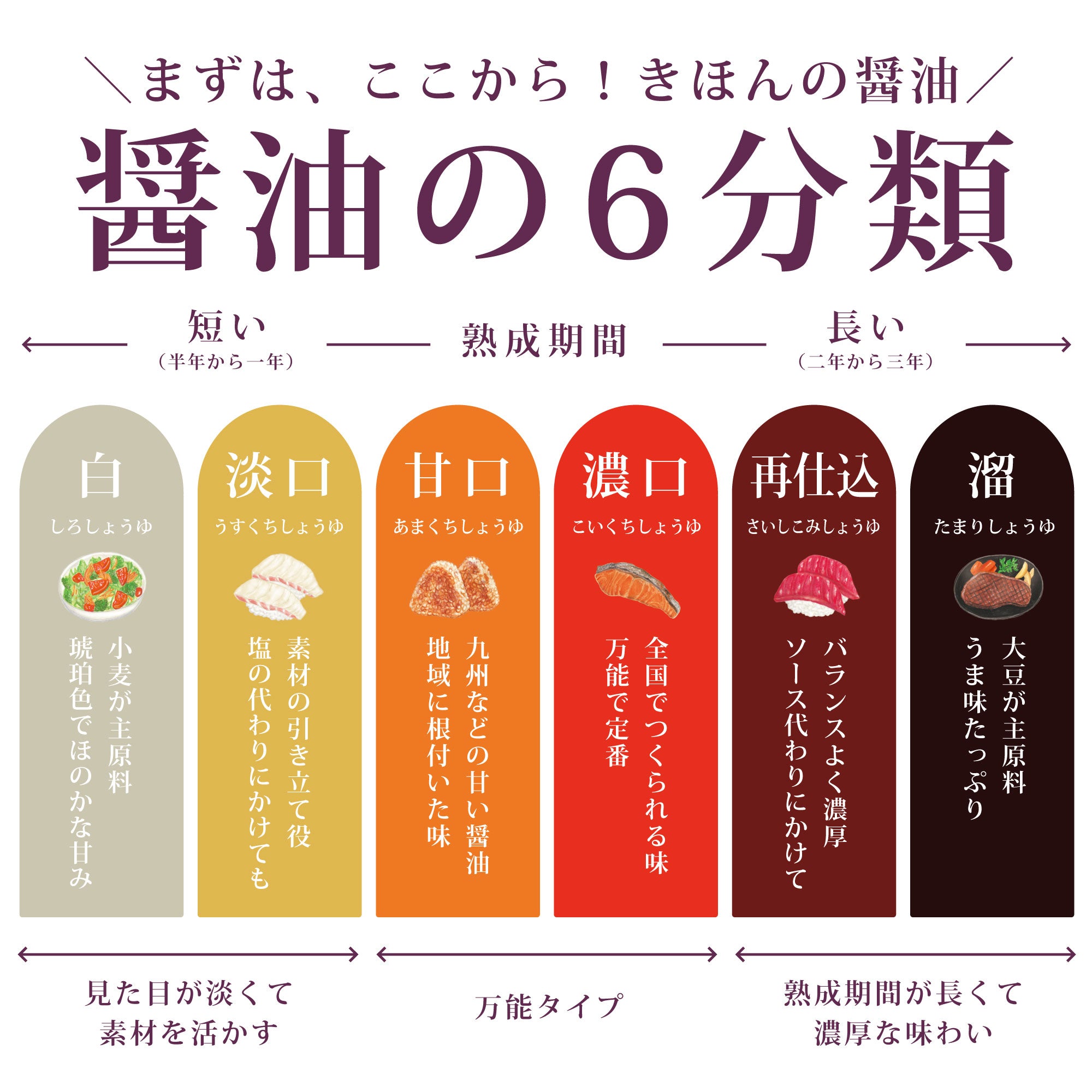
First, let's take a quick look at the different types of soy sauce. Soy sauce is classified into five categories: white soy sauce, light soy sauce, dark soy sauce, re-brewed soy sauce, and tamari soy sauce. (Shokunin Shoyu adds its own sweet soy sauce, making it a total of six categories.) These differences are due to factors such as the brewing period, fermentation method, and ingredients used. This is why each type has a different color, saltiness, and flavor, making it fun to use them differently.
Koikuchi soy sauce accounts for approximately 80% of soy sauce produced in Japan. With an exquisite balance of umami, sweetness, and aroma, it is a versatile type that suits any dish. Shiro soy sauce and usukuchi soy sauce are brewed for a short period of time, so they are light in color and have a light taste. Saishikomi soy sauce and tamari soy sauce are brewed for a long period of time and contain many ingredients. As a result, they are dark in color and have a strong umami flavor. Shiro soy sauce and tamari soy sauce have completely different characteristics, so we encourage you to experience this wide-ranging world of soy sauce.

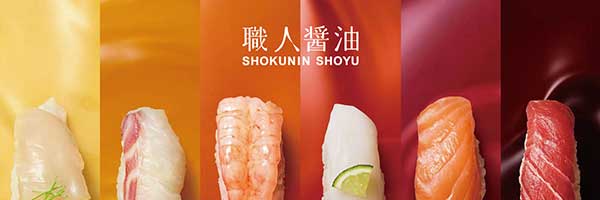
By the way, the above photos are of actual soy sauces, from white soy sauce to tamari soy sauce. Many people will be surprised at the difference in color.

Aiming for a mellow white soy sauce
White soy sauce is the lightest in color, amber. When you think of soy sauce, you might think of soybeans, but in fact, among the ingredients of soy sauce, soybeans are mainly responsible for the umami, while wheat produces the sweetness and aroma. Dark soy sauce has an exquisite balance of this umami and sweetness/aroma, but white soy sauce contains only a small amount of soybeans and is made almost entirely from wheat, so it does not have the deep flavor that is typical of soy sauce, and is dominated by the sweetness, aroma, and saltiness unique to wheat.
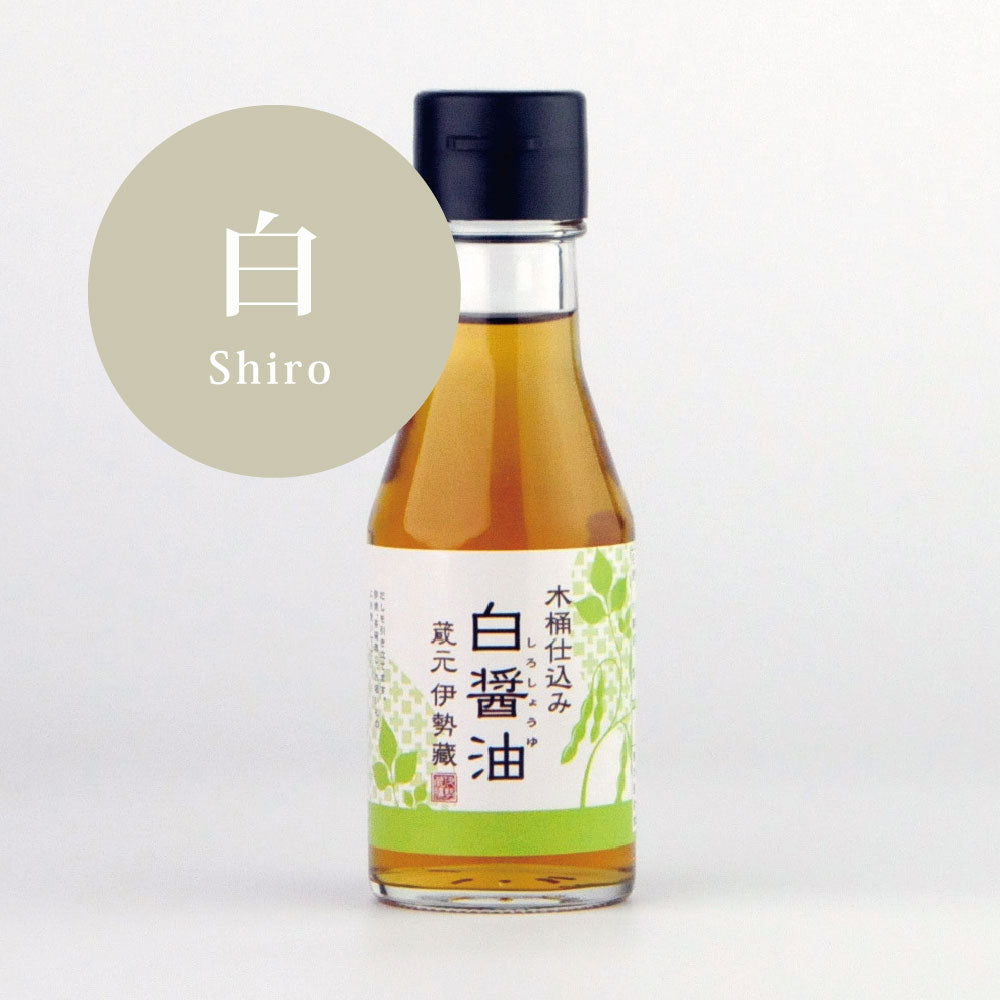
To make "Isekura Shiro Soy Sauce" as light in color as possible, the soybeans are shaved off about 8% of their outer layer, limiting the amount to about 10% of the total. After roasting and soaking, the wheat and soybeans are steamed together and left to mature in a wooden barrel for about three months. The moromi is characterized by its flaky texture compared to other soy sauces. For this reason, when it is pressed, it is scooped out of the wooden barrel with a scoop, wrapped individually in cloth, and unfolded by hand, a very time-consuming process. This moromi contains a lot of sugar, giving it a strong sweetness and umami flavor. This, combined with its gorgeous aroma, gives "Isekura Shiro Soy Sauce" its unique character.
In fact, this white soy sauce was renewed in the winter of 2024. Originally, in order to preserve the beautiful color unique to white soy sauce, previous generations at Isekura have been using enamel tanks to brew it. However, the fifth-generation owner, Shikii Kazuhiro, believes that "the taste of Isekura lies in the wooden barrels," and so he decided to brew white soy sauce in wooden barrels as well. The first brewing took place in October 2024, and the first pressing took place in December.
It tends to be used more often in shio ramen than soy sauce ramen. The unique aroma and sweetness of white soy sauce adds an umami flavor that salt alone cannot produce. Also, if you feel like koikuchi, saishikomi, or tamari soy sauce just isn't enough, try adding a small amount to the base. It will greatly enhance the flavor while maintaining the color.

Organic JAS certified white soy sauce
This white soy sauce is made with JAS-certified organic wheat and soybeans, and is particularly carefully prepared. While typical white soy sauces have a short aging period, Shichifuku Brewery's is characterized by its long aging period of six months to a year. Fermentation takes place in deep fermentation tanks in a 24-hour temperature-controlled refrigerated facility. The tanks are kept at approximately 15°C year-round, suppressing fermentation and allowing the soy sauce to slowly mature while preserving the clear amber color unique to white soy sauce. Periodic "kumikake" (pumping) of the liquid from the bottom is also performed to prevent uneven fermentation. Shichifuku Brewery does not have a press. Only the first pressing, which drips the moromi mash as it is, and the second pressing, which drips after adding salt water and leaving it for several months, are used to make soy sauce. Although soy sauce can be produced by pressing, the remaining moromi mash is used as livestock feed, in the desire to use only the best parts. Furthermore, the enzymes are kept alive because the moromi mash is not sterilized by heat. The aroma is mild, and the flavor is characterized by a refined sweetness and umami.
If you want to bring out the flavor of ingredients such as shellfish or chicken soup, try using Organic White Soy Sauce. Its clear, delicate saltiness and refined umami will bring out the flavor of the soup to the fullest.

Authentic light sake made with domestically grown soybeans and wheat
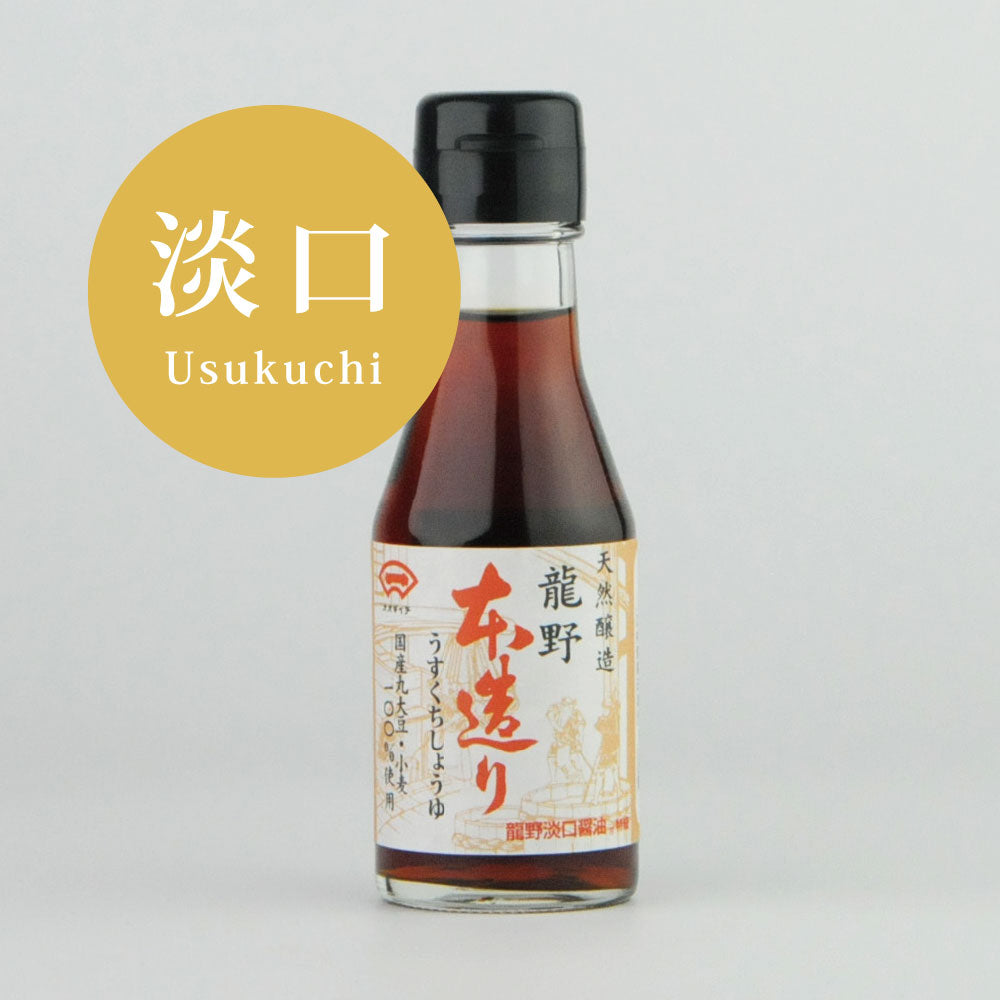
This is the so-called orthodox light soy sauce of the Kansai region, with a beautiful light color and a refreshingly crisp taste. Light soy sauce, as its name suggests, is characterized by its light color, but it is actually a little higher in salt than dark soy sauce. For this reason, the word "light" is not used. Like dark soy sauce, it uses soybeans and wheat in a 1:1 ratio, so it has a well-balanced soy sauce flavor. However, because it is aged for a short period of time, it is light in color and taste.
Suehiro Soy Sauce, which produces this light soy sauce, is located in Tatsuno City, Hyogo Prefecture, at the northernmost point of the Harima Plain. Blessed with the mild climate unique to the Seto Inland Sea, the city boasts a rich natural landscape with plenty of greenery remaining. The Ibo River, which flows through the center of the city, is known as a clear stream where many sweetfish swim up in the summer. The underground water is "soft water" with little iron, making it ideal for making soy sauce. Using this water gives light soy sauce its beautiful color and gentle flavor.
It has a mild aroma, keeps the color of the soup bright, and has just the right amount of saltiness, making it perfect for when you want to create a colorful and sharp flavor. You can taste the umami of the soy sauce, but it doesn't overpower the flavor, and it complements the soup perfectly.

The color remains light but the flavor is strong.
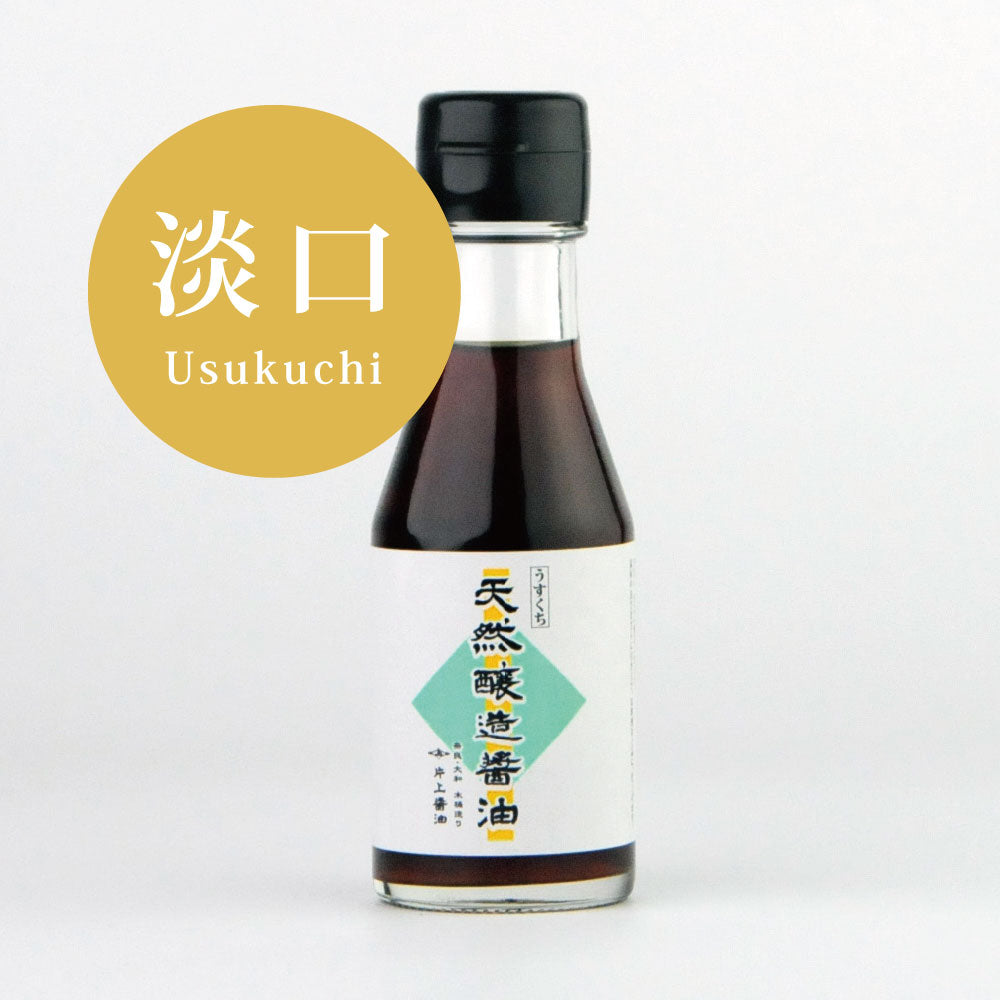
Typical light soy sauces are characterized by a light color and high salt content, resulting in a clean flavor that brings out the flavor of the ingredients. However, Katagami soy sauce is a little different. It is brewed in wooden barrels, which is rare for light soy sauce. Its approach is to maximize the umami flavor while maintaining the color that falls just within the definition of light soy sauce. As a result, its color is slightly darker than other light soy sauces. It has a strong saltiness, but the strong umami and punch that surpasses it makes it powerful enough to make you go "wow" at first sip.
It has a dark color and a strong flavor, so I recommend it as a light soy sauce to use as a topping, but I also think it's perfect as a ramen seasoning. For those looking for a flavor somewhere between light and dark soy sauce, it may be the perfect balance. However, because it has a higher salt content than dark soy sauce, you need to be careful about how much you use.

Domestically produced organic JAS certified soy sauce brewed in barrels
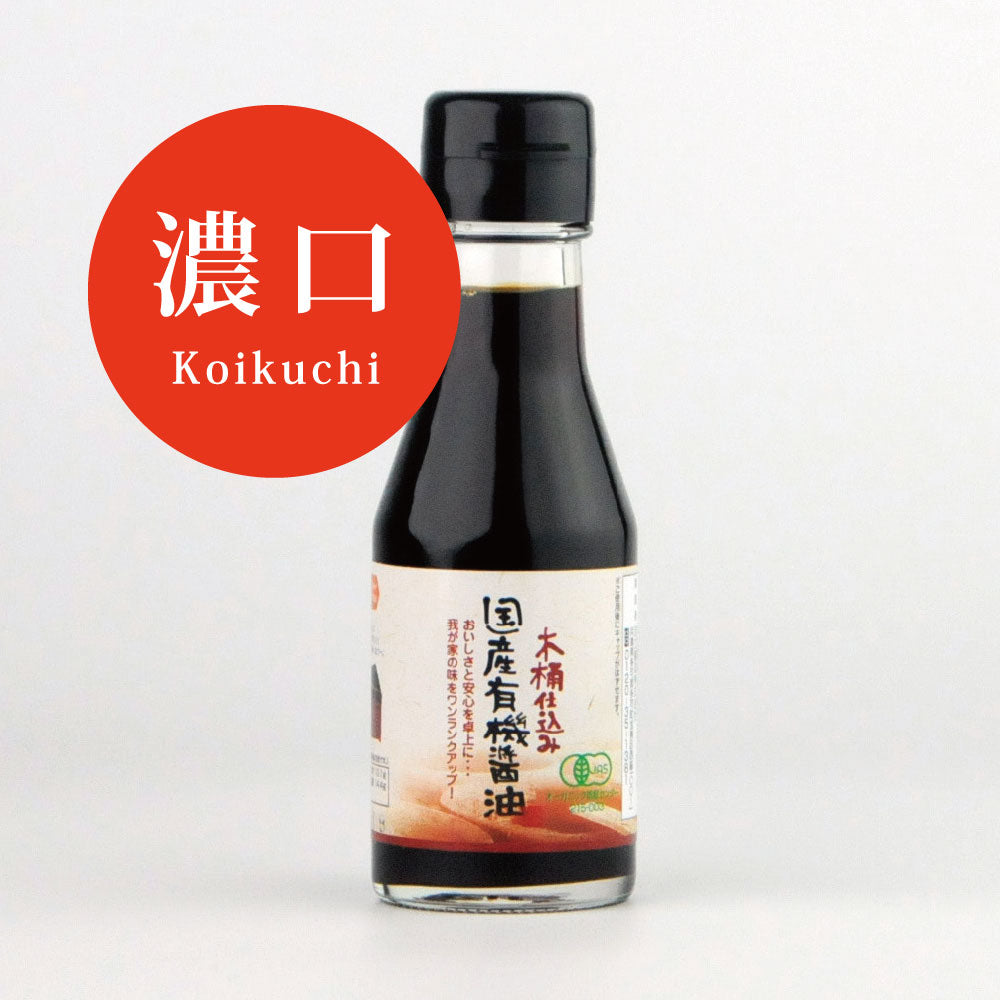
About 80% of the soy sauce produced in Japan is koikuchi soy sauce, which is used in many households as "regular soy sauce." Koikuchi soy sauce is made from soybeans and wheat in a 1:1 ratio. While the image of "soy sauce = soybeans" may be strong, these two ingredients each have their own role to play. Soybeans primarily produce "umami," while wheat produces "sweetness" and "aroma." The appeal of koikuchi soy sauce is the excellent balance of umami, sweetness, and aroma.
Adachi Brewery brews all of its soy sauce in wooden barrels. They use precious domestically grown organic whole soybeans, which account for only 0.46% of Japan's total soybean production. They add organic wheat, Ako sea salt, and underground water from the clear Sugihara River in Northern Harima, and then carefully age the soy sauce in Yoshino cedar barrels for one to one and a half years.
This soy sauce has a strong umami flavor, but is bright in color and low in salt. This gives it a gentle, rounded taste. However, the strong aroma gives this gentleness a core. When blending, I think the unique characteristics of this soy sauce can be best utilized if the gentle flavor is not overpowered.

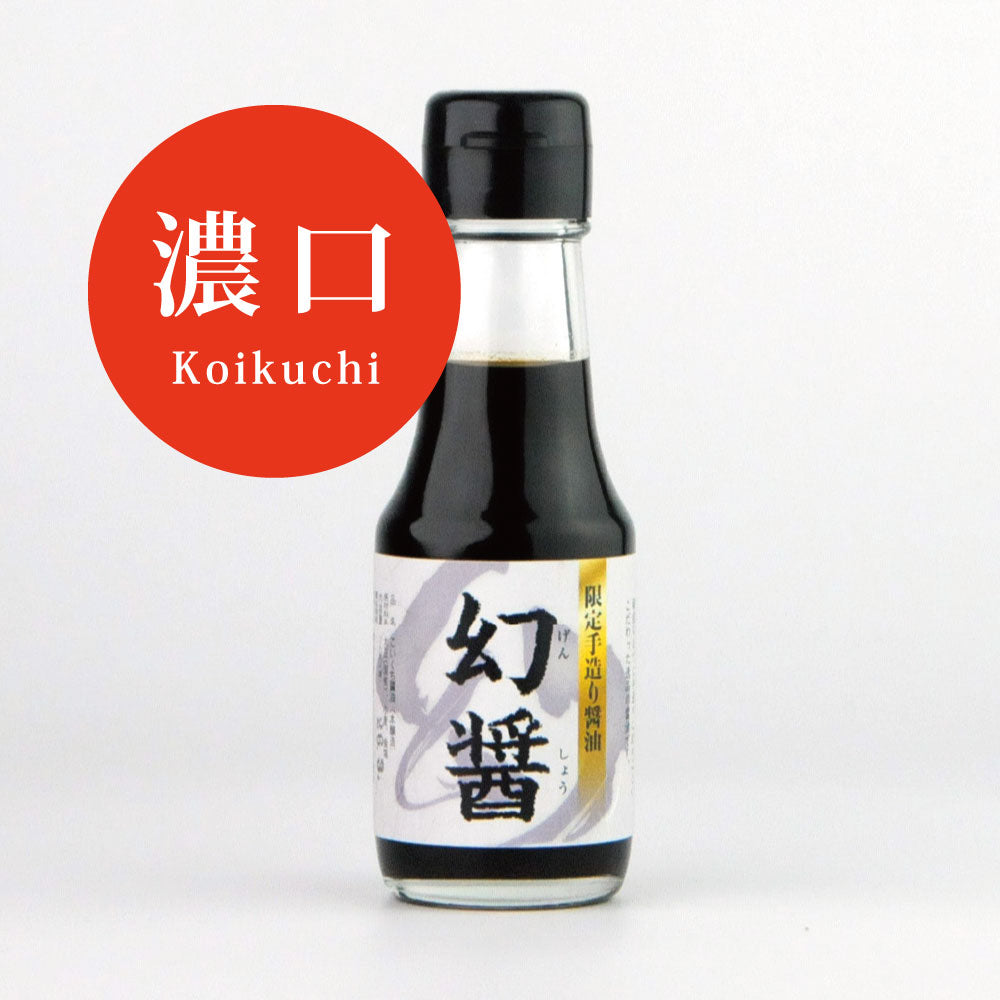
A legendary soy sauce made using traditional koji brewing methods
A farm brewery in Toyama Prefecture continues to use the traditional method of koji lids, which are becoming increasingly rare nationwide. Brewing takes place only between January and March, when the coldest months in the Hokuriku region are, and the water and air are crystal clear. The koji is made in a koji room made entirely of brick. The breathing properties of these bricks help to reduce the impact on the koji, even on cold days when the outside temperature drops below freezing.
The ingredients are soybeans from Oyabe City, Toyama Prefecture, wheat from Takaoka City, Toyama Prefecture, and Shima-Masu salt from Okinawa. The soy sauce is slowly aged for three years, carefully stirring with a paddle and left to its natural environment, resulting in a rich, umami-rich soy sauce that combines the sweetness of the soybeans, the savory aroma of the wheat, and the umami of the salt. The pressing process is also unique. First, the moromi is allowed to drip naturally under its own weight for a week, and then only slight pressure is applied. This is done to avoid forcibly pressing out the oils contained in the whole soybeans. Applying too much pressure would result in an oily smell. This is why "Gensho" is unique, combining concentrated umami with a refreshing taste. Its salt content is 20%, which is somewhat high even for dark soy sauces. However, the moment you put it in your mouth, the umami hits you before the salty taste hits you. It's not just rich, but has a clean, crisp aftertaste and a pure, unobtrusive soy sauce aroma.
This soy sauce has a classic aroma and a powerful umami flavor. Most ramen restaurants say, "I don't want to blend this soy sauce with anything else. This one alone is enough to make delicious ramen." This soy sauce is especially trusted by those who use chicken-based soups.

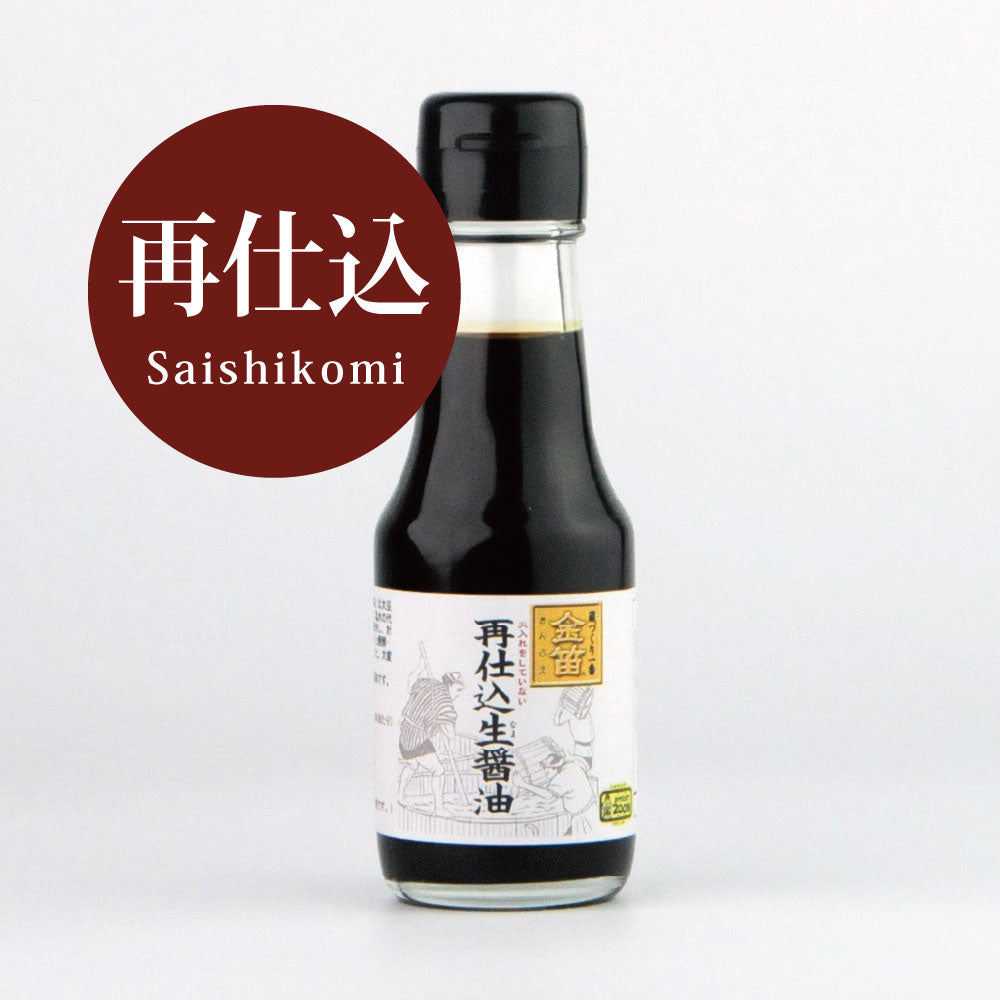
Unpasteurized raw sake
While dark soy sauce is made by adding salt water to koji, re-brewed soy sauce is made by adding dark soy sauce instead of salt water. In other words, it is made from soy sauce. This luxurious brewing method results in a soy sauce with a low salt content, but with a remarkably rich umami flavor and a deep color. It takes time and effort, but the appeal of re-brewed soy sauce is that it strongly reflects the individuality of the brewery and the sensibility of the artisan.
This "Kinbue Saishikomi Nama Soy Sauce" is made from domestically grown whole soybeans, wheat, and sun-dried salt. After carefully preparing the koji, it is aged for three years using two-year-aged nama soy sauce instead of brine. Characterized by a rich umami flavor and a deep aroma unique to the brewery, it is the sharpest soy sauce in our lineup. When you smell the aroma, you can almost feel the depth of the brewery's atmosphere. And when you put it in your mouth, the rich umami flavor and the rich flavor unique to raw soy sauce that is not pasteurized spread throughout your mouth.
This soy sauce is especially trusted by those who enjoy strong soups such as dried sardines and other animal-based soups. Its powerful core that stands up to the soup and the deep aroma that comes from brewing in wooden barrels create an addictive personality.

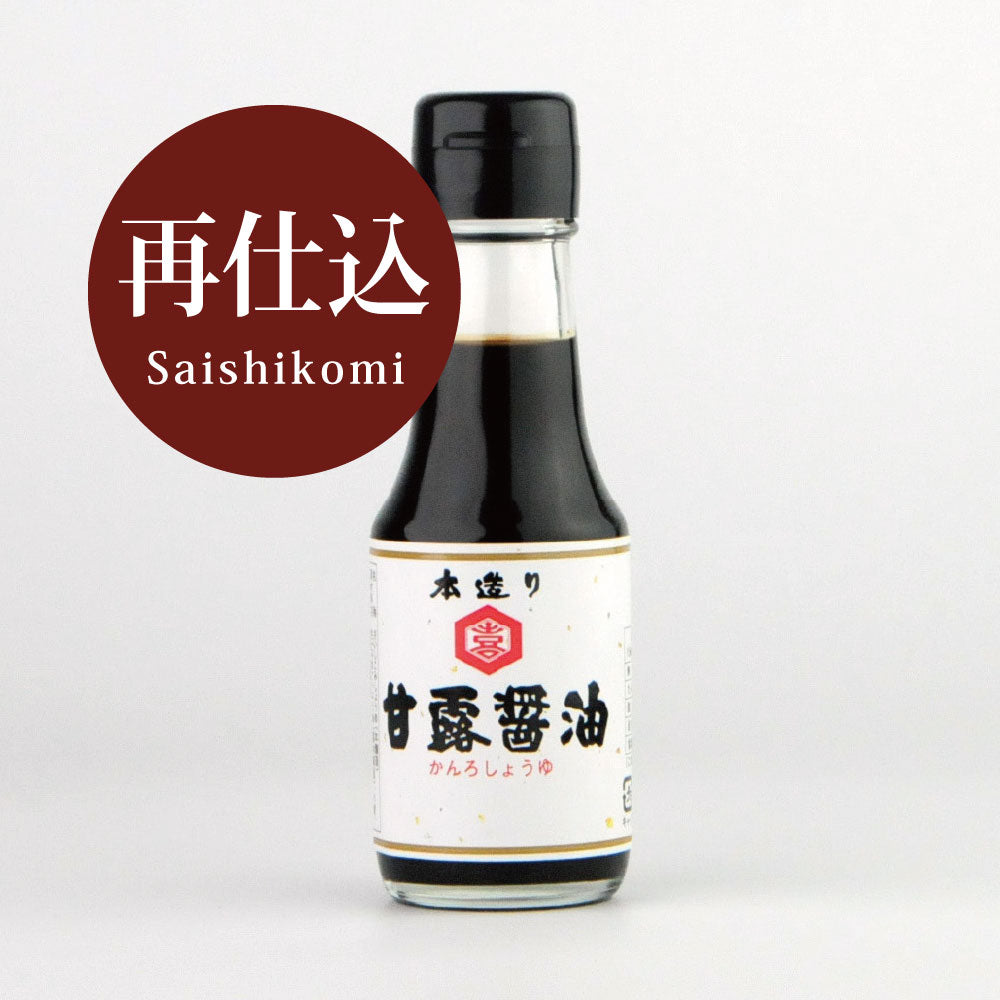
Soy sauce that lets you experience the profound depth of fermentation
Okubo Brewery, located in Matsumoto City, Nagano Prefecture, maintains a meticulous commitment to both ingredients and the environment, something only a small brewery can achieve. The raw materials storage area is filled with piles of soybeans, wheat, salt, and rice, each clearly labeled with their variety, origin, and grade. The storehouse is packed with graded soybeans from Nagano Prefecture, including Tsubuhomare, Ginrei, and Tachinagaha; Aomori Prefecture, including Okushirome and Ryuho; and Niigata Prefecture, including Enrei; as well as other brands from Gifu, Ishikawa, and Yamagata. The salt is Shimamars from Okinawa. Microorganisms are said to play a key role in soy sauce production. While lactic acid bacteria and yeasts have positive effects, it is also true that there are also harmful bacteria. Okubo believes that the microorganisms living inside the barrels are crucial, and he maintains meticulous cleanliness throughout the rest of the brewery. The barrels are lacquered, and large amounts of charcoal are buried in the walls and under the floor of the brewery to prevent moisture buildup.
"Kanro Soy Sauce" is made by adding koji to the moromi mash that has been aged for a year, then aging it again. Homemade amazake is then added and the mash is aged for a long period of three years before it is completed. It is not sweet like sugar, but has a soft sweetness derived from rice. You can feel the rich, creamy flavor and the subtle fragrance of fermentation. While the aroma is not as strong as the previously introduced "Kinbue Saishikomi Nama Soy Sauce," the unique deep aroma and flavor that only this "Kanro Soy Sauce" has make its presence felt. The image is that "the unique aroma brings out the three-dimensionality of the soup."
This soy sauce is especially trusted by those who like punchy soups such as dried sardines and rich chicken.

Gluten-free and extremely rich
Tamari soy sauce is completely different from regular soy sauce in both ingredients and production method. While regular dark soy sauce has a 1:1 ratio of soybeans to wheat, Tamari soy sauce is characterized by a high soybean to wheat ratio and little water used in brewing. This gives it a thick, rich consistency and boasts one of the best umami flavors among soy sauces. It also takes a long, time-consuming aging period of 2-3 years. The brewing method is also unique. Soybeans are soaked in koji to form miso balls, which are then carefully aged under a weight. Because it has so little water, it cannot be "stirred" like other soy sauces. Therefore, a tube is placed inside the wooden barrel, and the liquid that naturally accumulates there is scooped up with a ladle and poured back over the stone in a process called "kumikake." This "kumikake" is an essential and crucial process for making Tamari soy sauce.
People often think that "Kyushu's sweet and thick soy sauce = tamari soy sauce," but in fact, it is something different. The main production area of tamari soy sauce is the Chubu region, and its salt concentration is about the same as that of dark soy sauce. It is by no means a sweet soy sauce. However, some people perceive its rich umami as "sweet" in their taste. This is different from the sweetness of sugar, and may be a kind of mellowness that lies deep within the ingredients.
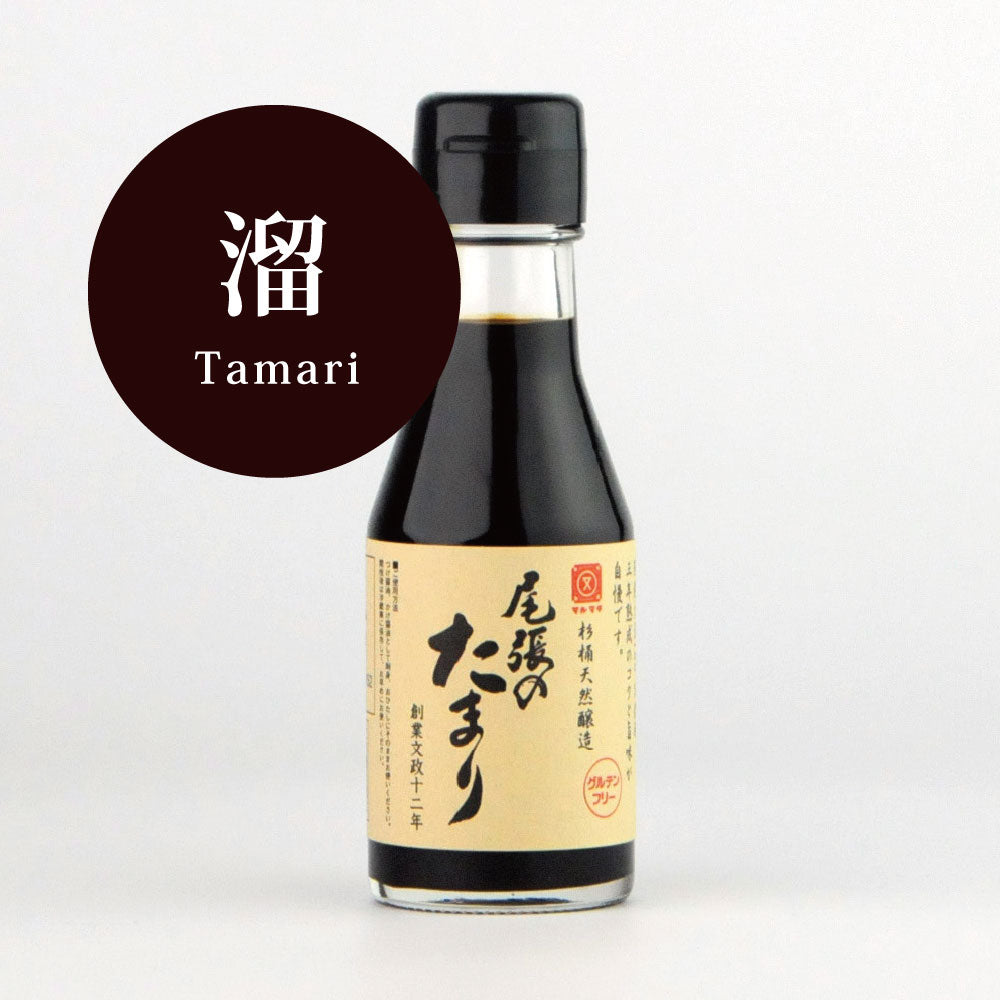
"Owari no Tamari" is made using only whole soybeans and salt from Aichi Prefecture, and aged for three years in cedar barrels. It uses only a small amount of brine during brewing, which is why the umami flavor is so concentrated. The "total nitrogen content," an indicator of umami components, is a whopping 3.0%. This is about 1.5 to 2 times the content of regular dark soy sauce. It has a rich, full-bodied flavor, and the smooth, mellow taste that only long-term aging can provide. It also has the fragrant aroma of a traditional soy sauce, and the core of the flavor is consistent.
Due to its strong presence, many people add a small amount to dark soy sauce rather than using it as a base, and we often hear people say, "Just a little bit completely changes the flavor of the soup." However, because Owari Tamari is produced in limited quantities, it is not available for commercial use. It is such an excellent product that some ramen chefs purchase it for personal use, saying, "There is a flavor that can only be achieved with this soy sauce." However, there is one thing to be aware of: the umami becomes more complex and deep, but the color of the soup will also become darker. If color is important to you, use it sparingly.

Pressed soy sauce enhances the soup
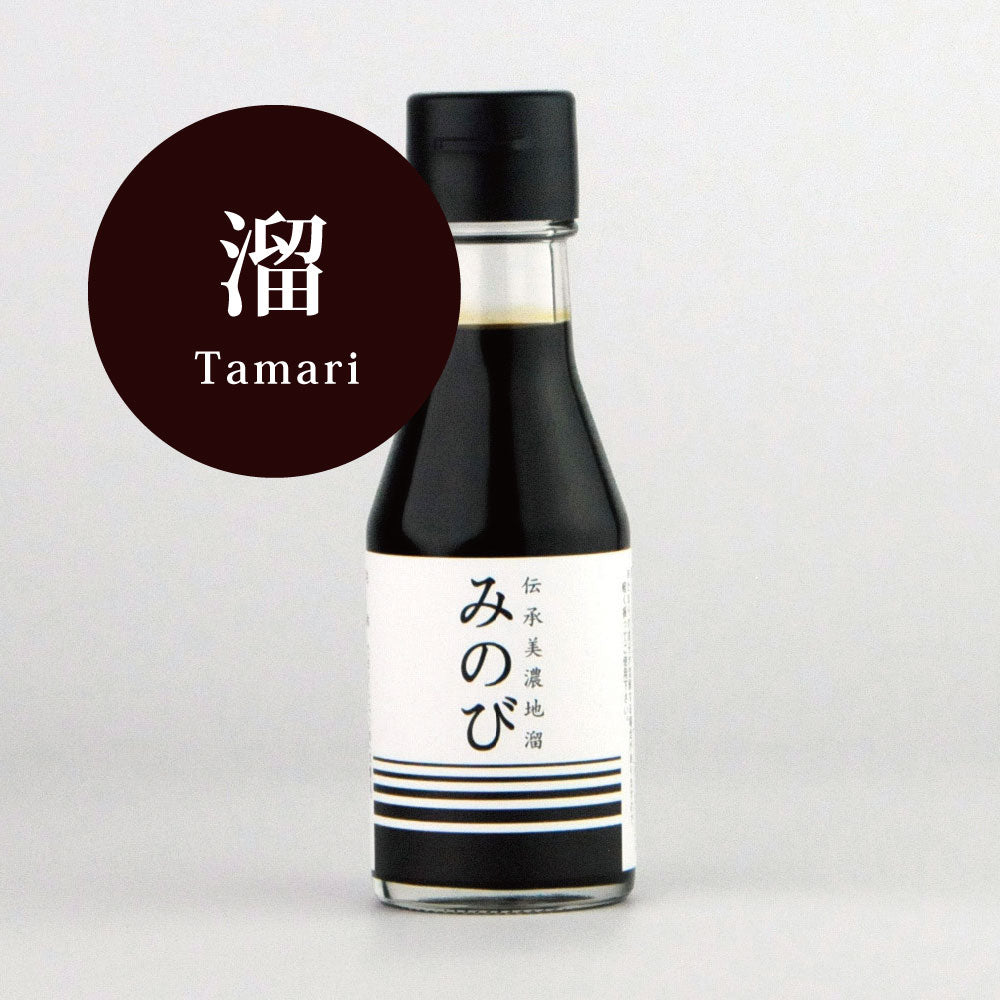
Yamakawa Brewery offers two types of tamari soy sauce. Both are aged for two years in wooden barrels and are made with 10 water brewing methods using only domestically grown soybeans and salt. The ingredients and process are exactly the same, but the main difference is the method of pressing: "raw pressing" or "pressed pressing."
The wooden barrels for tamari soy sauce have a spout at the bottom. "Namabiki" is the natural extraction of soy sauce that has accumulated at the bottom of the barrel through the spout, which takes over a year to extract, as it only drips out slowly. Once the namikibiki is complete, the brewer enters the barrel and digs out the hard, heavy moromi with a shovel. This moromi is unique to tamari soy sauce, and is called "miso" due to its low water content, but it is completely different from regular miso. The excavated moromi is sliced into slices a few millimeters thick using a "miso cutter," wrapped in thick cloth, and stacked before being slowly pressed. Squeezing the moromi carefully over time prevents the inclusion of impurities. It takes approximately two months to extract one barrel's worth of moromi.
"Minobi" is a pressed soy sauce. In 2025, it was revamped to be gluten-free, brewed only with domestic soybeans and salt. Previously, "Minobi" was brewed for five minutes and was quite thick, but the new version is brewed with 10 water, resulting in a just the right consistency. While the aroma is more subdued, the unique flavor remains, and the gentle sweetness of the soybeans is more prominent. The mellow saltiness, sweetness, and richness give the soup depth, making it a cup you'll want to drink down to the last drop. The soy sauce has a pronounced flavor, yet blends well with the rest of the dish, creating an exquisite balance that shines through.
[Fish sauce]

Packed with the flavor and culture of Noto
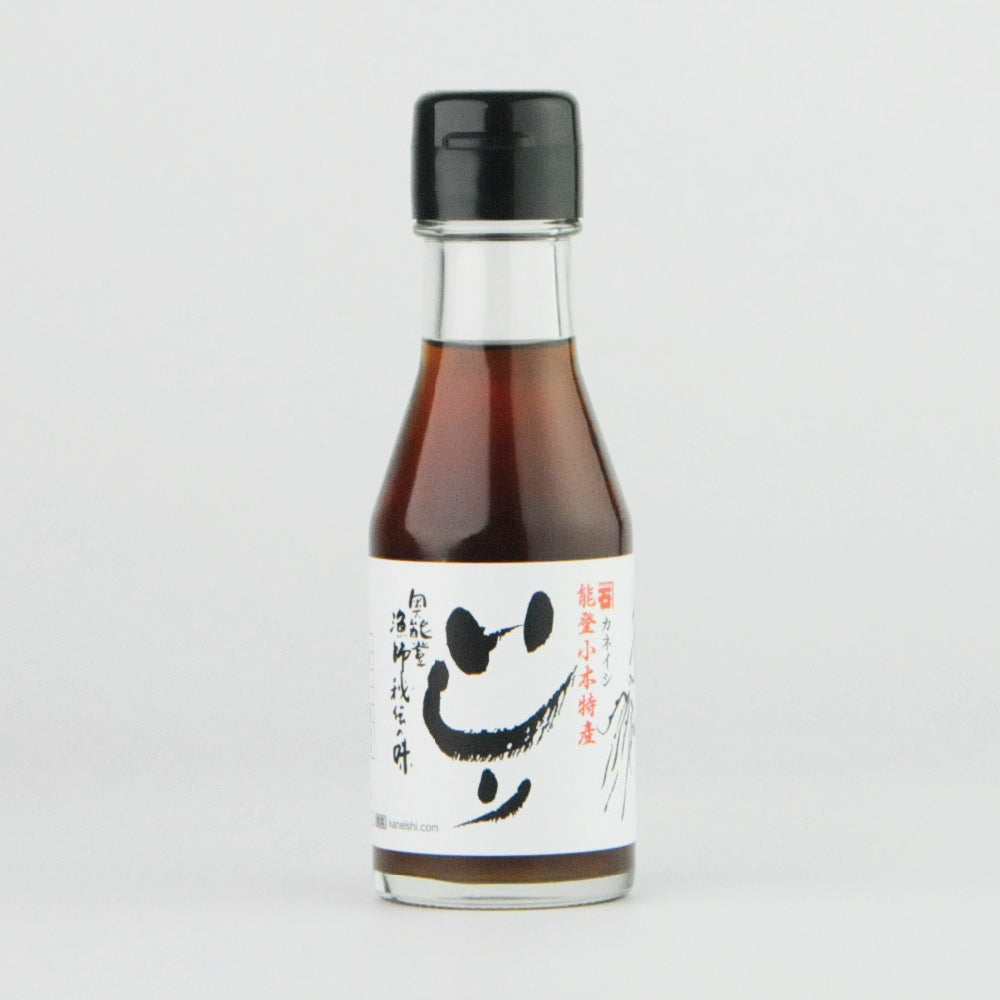
This fish sauce has been passed down for generations in Ishikawa Prefecture, from Kanazawa to Oku-Noto. Its ingredients are simple: squid and salt. Using squid from Ogi Port in Noto, the squid innards are thoroughly mixed with salt and then soaked in tanks during the cold winter months. The mixture is then stirred repeatedly over a two-year period, allowing it to slowly mature. During this process, the digestive enzymes in the squid innards break down proteins, converting them into amino acids, which are the umami components. This process is similar to making soy sauce, but when compared numerically, Ishiri contains more umami components than soy sauce. While its salt concentration is higher than soy sauce, Ishiri's distinctive feature is not simply its saltiness, but the rich, deep flavor unique to squid.
Many ramen shops also add fish sauce to their soup base, separate from the soy sauce and seafood in the soup, to add more umami. Try it when you want to add a stronger umami flavor than white soy sauce. It adds a bold umami flavor from the "ishiri" that is clearly different from the seafood in the soup. It is higher in salt than soy sauce, so be careful with the amount. However, it is a seasoning that makes a big impact with just a small amount.

A long-established chikuwa maker attempts to create a fish sauce that doesn't have a strong smell
This fish sauce has no strong smell at all. I'm sure there are many people who think, "The smell of fish sauce is a bit of a problem..." I was one of them. However, "Eso Fish Sauce" is an exception. The smell is not noticeable, and you can really taste the umami flavor. For example, just by diluting it with hot water, the elegant aroma and deep umami flavor spreads softly, just like a shellfish soup. In the summer, I often dilute "Eso Fish Sauce" with water and use it as the base for chilled soup. The stock is just "Eso Fish Sauce". It goes well with miso, and I like how it creates a rich flavor.
This "Eso Fish Sauce" was jointly developed by Yamasa Chikuwa, which was founded 190 years ago, and Ichibiki, a long-established soy sauce manufacturer in Aichi. In fact, Ichibiki had previously tried making fish sauce using sardines, but found it difficult to suppress the distinctive odor. So, they decided to salt the "Eso," which is considered the highest quality ingredient for fish paste products, as soon as it was filleted by Yamasa Chikuwa. This process succeeded in significantly reducing the odor. Furthermore, by adding soy sauce koji, lactic acid bacteria, and yeast and fermenting it, a fish sauce with no strong odor and full of umami was created.
Its mild aroma means it adds a more subtle umami flavor than "Ishiri." Whether or not you add it as a secret ingredient will make a difference in the depth of flavor. If you want to "add just a little bit of umami," then this "Eso Fish Sauce" is the perfect choice.
[Extra Edition]

"Namaage soy sauce" that has not been "pasteurized" or "filtered"
Although it's not included in the set, there's one soy sauce I'd like to highly recommend. It's "Namaage Soy Sauce," which is neither pasteurized nor filtered. This is a store-exclusive product, sold as is, bottled immediately after pressing. It's not sold online. This is because "Namaage Soy Sauce" is not heat-sterilized or filtered, so microorganisms remain alive. As a result, fermentation can progress too much in a sealed container, occasionally causing the cap to fly off. This is why we only sell it in stores where we can give it to you on the spot.
"Pasteurization" refers to the process of applying heat to freshly pressed kiage soy sauce. It sterilizes the soy sauce, adjusts its color, and imparts a fragrant aroma. The temperature, time, and method vary from brewery to brewery, making it a true test of skill. It's no exaggeration to say that the pasteurization method determines the flavor of each brewery. The recipe is a closely guarded secret passed down through generations. Kiage soy sauce, which doesn't undergo pasteurization, is said to be the soy sauce that allows the user to bring out the aroma the most. For example, adding just a little kaeshi when diluting soup releases a soft, rich aroma. While it can of course be used as a base, its lack of adjustments makes it a bit tricky to use. The flavor changes depending on the heating temperature, time, and room temperature, so if you're not used to it, the final product will vary slightly from the first time to the second time.
If you are interested, please come visit our Maebashi main store.
Text: Mori (Shokunin Soy Sauce)
Choose options
| 地域 | 都道府県 | 送料 |
|---|---|---|
| 北海道 | 北海道 | 1,200円 |
| 東北 | 青森・岩手・秋田・宮城・山形・福島 | 900円 |
| 関東・中部 | 茨城・栃木・群馬・埼玉・千葉・東京・神奈川・新潟・富山・石川・福井・山梨・長野・岐阜・静岡・愛知・三重 | 800円 |
| 近畿・中国 | 滋賀・京都・大阪・兵庫・奈良・和歌山・鳥取・島根・岡山・広島・山口 | 900円 |
| 四国・九州 | 徳島・香川・愛媛・高知・福岡・佐賀・長崎・熊本・大分・宮崎・鹿児島 | 1,100円 |
| 沖縄 | 沖縄県 | 1,500円 ※6,000円以上で500円 |
ご注文を受けてから3営業日以内の発送を原則としています。海外への発送も承っています。
目的別・人気セット


醤油の世界を、もっと深く。
11,000人以上が読んでいます
蔵元訪問レポート、季節の使い分け、醤油をもっと深堀した内容を、代表の高橋万太郎が毎週金曜日にお届けします。
毎週金曜日に配信。いつでも解除できます。