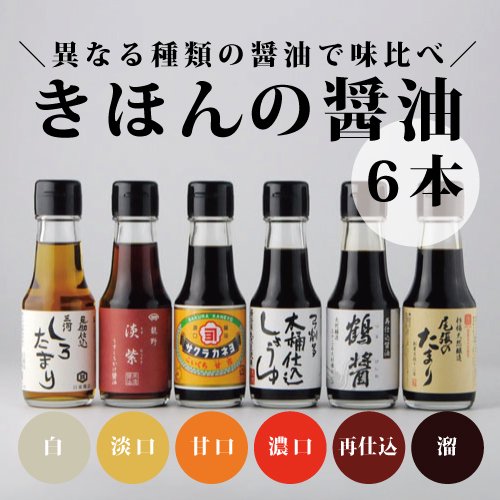



Basic soy sauce 6 bottles
If you're not sure what to buy, try this "Basic Soy Sauce" set.

Enjoy soy sauce tasting at the dinner table.
"Aren't they all the same?" - if you think so, you'll be surprised. Enjoy the differences in color, aroma, and taste and find the one that suits you best.
If you line up six bottles and taste them, it will create the atmosphere of a wine tasting. It will be a great way to have fun with your family and friends.

The six basic categories of soy sauce
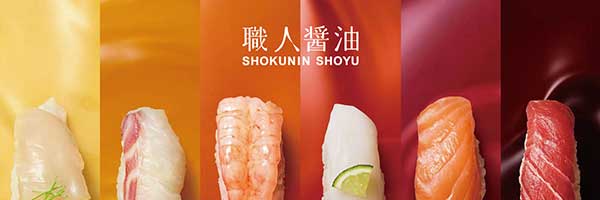
In fact, the six colors in the background of the photo above are all photographs of the actual colors of soy sauce. There are clear visual differences depending on the production method and aging period.
The dark soy sauce in the center is the most widely distributed and is common in the Kanto region. The soy sauce on the left is light in appearance and brings out the flavor of the ingredients, while the soy sauce on the right is a richer type that is aged for a longer period of time.
The type on the left is recommended when you want to add salt or lemon to bring out the flavor of the ingredients themselves, and the type on the right is recommended for ingredients that you want to eat with sauce.

Using different soy sauces can make eating more enjoyable.
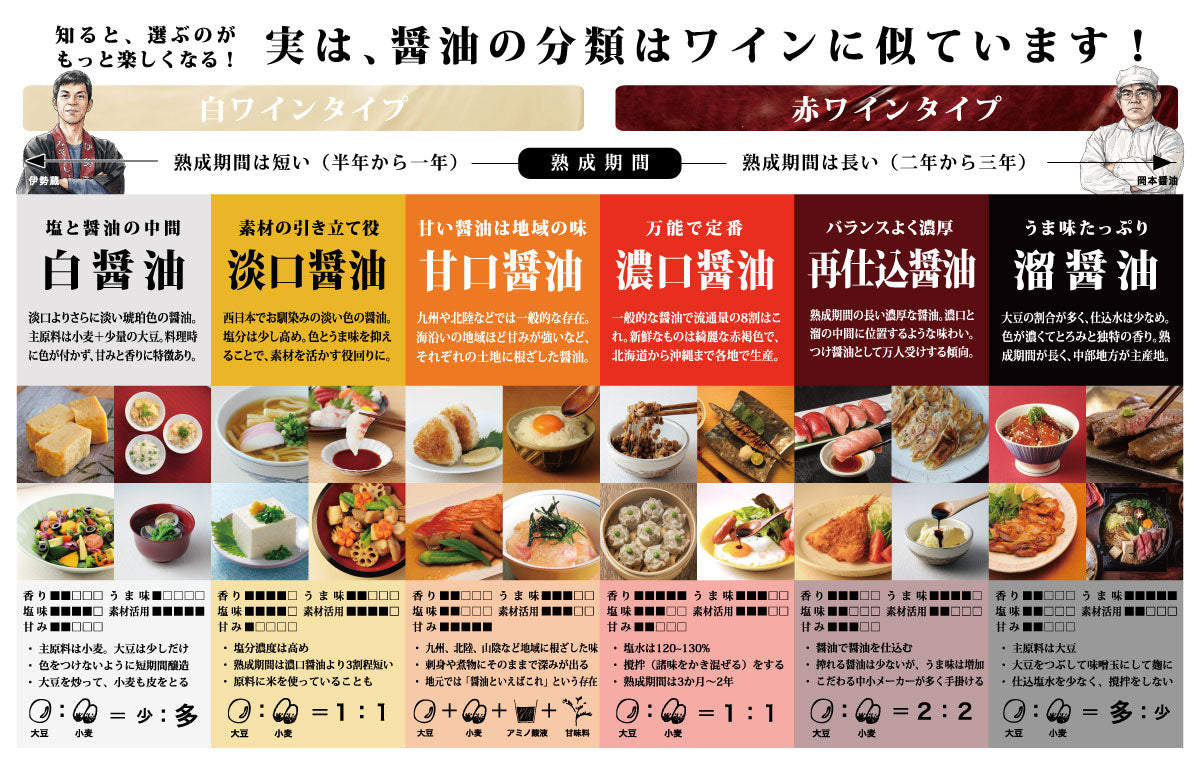
| classification | color | Taste | Recommended dishes |
|---|---|---|---|
| White soy sauce | amber color | The aroma and taste are both subtle, with a subtle sweetness. | Rolled omelet, clear soup, dressing made with olive oil, cooked rice |
| Light soy sauce | golden color | It brings out the flavor of the ingredients and can be sprinkled instead of salt. | Cold tofu, white fish sashimi, and seasoned rice |
| sweet soy sauce | reddish brown | Sweet soy sauce from Kyushu and other areas. A flavor deeply rooted in the region. | Kyushu-style seasoning, simmered dishes, rice with raw egg, grilled rice balls |
| Dark soy sauce | reddish brown | A versatile and classic flavor made all over the country. | Natto, grilled fish, fried egg, shumai |
| Re-brewed soy sauce | Jet black | Well-balanced and rich. Try it instead of a sauce. | Red meat sashimi, steak, vanilla ice cream, gyoza |
| Tamari soy sauce | Jet black | Made primarily from soybeans, it's rich and full of flavor. | Teriyaki, meat dishes, lean fish, sukiyaki |


Shiro Tamari / Nitto Brewery (Aichi Prefecture)
White soy sauce is made primarily from wheat and matured for a short period of time. It has a beautiful amber color and a salty taste, but when used in cooking, it is the best soy sauce for bringing out the color and flavor of ingredients. It is perfect for rolled omelets and clear soups.
The only ingredients used in this "Shiro Tamari" are wheat, salt, and shochu. In pursuit of the taste and flavor of white soy sauce, we have come up with a production method that uses half the amount of water compared to regular white soy sauce and does not use any soybeans at all. It goes very well with eggs, so it is perfect for rolled omelets and chawanmushi.


Pale purple/Suehiro Soy Sauce (Hyogo Prefecture)
Light soy sauce is commonly found in western Japan, and is often used in cooking. However, I highly recommend trying it as a "soy sauce for topping." I recommend pairing it with ingredients you want to top with salt or lemon, as it really brings out the flavor of delicate or mild ingredients.
This "Awamurasaki" soy sauce is characterized by the use of rice koji, which mellows the saltiness that is characteristic of light soy sauce. This long-established light soy sauce maker has pursued the best flavor for pouring soy sauce over food, and it is a soy sauce that brings out the flavor and umami of the ingredients.


Koikuchi Kanro / Yoshimura Brewery (Kagoshima Prefecture)
This is a sweet soy sauce that is representative of Kyushu. It is quite sweet among them. People may like it or not, but for those who grew up in Kyushu, this taste is exactly what soy sauce is like. For those who grew up in the Kanto region, it will be a surprise.
This "Koikuchi Kanro" is Yoshimura Brewery's signature product, a classic sweet Kagoshima soy sauce that can also be used for simmered dishes. First, try tasting it as is. Then, when you use it for sashimi or pickling, you'll notice the difference from regular soy sauce. The flavor will also change when you use it in dishes that involve heat, such as grilled rice balls or rice with raw egg.


Wooden barrel-brewed soy sauce / Yugeta Soy Sauce (Saitama Prefecture)
This dark soy sauce is a staple for people who grew up in the Kanto region. However, this soy sauce is made using a slightly different method. It is brewed in traditional wooden barrels, and domestically grown soybeans are aged over time using natural fermentation. It is easy to use and reliable, from dipping sauce to cooking.
The distinctive feature of wooden barrel brewing is that it allows the individuality of each brewery to be expressed, resulting in the unique aroma of Yugeta soy sauce. If you compare the aroma with the soy sauce you have at home, you will be able to sense the individuality of each soy sauce, even among the same type of dark soy sauce.


Tsurusho / Yamaroku Soy Sauce (Kagawa Prefecture)
Saishikomi soy sauce is aged for a long time, resulting in a dark color and a robust flavor. It uses about twice as many ingredients as regular dark soy sauce and takes about twice as long to brew. It's recommended to use it as a sauce, and it can be poured over lean sashimi, steak, fried foods, dumplings, or vanilla ice cream for a caramel flavor.
This "Tsurusho" is a masterpiece of Yamaroku Soy Sauce from Shodoshima, and is considered to be one of the longest-aged soy sauces. After about two years of aging, the soy sauce is returned to the barrel and brewed again for another two years. This soy sauce is the ultimate in deep richness and mellowness.

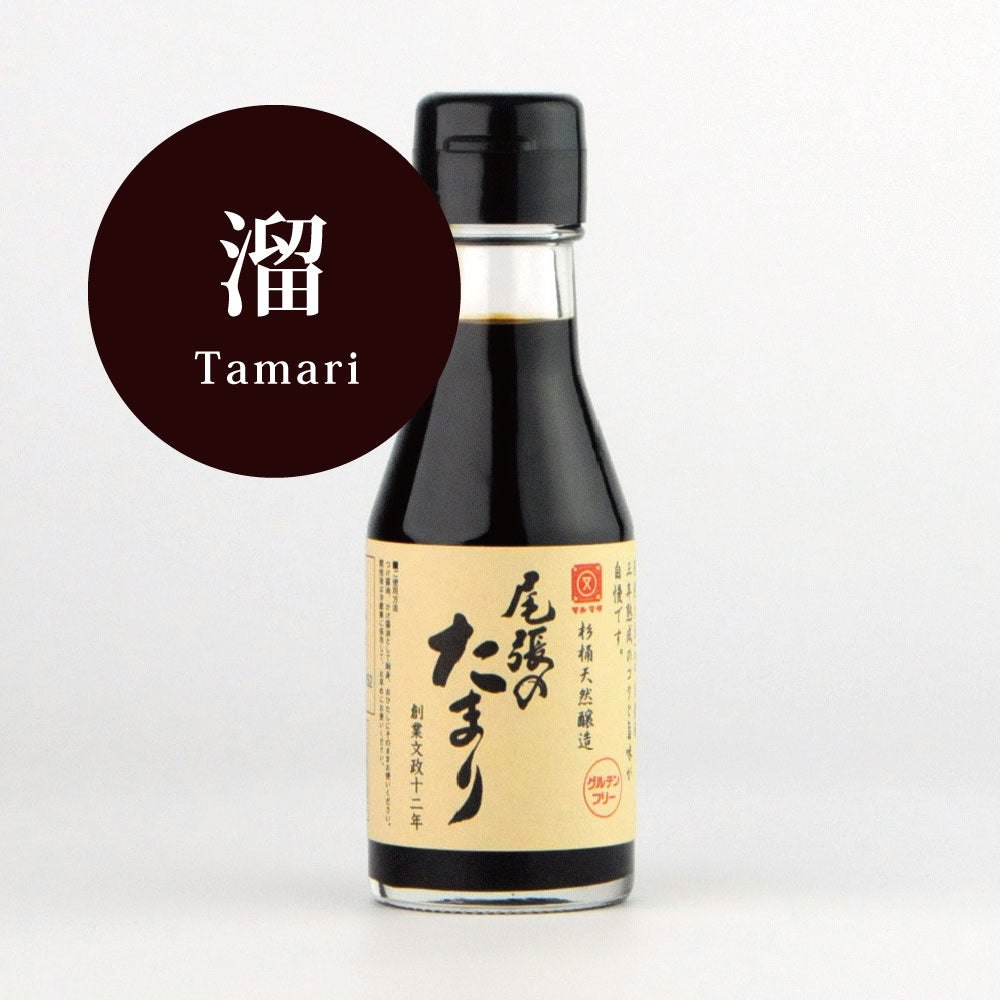

Owari Tamari / Marumata Shoten (Aichi Prefecture)
Tamari soy sauce is made primarily from soybeans and is characterized by its richness and the highest umami content of any soy sauce. Among them, "Owari no Tamari" is a gluten-free soy sauce that does not contain any wheat and is exported overseas.
By pairing it with red fish or fatty meat, you can enjoy the harmony of the soy sauce and the ingredients, and it is best used in dishes that go well with red wine. Also, since its flavor is further enhanced by the addition of heat, many enthusiastic fans use it in teriyaki or sukiyaki dishes, combining it with mirin and sugar.

A catalogue of Shokunin Soy Sauce is included.
In addition to product descriptions, we have also compiled explanations of each type of soy sauce and recommended ways to use them. These will be included with the product, so please refer to them and try using different soy sauces accordingly.

We can also send you a set of "Soy Sauce Book"
If you wish, we can also send you a "Soy Sauce Book" that provides a more detailed explanation of soy sauce. This is a specialized book on soy sauce that you've never seen before. It's all about soy sauce, including basic knowledge about soy sauce, introductions to producers, and how to use soy sauce in cooking.
You can add items from the "Cart" payment screen. Go to the top of this screen
Choose options
| 地域 | 都道府県 | 送料 |
|---|---|---|
| 北海道 | 北海道 | 1,200円 |
| 東北 | 青森・岩手・秋田・宮城・山形・福島 | 900円 |
| 関東・中部 | 茨城・栃木・群馬・埼玉・千葉・東京・神奈川・新潟・富山・石川・福井・山梨・長野・岐阜・静岡・愛知・三重 | 800円 |
| 近畿・中国 | 滋賀・京都・大阪・兵庫・奈良・和歌山・鳥取・島根・岡山・広島・山口 | 900円 |
| 四国・九州 | 徳島・香川・愛媛・高知・福岡・佐賀・長崎・熊本・大分・宮崎・鹿児島 | 1,100円 |
| 沖縄 | 沖縄県 | 1,500円 ※6,000円以上で500円 |
ご注文を受けてから3営業日以内の発送を原則としています。海外への発送も承っています。
目的別・人気セット


醤油の世界を、もっと深く。
11,000人以上が読んでいます
蔵元訪問レポート、季節の使い分け、醤油をもっと深堀した内容を、代表の高橋万太郎が毎週金曜日にお届けします。
毎週金曜日に配信。いつでも解除できます。