





5 ways to enjoy pork to the fullest
のし(無料)


Rich, soft and mild
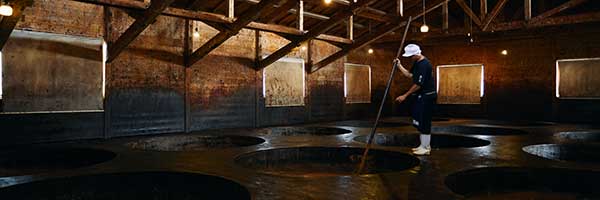
Okamoto Soy Sauce Brewery is located on Osakikamijima Island, which is in Hiroshima Prefecture but can only be reached by ferry. It's a 30-minute ferry ride from Takehara in Hiroshima Prefecture. This island in the Seto Inland Sea, with a population of about 9,000, is home to a truly wonderful soy sauce brewery. All of the ingredients used, including soybeans, wheat, and salt, are domestically produced. The soy sauce is naturally brewed in traditional cedar barrels.
The soy sauce stored in 30 barrels slowly matures every day, watched over by Mr. Okamoto and his team. This traditional soy sauce brewery cannot mass-produce soy sauce. While it depends on the natural environment surrounding the brewery and the characteristics of the microorganisms that inhabit it, if left unattended, a white mold called "film yeast" will grow during the aging process of the moromi (soy sauce base). To prevent this, agitation is required. Mixing the moromi in the barrels is a laborious task. Each 20-koku barrel has a capacity of approximately 3,600 liters. More than three tons of moromi are mixed by hand using a stirrer. It's not hard to imagine how difficult this task is, but this process is performed every three days for all 30 barrels. Moreover, because the aging process differs for each barrel, each one is carefully stirred while communicating with the moromi.
"Handmade Soy Sauce with Two Stages of Preparation and Aged for Three Years" is a three-year-old re-brewed soy sauce made by adding koji to a dark soy sauce that has been aged for two years and then aging it for another year. It has a rich yet soft, mild flavor. This is a recommended product for beginners to re-brewed soy sauce.
The characteristics of soy sauce
Light ☆☆☆★☆ Rich and mellow ☆★☆☆☆ Sharp and mild ☆★☆☆☆ Fragrant

There are quite a lot of people who prefer soy sauce when it comes to tonkatsu or fried horse mackerel. It has a gentle, mellow, and mild taste, with a soft texture. This is perfect for those who find dark soy sauce a bit lacking, but don't like salty soy sauce. The umami of the soy sauce that soaks into the tonkatsu batter spreads softly, allowing you to fully enjoy the flavor of the meat. It also goes well with the accompanying cabbage, so you won't get bored of it until the very end. Its mild aroma also brings out the fragrant aroma of freshly fried food, which is another appealing point. Once you try it, you might just associate tonkatsu with re-brewed soy sauce.


The revival of wooden barrel-brewed soy sauce
Founded in 1864, Inoue Honten is a long-established soy sauce brewery in Nara Prefecture with a history spanning 160 years. The brewery has been making soy sauce for six generations, and for the past 50 years, it has been brewing soy sauce using open concrete vats. These vats, which were introduced to many breweries during the period of rapid economic growth, have been highly valued for their ability to mass-produce soy sauce while continuing natural fermentation. However, in recent years, they have reached the end of their useful life. While plastic or steel tanks were considered as the next brewing container, President Yoshikawa opted to return to wooden barrels. This decision was made despite the time-consuming nature of the process and the resulting decline in production. Behind this decision, together with his sons Shuhei and Ryo, who have returned to the brewery, was a desire to "make soy sauce that they themselves would find truly delicious."
In 2022, the first wooden barrel-brewed soy sauce in decades, "Kimajime," will be released. The wooden barrels used were acquired at a wooden barrel auction held by Yamaroku Soy Sauce in Shodoshima, Kagawa Prefecture. The barrels had been used for brewing for several years, and were already inhabited to a certain extent by Yamaroku's own microorganisms. However, strangely enough, the "Kimajime" brewed in these barrels does not taste like Yamaroku, but rather has the distinct flavor of Inoue Honten.
Of course, since it has only been a few years since preparation began, the impression is light and refreshing rather than profound. However, the aroma of the soy sauce is strong and undoubtedly characteristic of Inoue Honten. In the future, five years, twenty years, fifty years from now... The microorganisms living in the wooden barrels will grow, the wooden barrels themselves will grow, and the flavor of the soy sauce will also develop. The unique charm of "Kimajime" is that you can enjoy these changes together.
The characteristics of soy sauce
Light ☆★☆☆☆ Rich and mellow ☆☆★☆☆ Sharp and mild ☆☆☆★☆ Fragrant

Ginger pork is a classic side dish that can be made quickly and goes well with rice. It's great for dinner, and also as a side dish for bento lunches. "Kimajime" has a light flavor that doesn't overpower the ginger's aroma, but rather supports it well. When simmered, it brings out its rich flavor, making it a side dish that will have you eating rice nonstop. If you're going to make delicious ginger pork, we recommend using grated ginger instead of the ginger in a tube.
The spicy aroma and spiciness of the grated ginger is subtly complemented by the "Kimajime" pork, creating a perfect balance. This is perfect when you buy a special brand of pork, but of course it's also fine to use affordable pork from the supermarket. The key is to sprinkle some sake on it before grilling to lightly remove any odors.


Umami components of naturally brewed miso
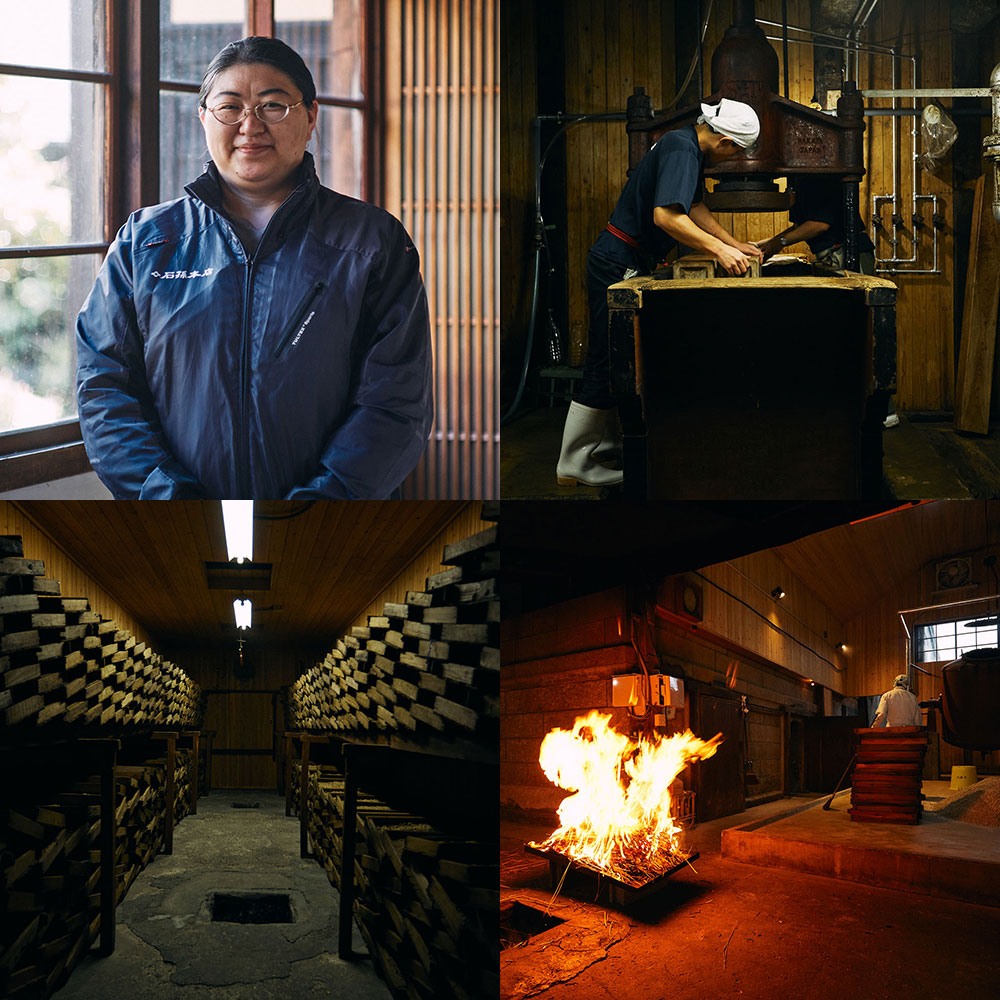
Ishimago Honten in Akita Prefecture is the perfect example of "old-fashioned." They use coal to roast wheat and "koji lids" to make rice koji. This brewery still uses a variety of tools that would not look out of place on display in a museum.
Miso-making begins with making rice koji. The koji lids are carried to a room called a muro, where the koji is carefully cultivated. Charcoal is placed in a hole in the floor, and the temperature is regulated by opening and closing a window in the ceiling. Someone watches over the room, even at night, and looks after it round-the-clock for three days. The brewers then carry the finished koji back and forth over and over again until it fills up a huge 30 koku (approximately 2m high, 5,000 liters) vat. Ishimagoto Honten's attitude of continuing to use and repair its buildings and tools is firmly rooted in the passion for miso-making of each and every brewer.
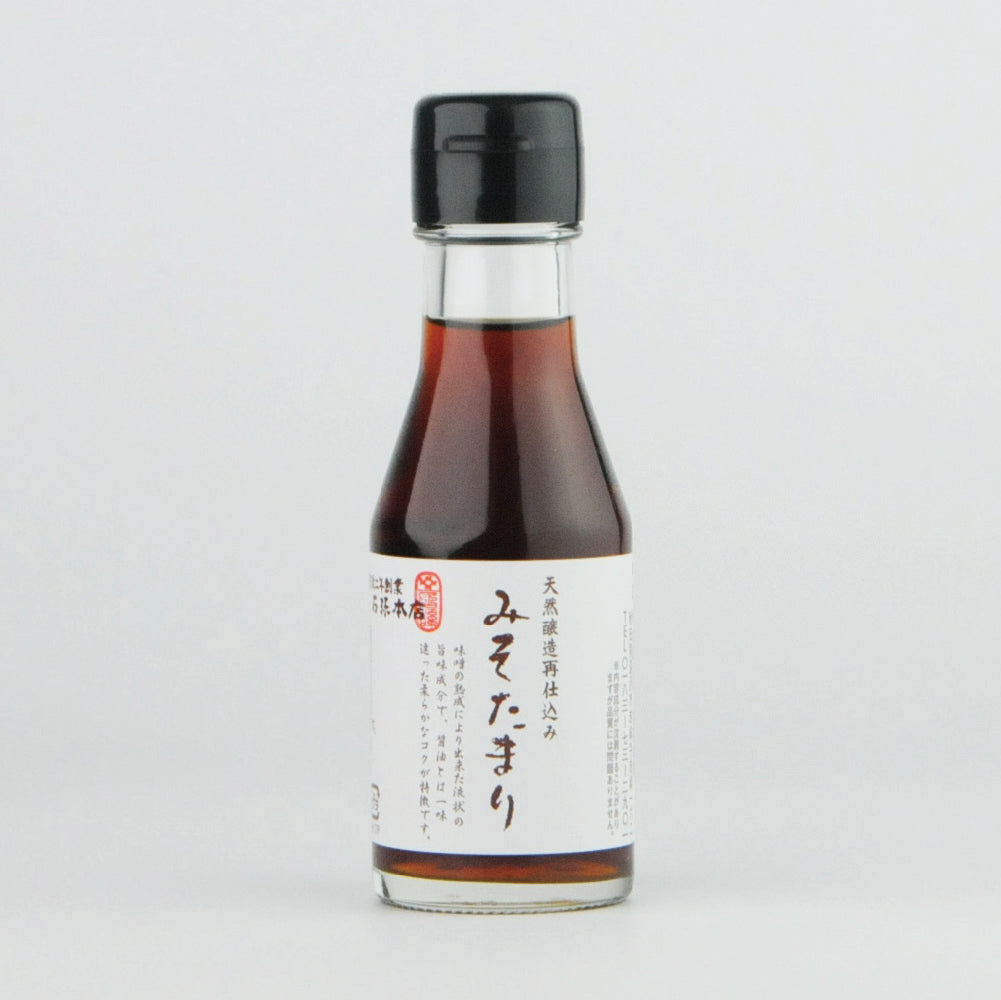
"Miso Tamari" is the umami component of naturally fermented amber-colored miso. Made from soybeans and rice from Akita Prefecture, it is further fermented by adding rice koji and Shima Mars from Okinawa. It has a refined taste with a subdued sweetness, umami, richness, and a pleasant saltiness. The method of squeezing is also unique, using a "hanging strainer bag" method, as squeezing too hard would cause the miso to become cloudy. No pressure is applied, and only the natural drippings are bottled, resulting in a clear amber color.
The characteristics of soy sauce
Light ☆★☆☆☆ Rich and mellow ☆☆★☆☆ Sharp and mild ☆★☆☆☆ Fragrant

"Miso Tamari" is a perfect match for meat. It blends flavors better than soy sauce, allowing for a quick and easy way to create an authentic seasoning. Teriyaki chicken and fried chicken are also delicious, but our top recommendation is pork shogayaki. The meat is not cooked through, but comes out plump and tender, and the gentle saltiness really brings out the sweetness of the pork. Another appealing feature is that it is not as dark in color as soy sauce, resulting in a beautiful, clear finish.
This umami flavor, which soy sauce just can't match, is sure to make you want to eat it again and again. It's great for seasoning fried rice, or adding a little to mayonnaise to make a dipping sauce, and is great when you want a slightly lighter flavor than soy sauce.


Domestically grown soybeans aged for two years in Tokushima
Founded in 1826 in Naruto City, Tokushima Prefecture, near Reizanji Temple, the first temple on the Shikoku Pilgrimage (88 temples), Fukuju Soy Sauce is located here. While Shikoku is known for its relatively sweet soy sauce, Fukuju Soy Sauce maintains a simple, unsweetened flavor. Since its founding in the late Edo period, the company has continued to produce naturally fermented soy sauce using domestically grown soybeans and wheat. The first potential problem for a brewery with a history like Fukuju Soy Sauce is the timing of a succession. Ninth-generation owner Nobuaki Matsuura returned to the brewery in 2012 after eight years in real estate sales in Osaka and Tokyo. His father's only words of encouragement were, "Do what you like." "My father was dedicated to production, so I could sense what was expected of him," says Nobuaki, who also handles sales. "I want to share this flavor I've enjoyed since I was born with even more customers," he says with enthusiasm.
This dark soy sauce is additive-free and color-free, made with domestically produced whole soybeans, wheat, and sun-dried salt, and fermented and aged for two years. It has the powerful umami flavor that comes from two years of aging, but is also characterized by a clean, crisp finish. The deep flavor prevents it from feeling salty. It has a deep taste, but is not too heavy. Its gentle, mild aroma is also pleasant, and it brings the entire dish together with elegance.
The characteristics of soy sauce
Light ☆☆★☆☆ Rich and mellow ☆☆☆★☆ Sharp and mild ☆★☆☆☆ Fragrant

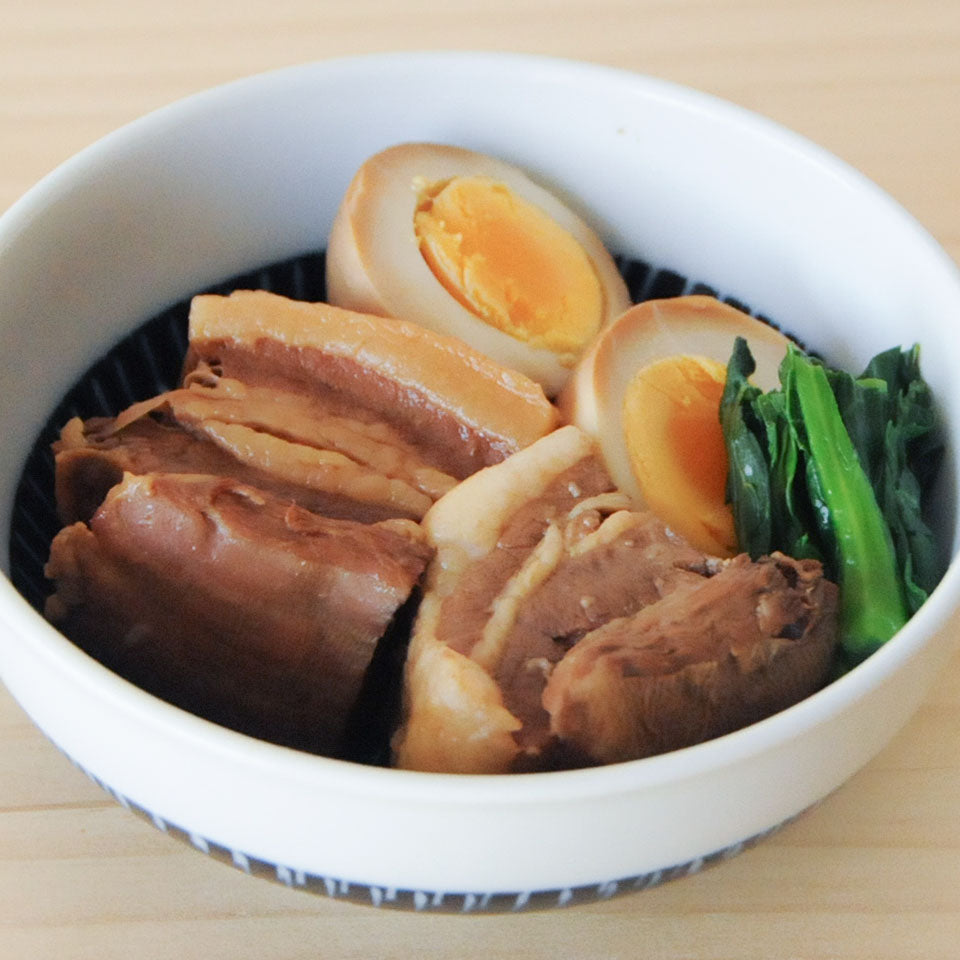
Personally, I think braised pork is the epitome of a satisfying side dish. It's the kind of dish that brings a smile to the faces of both children and adults. By simmering it slowly over time, it becomes so tender that it crumbles easily when you poke it with your chopsticks.
"Fukuju" has a deep umami flavor, yet a clean, crisp aftertaste. So even though the flavor soaks into the pork, it doesn't become cloying, resulting in a pleasant sweet-savory flavor. It also brings out the tangy accent of the ginger nicely. It's recommended not only for braised pork, but also for all pork dishes that rely on a sweet-savory flavor, such as pork bowl, roast pork, and vegetable meat rolls. The sauce that soaks into the rice in a pork bowl is especially delicious... Making a little extra sauce and savoring it to the last drop is also a luxurious way to enjoy it.


Popular all over the world! Four-year aged soy sauce
"Tsurusho" is a re-brewed soy sauce from Yamaroku Soy Sauce, located on Shodoshima Island in Kagawa Prefecture. It is synonymous with wooden barrel-brewed soy sauce, and is such a popular brand that people come from all over the world to buy it.
"I want to preserve the tradition of barrel-brewed soy sauce for my grandchildren," says Yamamoto Yasuo, the fifth-generation owner of Yamaroku Soy Sauce. With this desire in mind, in 2012 he began working with local carpenters to take on the challenge of "making the wooden barrels to brew soy sauce with our own hands." This initiative marked the beginning of the "Wooden Barrel Craftsman Revival Project," which later spread nationwide. Currently, wooden barrel-brewed soy sauce accounts for only about 1% of the total amount distributed in Japan. Rather than small manufacturers competing for that tiny share, the "Wooden Barrel Craftsman Revival Project" is an initiative to work together to increase that 1% to 2%. Today, at Yamaroku Soy Sauce, you can see a rare sight in Japan, with wooden barrels that are over 100 years old coexisting with new barrels made every year.
"Tsurusho" is a soy sauce that has been aged for four years, with more seasonings added to a dark soy sauce that has been aged for two years, and then aged for another two years. It has been brewed to the utmost to achieve a deep richness and mellowness, with even a hint of sweetness. It is not overly salty, so it is a must-try for those who don't like the saltiness of soy sauce. And above all, the appeal of "Tsurusho" is its mellow aroma. The moment you put it in your mouth, the fragrance that spreads softly and the rich flavor have such an impact that they say, "You'll never go back to regular soy sauce again."
The characteristics of soy sauce
Light ☆☆☆★☆ Rich and mellow ☆★☆☆☆ Sharp and mild ☆☆☆☆★ Fragrant
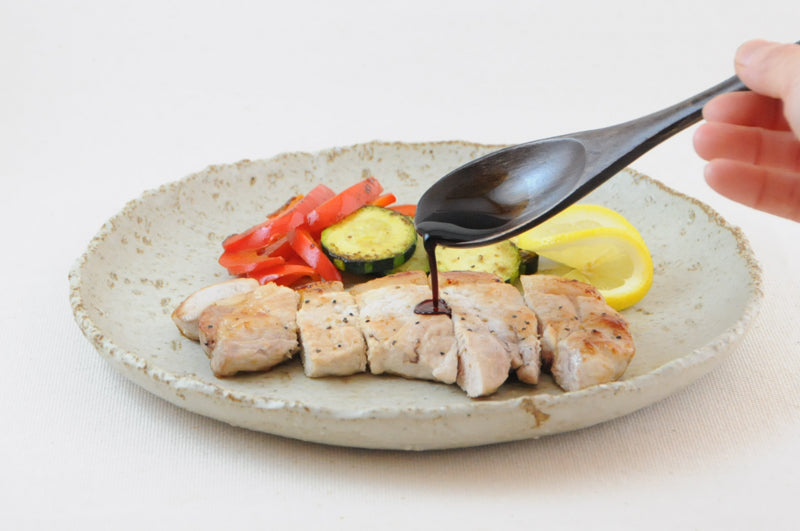
 Juicy and satisfying, yet not too heavy. When you want to eat a pork steak like that, the trick is to cook it slowly at a low temperature until it's plump and tender. Once it's cooked, finish it off with a splash of "Tsurusho". It's an irresistible match!
Pork fat has a sweetness to it, making it an excellent match for Tsurusho, which has a rich umami flavor and is not too salty. It adds just the right amount of richness and depth to the thick yet light pork. You can really taste the fat, but the aftertaste is clean. It brings out the umami of the meat without interfering with it. They are a relationship in which each enhances the other. "Tsurusho is delicious! The pork steak is delicious!!" Please enjoy this luxurious dish where you can enjoy both.
Text: Mori (Shokunin Soy Sauce)
Choose options
| 地域 | 都道府県 | 送料 |
|---|---|---|
| 北海道 | 北海道 | 1,200円 |
| 東北 | 青森・岩手・秋田・宮城・山形・福島 | 900円 |
| 関東・中部 | 茨城・栃木・群馬・埼玉・千葉・東京・神奈川・新潟・富山・石川・福井・山梨・長野・岐阜・静岡・愛知・三重 | 800円 |
| 近畿・中国 | 滋賀・京都・大阪・兵庫・奈良・和歌山・鳥取・島根・岡山・広島・山口 | 900円 |
| 四国・九州 | 徳島・香川・愛媛・高知・福岡・佐賀・長崎・熊本・大分・宮崎・鹿児島 | 1,100円 |
| 沖縄 | 沖縄県 | 1,500円 ※6,000円以上で500円 |
ご注文を受けてから3営業日以内の発送を原則としています。海外への発送も承っています。
このセットは、本数に合ったギフトボックスに入れてお届けできます。熨斗は蝶結び・結切り・熨斗なしからお選びいただけます。
ご注文の際は、セットと一緒にギフトボックスをカートに入れてください。
ギフトの一覧を見る目的別・人気セット


醤油の世界を、もっと深く。
11,000人以上が読んでいます
蔵元訪問レポート、季節の使い分け、醤油をもっと深堀した内容を、代表の高橋万太郎が毎週金曜日にお届けします。
毎週金曜日に配信。いつでも解除できます。