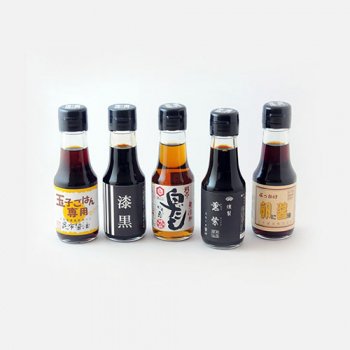
5 bottles for those who like dashi soy sauce
のし(無料)

For use with egg rice / Hashimoto Soy Sauce (Kumamoto Prefecture)
The original soy sauce specifically developed for egg rice, first developed in Japan. Based on dark soy sauce, it features the mellow umami of kelp stock and the gentle sweetness of oligosaccharides.
The soy sauce has a very refreshing taste and is a dashi soy sauce characterized by the mellow sweetness of oligosaccharides and the umami of kelp, so it can be used on a variety of dishes other than egg rice as a soy sauce for children to pour over.
We recommend the Kamatama-style udon. Simply add an egg to freshly boiled udon noodles, mix, and then pour on soy sauce. If you use it exclusively for egg rice, you can enjoy the refreshing and gently sweet taste of Kamatama-style udon. It's easy and delicious, so it's perfect for a quick meal or a late-night snack.
In addition to rice with raw egg, you can also use it in other dishes like this
・Kamatama-style udon noodles, natto, and boiled eggs

Eggs with soy sauce / Joho soy sauce (Ibaraki Prefecture)
This soy sauce is rich in bonito stock and is perfect for rice topped with raw egg. A local chicken farmer gave it rave reviews, saying, "Our eggs taste amazing!" "I think it's important to make the most of the eggs, without letting the salt or soy sauce overpower them," says Masataka Hosaka, the sixth-generation owner.
This soy sauce is based on a refreshing bonito stock, making it easy to use in dishes other than eggs. It also works well as a drizzle over natto, boiled greens, and pickles. We recommend using it with sesame dressing; if you make it without adding sugar, it will have a refreshing sesame dressing with a strong bonito stock flavor.
In addition to rice with raw egg, you can also use it in other dishes like this
・Boiled greens, pickles, egg drop soup

Jet Black / Yamakawa Brewery (Gifu Prefecture)
This popular product from Yamakawa Brewery is based on the richly flavored and fragrant tamari soy sauce that has been aged for two years in wooden barrels, and is made with bonito, horse mackerel, kelp, shiitake mushroom stock, mirin, and sugar, all blended together to create a rich, umami-filled dashi soy sauce.
Many people are fascinated by the richness and umami that cannot be found in regular soy sauce, and continue to buy only Jet Black. Its uses are truly diverse, and you can use it straight on avocado, on egg rice, or on natto, or dilute it to make noodle soup or sukiyaki. It's easy and convenient to use, more like a sauce than soy sauce!
Recommended usage
・Avocado ・Mentsuyu broth ・Beef bowl ・Rice with raw egg ・Natto

Restaurant White Dashi / Shichifuku Brewery (Aichi Prefecture)
Shichifuku Brewery was the first brewery in Japan to produce white dashi, and continues to take pioneering steps, such as being the first in the industry to receive JAS organic white soy sauce certification.
When he explained to a business partner that "we use honkarebushi (dried dried bonito flakes)," he was told, "Don't lie!" He said that it would make sense if a restaurant were using it, but there's no way it would be used in processed soy sauce products.
He even came to the production site to check it out for himself. "We make good products. To do that, we need to use good ingredients," said President Inuzuka. "There are also cheap white dashi products on the market, and the price difference can be several times higher. However, in order to live up to the trust of our customers who choose Shichifuku products, we have told them that we will not lower the cost of ingredients, but rather increase it."
First, we recommend trying it in a simple clear soup. If you dilute the white dashi 16 times, it will hardly take on any color. However, the gentle flavor of the dashi will spread throughout the dish. As well as clear soup, we also recommend trying it in tamagoyaki (rolled omelet). Simply add the right amount of white dashi and water to beaten eggs and fry, and you'll have a full-fledged dashimaki (rolled omelet) with a strong dashi flavor and a beautifully accentuated egg yellow.
Recommended usage
・Omelette ・Dressing ・Clear soup ・Lightly pickled vegetables ・Japanese-style spaghetti

Kun Murasaki / Suehiro Soy Sauce (Hyogo Prefecture)
This dark soy sauce is made from whole soybeans and wheat from Hyogo Prefecture, aged for a year using traditional natural fermentation methods, and then smoked for 8 to 9 hours, allowing the soy sauce to retain its natural umami flavor while also infusing it with a strong smoky aroma. Just one drop will fill your dish with its fragrant aroma.
Place grilled bacon on mizuna for a simple and delicious dish. This soy sauce was originally created at the request of a roast beef restaurant, so it pairs well with steak, bacon, and other meats. Since the aroma is sensitive to heat, we recommend using it as a finishing drizzle or dipping sauce. It also goes well with roast beef and cheese .
Recommended usage
・Cheese・Dressing・Salmon・Rice with raw egg
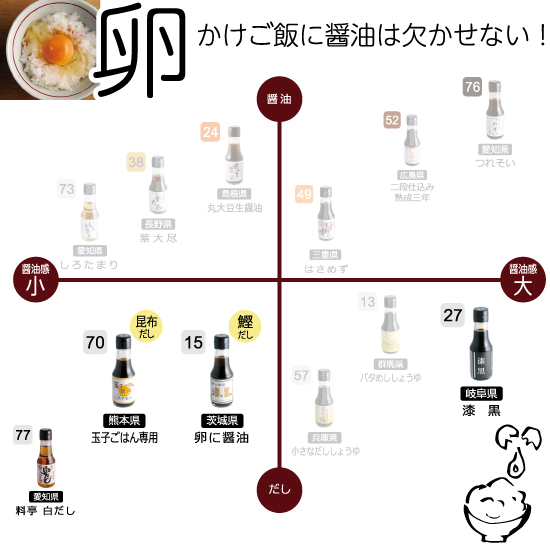
Should I eat it with soy sauce or dashi?
When it comes to soy sauces specifically for rice with raw egg, dashi soy sauce based on bonito stock or kelp stock is the most common, but the taste can vary greatly depending on whether it is based on rich tamari soy sauce or white soy sauce that is designed to bring out the flavor of the ingredients.
Choose options
| 地域 | 都道府県 | 送料 |
|---|---|---|
| 北海道 | 北海道 | 1,200円 |
| 東北 | 青森・岩手・秋田・宮城・山形・福島 | 900円 |
| 関東・中部 | 茨城・栃木・群馬・埼玉・千葉・東京・神奈川・新潟・富山・石川・福井・山梨・長野・岐阜・静岡・愛知・三重 | 800円 |
| 近畿・中国 | 滋賀・京都・大阪・兵庫・奈良・和歌山・鳥取・島根・岡山・広島・山口 | 900円 |
| 四国・九州 | 徳島・香川・愛媛・高知・福岡・佐賀・長崎・熊本・大分・宮崎・鹿児島 | 1,100円 |
| 沖縄 | 沖縄県 | 1,500円 ※6,000円以上で500円 |
ご注文を受けてから3営業日以内の発送を原則としています。海外への発送も承っています。
このセットは、本数に合ったギフトボックスに入れてお届けできます。熨斗は蝶結び・結切り・熨斗なしからお選びいただけます。
ご注文の際は、セットと一緒にギフトボックスをカートに入れてください。
ギフトの一覧を見る目的別・人気セット


醤油の世界を、もっと深く。
11,000人以上が読んでいます
蔵元訪問レポート、季節の使い分け、醤油をもっと深堀した内容を、代表の高橋万太郎が毎週金曜日にお届けします。
毎週金曜日に配信。いつでも解除できます。