
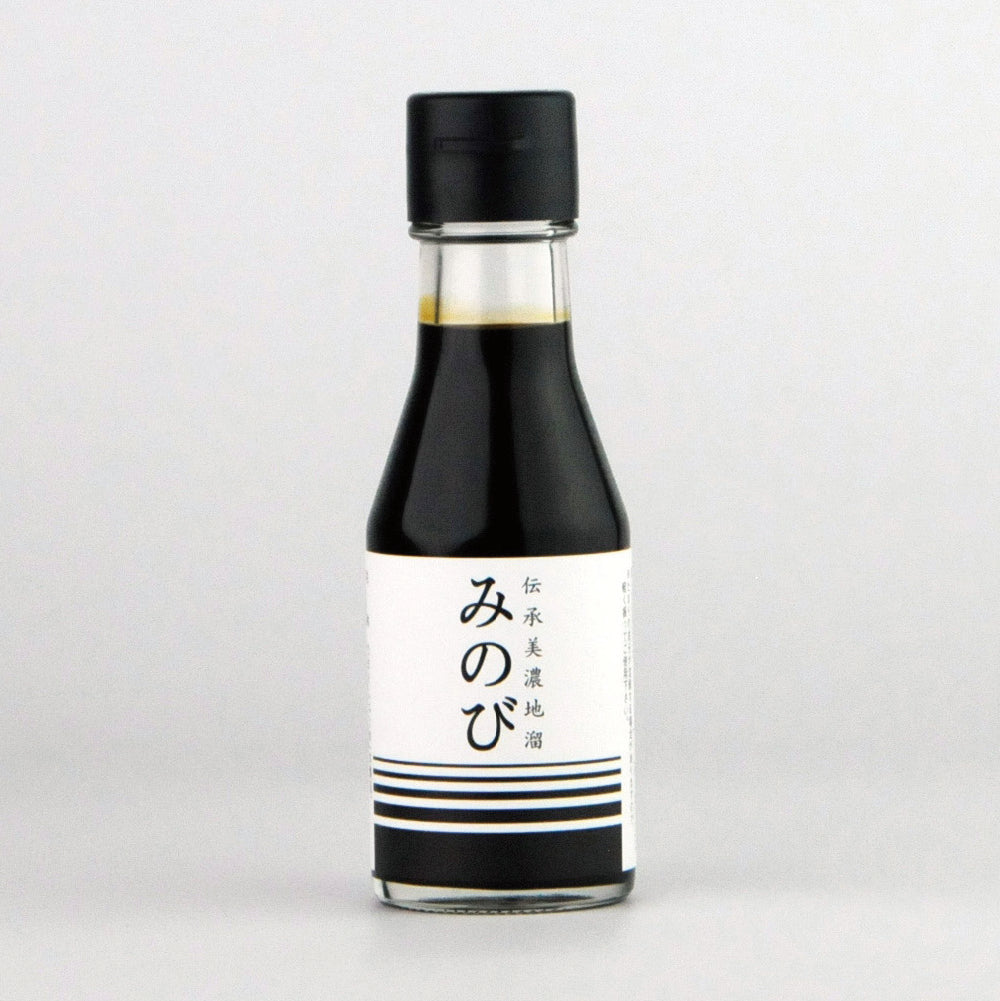
26. Minobi 100ml
A unique aroma and pleasant acidity
Shokunin Shoyu No. 26

Tamotsu soy sauce made with less water
Tamotsu soy sauce is mainly produced and consumed in the Tokai region (Aichi, Gifu, and Mie), but its production method is different from that of the commonly available dark soy sauce.
While regular dark soy sauce is made with 120% to 130% salt water relative to the amount of koji made from soybeans, wheat, etc., tamari soy sauce is made with 50% to 100% salt water. Since miso balls are made and weights are placed on top, it may be more similar to making miso than soy sauce.
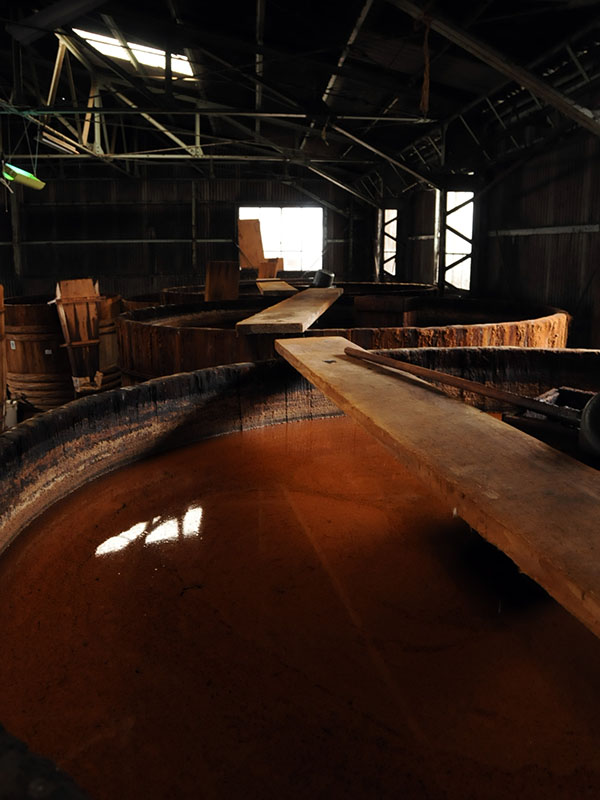
Because tamari soy sauce uses less water, it cannot be stirred (the process of stirring the various flavors). For this reason, a cylindrical object called a "chimney" is inserted into the wooden barrel. There is a hole at the bottom of the chimney, which is where the soy sauce collects. Over the course of two years, the soy sauce that has accumulated inside the chimney is repeatedly scooped up with a long ladle and poured over a stone weight, a process known as "kumikake."

Raw pulling and pressing
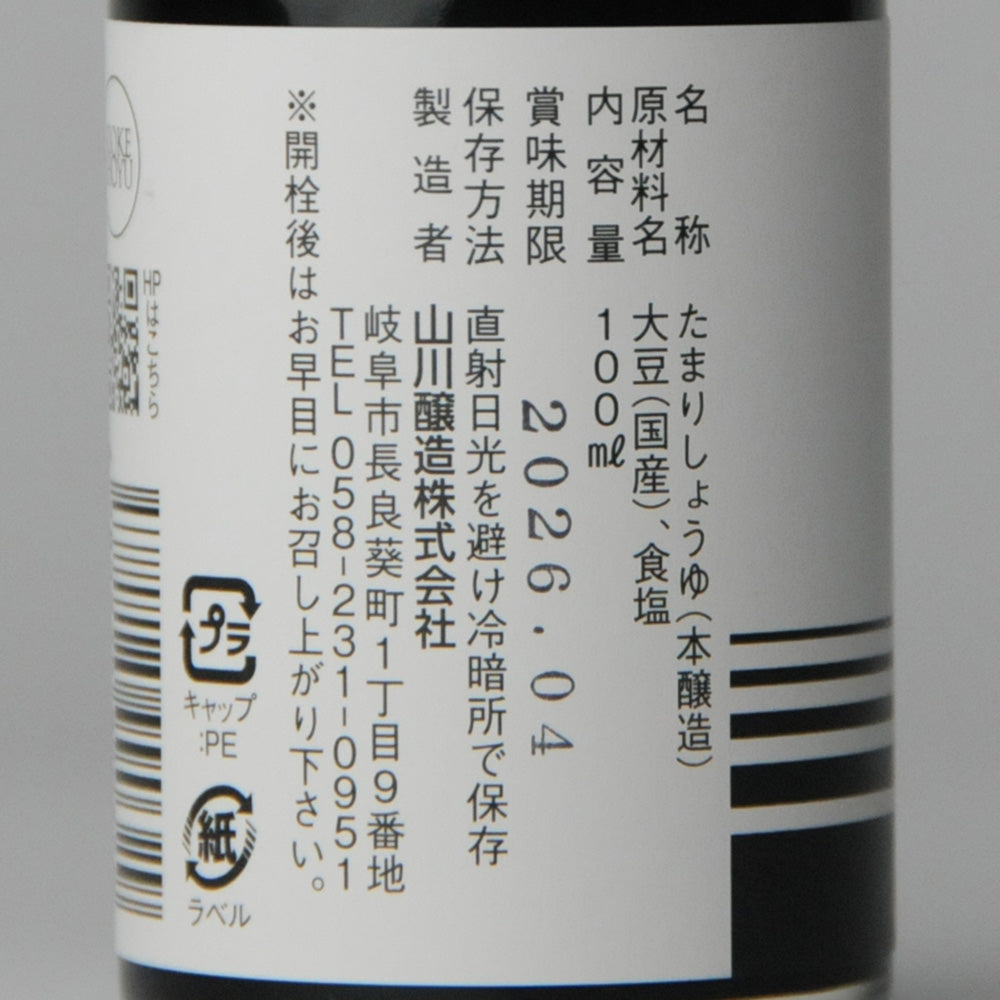
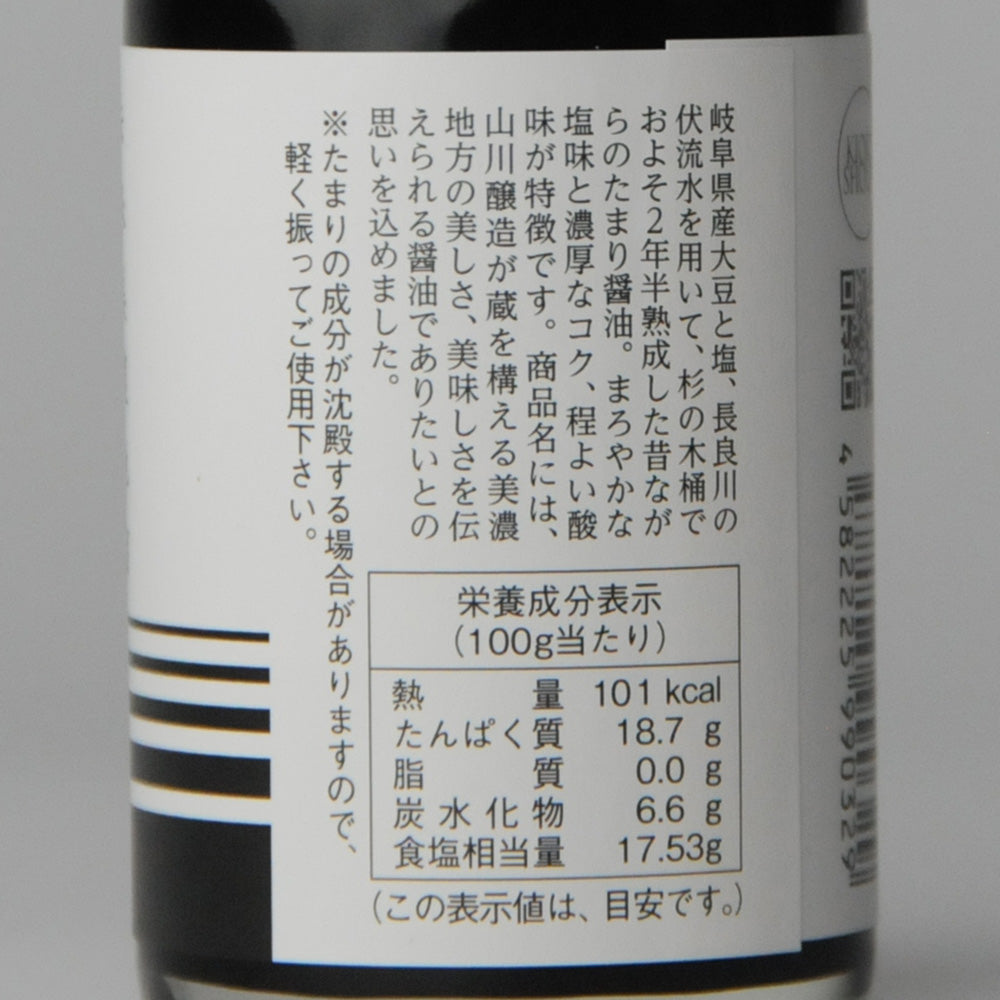
Yamakawa Brewery offers two types of gluten-free tamari soy sauce: "Nagara" and "Minobi." Both are aged for two years in wooden barrels and are made using a 10-water brewing method that uses only domestic soybeans and salt. The ingredients and process are exactly the same, but the main difference is the method of pressing: "raw" or "pressed."
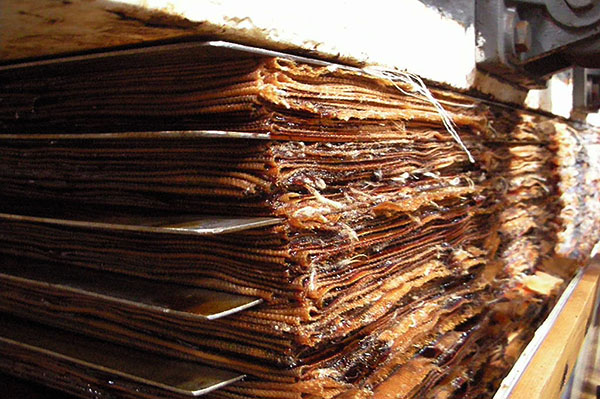
The wooden barrels for tamari soy sauce have a spout at the bottom. "Namabiki" is the natural extraction of soy sauce that has accumulated at the bottom of the barrel through the spout, which takes over a year to extract, as it only drips out slowly. Once the namikibiki is complete, the brewer enters the barrel and digs out the hard, heavy moromi with a shovel. This moromi is unique to tamari soy sauce, and is called "miso" due to its low water content, but it is completely different from regular miso. The excavated moromi is sliced into slices a few millimeters thick using a "miso cutter," wrapped in thick cloth, and stacked before being slowly pressed. Squeezing the moromi carefully over time prevents the inclusion of impurities. It takes approximately two months to extract one barrel's worth of moromi.
Because of this process, the wooden barrels used to brew tamari soy sauce are shorter and wider than regular barrels, even though they have the same capacity. Furthermore, the barrel's side panels are designed to be about 1cm thicker than standard ones. When brewing, miso balls are placed in the barrel, a cloth is placed on top of them, and then a layer of stones is placed on top before the brine is poured in, which puts a lot of pressure on the barrel. The barrel needs to be strong enough to withstand that pressure.
"Minobi" is a pressed soy sauce. In 2025, it was renewed to a gluten-free version, brewed only with domestic soybeans and salt. Previously, "Minobi" was brewed for five minutes and was quite thick, but now it is brewed with 10 water, giving it a nice thick consistency. Although the aroma is more subdued, the unique flavor remains, and the gentle sweetness of the soybeans is more pronounced.

Continuing to expand the possibilities of tamari soy sauce
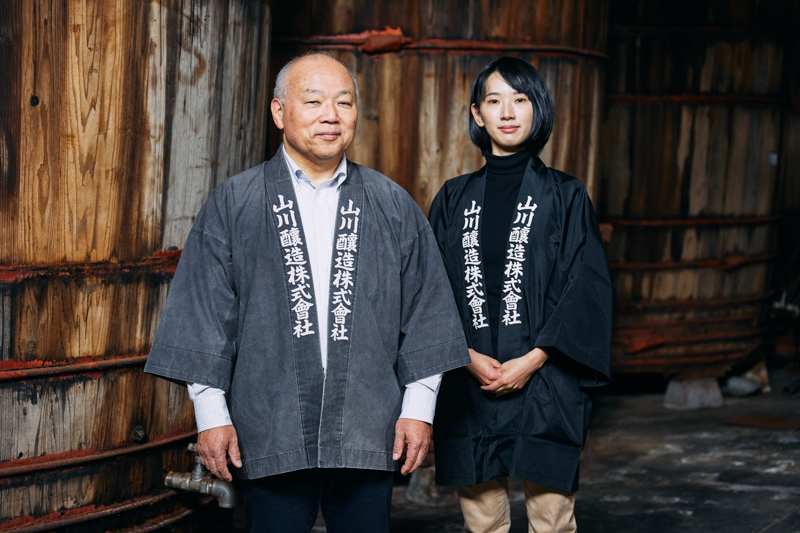
Kanako Yamakawa, the fourth generation owner, has loved going into the storehouse since she was a child, and grew up looking up at the large wooden barrels.
Tamari soy sauce has less water than other soy sauces, so it is made using a method that requires a lot of hard work, such as "drawing water" and "digging up the miso paste." "Even if it's a difficult task for me, I want to try it all with my own hands at least once. Because I can't convey it properly unless I touch it and understand it myself. I want to etch Tamari soy sauce in everyone's memories, even if just a little," says Kanako, who is actively involved in the work of making soy sauce.
In addition, the brewery's event, "Tamariya Brewery Open House," hosts experiential events such as selling sandwiches and sweets made with Yamakawa Brewery's soy sauce and miso at restaurants, wooden barrel exploration tours, and tamari soy sauce workshops, expanding the possibilities of tamari soy sauce.

The power of Minobi that natto connoisseurs should try
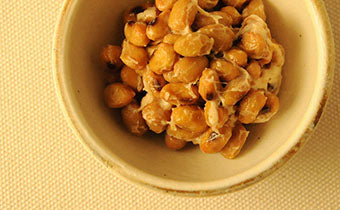
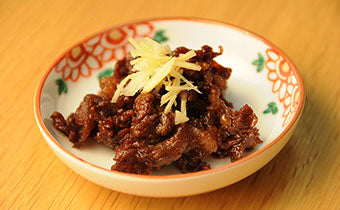
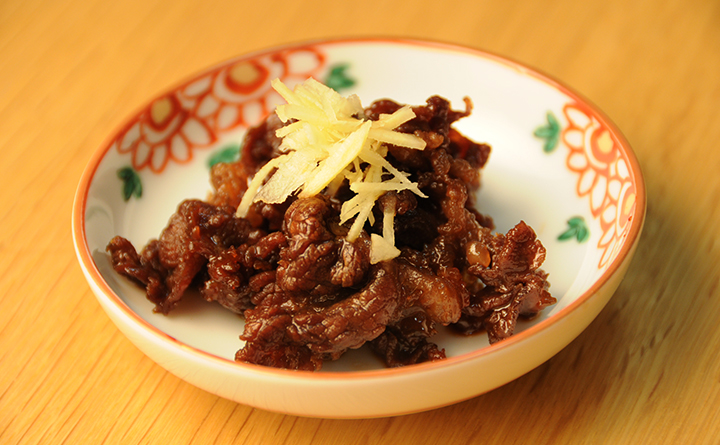
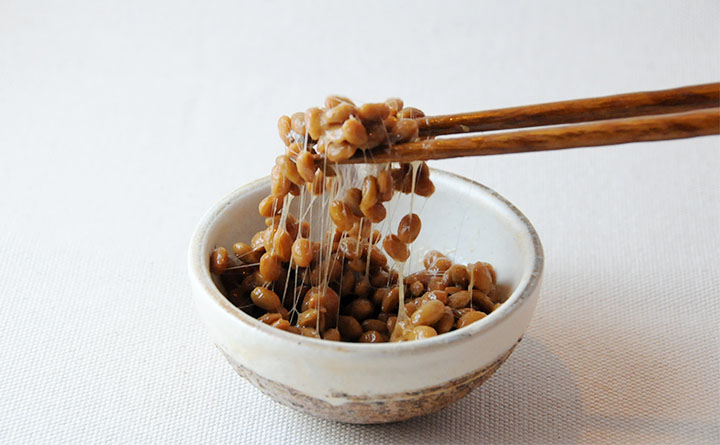
Minobi, with its gentle sweetness, richness, and creamy texture of soybeans, is a perfect match for large-grain natto. When sprinkled generously, it gently envelops the fermented aroma unique to natto while enhancing the flavor of the soybeans, making it a recommended choice for natto connoisseurs.

Rich soy sauce for a strong flavor
It has twice the umami of regular dark soy sauce, making it perfect for dishes that require a strong flavor, such as simmered dishes. Try this unique flavor that cannot be achieved with other soy sauces.
It is also often used in ramen restaurants, and its mellow saltiness, sweetness, and richness give the soup depth, making it a bowl you'll want to drink down to the last drop. The soy sauce has a strong presence, yet blends well with the rest of the dish, creating an exquisite balance that stands out.
Choose options
目的別・人気セット


NEWSLETTER│職人醤油通信
醤油の世界を、もっと深く。
蔵元訪問レポート・季節の使い方・新商品情報など、職人醤油 代表の高橋万太郎がお届けします。
- 蔵元訪問レポート・産地の話
- 季節の料理と醤油の使い分け
- 新着商品・限定セットのご案内
- 読者限定の先行情報
スパムメールは送りません。登録解除はいつでも可能です。