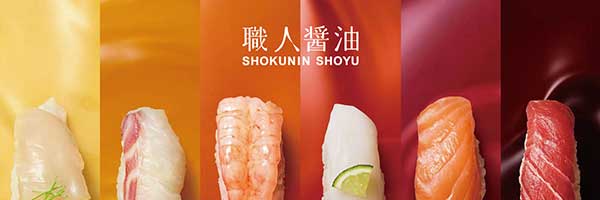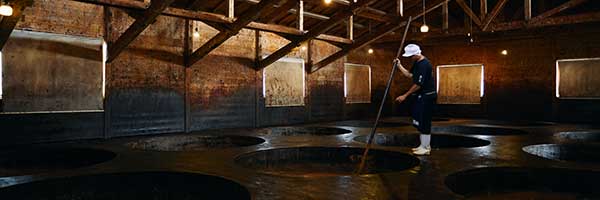
Choose options





Do you know the basics of soy sauce?
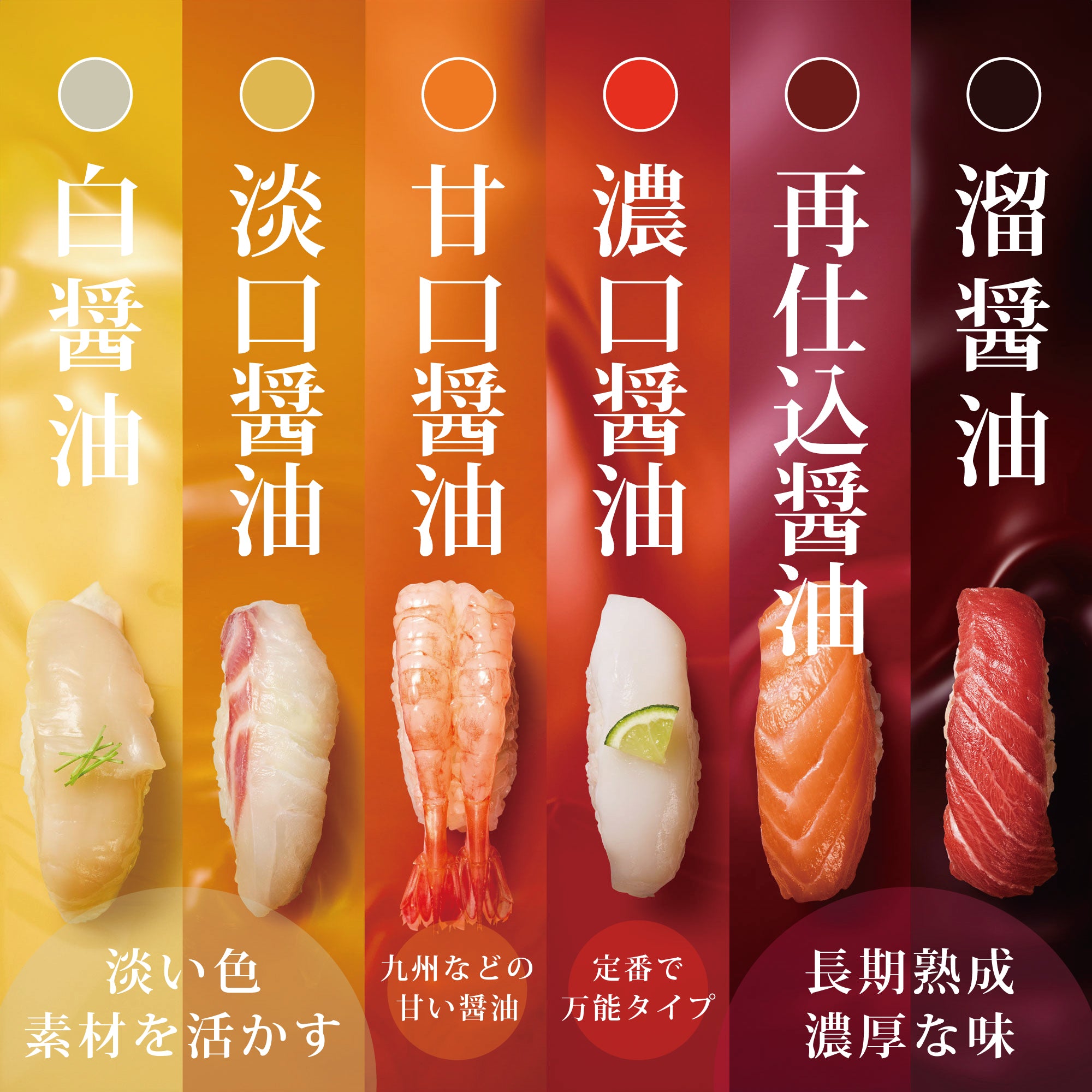
Soy sauce is classified into six types: white soy sauce, light soy sauce, sweet soy sauce, dark soy sauce, re-brewed soy sauce, and tamari soy sauce. The differences between these types are due to the brewing period, fermentation method, and ingredients used. This is why each type has a different color, salt content, and flavor, making it fun to use them differently.
Koikuchi soy sauce accounts for approximately 80% of the soy sauce produced in Japan. It has an exquisite balance of umami, sweetness, and aroma, making it a versatile type that goes well with any dish.
◆White soy sauce and light soy sauce are brewed for a short period of time, so they are light in color and have a light taste.
◆ Saishikomi soy sauce and tamari soy sauce are brewed for a long time and contain many ingredients. They are dark in color and have a strong umami flavor.
◆Sweetened soy sauce with a sweet soy sauce base. A flavor that has taken root in Kyushu, Hokuriku, and other regions.
This time,
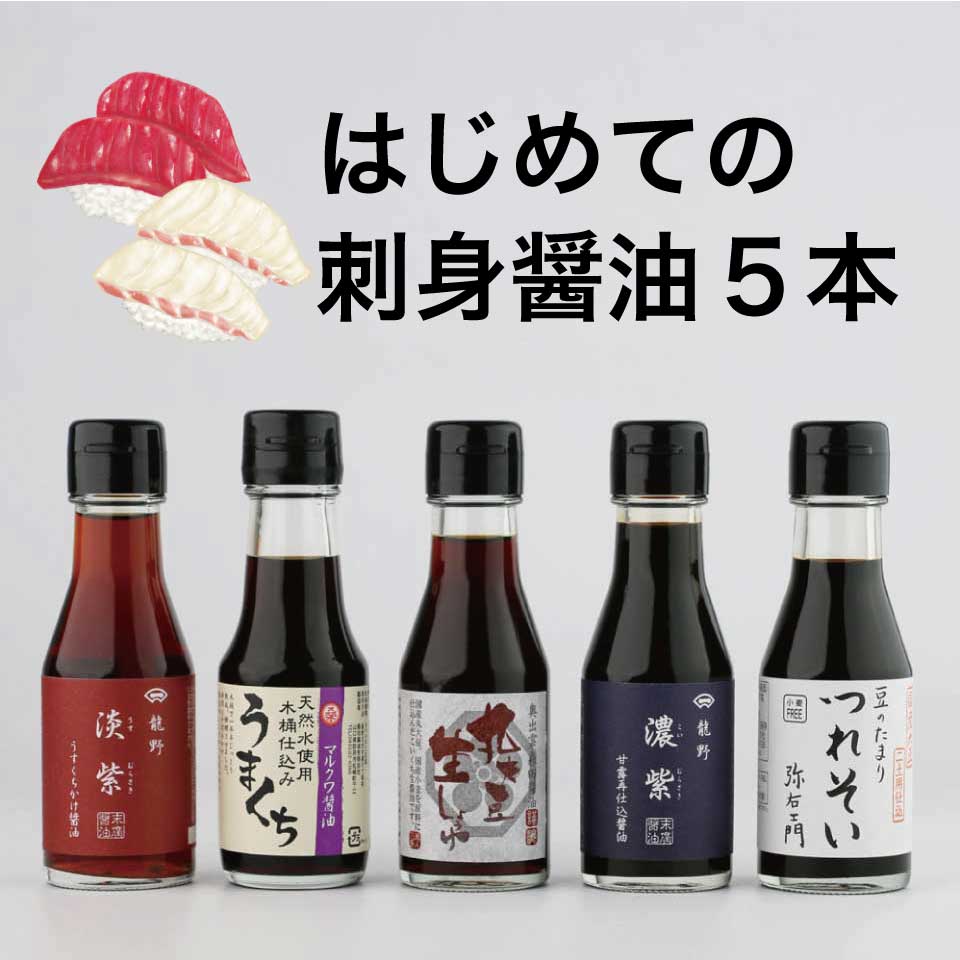
We have selected light soy sauce and sweet soy sauce, soy sauces that go well with white meat, re-brewed soy sauce and tamari soy sauce, and dark soy sauce, soy sauces that go well with red meat.

Pale purple/Suehiro Soy Sauce (Hyogo Prefecture)
The representative soy sauce that pairs well with white fish is the light soy sauce "Awamurasaki."
Usukuchi soy sauce, as its name suggests, is characterized by its light color, but in fact it is slightly higher in salt than dark soy sauce. This is why the word "light" is deliberately omitted. The ingredients are the same as dark soy sauce, using soybeans and wheat in a 1:1 ratio. While it has a well-balanced soy sauce flavor, its color and flavor are light due to the short aging period. It is perfect for when you want to show off the color of the ingredients beautifully or for dishes that require a light salty taste. For example, it is recommended for dishes such as simmered dishes and udon soup, where you want to bring out the flavor of the ingredients and the umami of the dashi stock.
Among all the light soy sauces, "Awanmurasaki" is something special. It is made by adding rice koji directly to naturally brewed light soy sauce. The gentle sweetness of this rice koji makes it less salty than regular dark soy sauce, resulting in a very mellow flavor. Furthermore, a distinctive feature of Suehiro Soy Sauce, the brewery that produces "Awanmurasaki," is its very mild aroma. It doesn't taste too much like soy sauce, and its gentle aroma gently brings out the flavor of the ingredients.
That's why it's perfect with white fish sashimi. Try pairing "Awa Murasaki" with delicately flavored seafood such as sea bream, flounder, sweet shrimp, and scallops. With dark soy sauce, the soy sauce flavor tends to be too strong, but "Awa Murasaki" has a gentle aroma and mellow flavor that subtly brings out the sweetness and umami of the fish. I was particularly shocked by sweet shrimp. "Sweet shrimp are really sweet...!" I don't think I'd ever be able to eat white fish sashimi again without "Awa Murasaki."

Marukwa Soy Sauce Umakuchi / Kuwata Soy Sauce (Yamaguchi Prefecture)
The second soy sauce that pairs well with white fish is sweet soy sauce.
Although it's sweet, it's quite subdued. Its subtle sweetness makes it unnatural even for people from the Kanto region. While many sweet soy sauces in Kyushu are made in joint factories, with each company then pasteurizing and seasoning the soy sauce, Kuwata Soy Sauce in Yamaguchi Prefecture, the maker of this soy sauce, is different. They make the koji themselves, carefully fermenting the soy sauce in traditional wooden barrels. Another distinctive feature of this soy sauce is its "mixed brewing" method. While some sweet soy sauces are made with the addition of amino acid liquid to the finished soy sauce to adjust the sweetness and umami, Marukuwa Soy Sauce Umakuchi is different. It uses a "mixed brewing" method, where amino acid liquid is added at the moromi stage and the soy sauce is aged together. This mellows out the unpleasant aroma of amino acid liquid during fermentation, eliminating the strong, off-putting aroma often associated with sweet soy sauce.
It has been carefully aged in wooden barrels, and has a soft soy sauce-like aroma. The taste is not too strong, but has a refreshing umami flavor with a hint of sweetness. Its mellow texture gently brings out the flavor of white sashimi. Like "Awamurasaki," this soy sauce has a refreshing taste, but this one has a slight sweetness that envelops the sashimi with a mellow sweetness.

Deep purple/Suehiro Soy Sauce (Hyogo Prefecture)
The first soy sauce that pairs well with lean meat is re-brewed soy sauce.
This soy sauce is made by Suehiro Soy Sauce, the same company that makes "Awa-Murasaki," which is paired with white fish. You might be surprised at how different varieties of soy sauce from the same brewery can be in terms of their appearance, flavor intensity, and aroma. While regular dark soy sauce is brewed by adding salt water to koji, re-brewed soy sauce is brewed by adding dark soy sauce instead of salt water. In other words, it's brewed again using soy sauce that has already been made. This results in a soy sauce with a low salt content, yet a much richer, more umami-rich flavor. Furthermore, "Koi-Murasaki" is brewed by adding homemade rice koji directly. The gentle sweetness of this rice koji further reduces the salt content and creates a very mellow flavor. Another appealing feature is the gentle aroma, a hallmark of Suehiro Soy Sauce. While the appearance and flavor intensity may differ, like "Awa-Murasaki," its gentle aroma enhances the flavor of the fish. Best of all, the rich umami flavor that only re-brewed soy sauce can provide effectively neutralizes the fishy smell of the red meat, making the umami flavor of the fish even more pronounced.
Personally, I recommend "Komurasaki" among lean sashimi, especially when you can get hold of seasonal fish. The best part of lean sashimi in season is the fatty texture, which melts in your mouth the moment you put it in your mouth. The great thing about "Komurasaki" is that it doesn't interfere with the flavor, but rather enhances it, making the umami taste many times more pronounced. I recommend pairing it with melt-in-your-mouth lean sashimi. I'm sure you'll be surprised at how much flavor sashimi has.

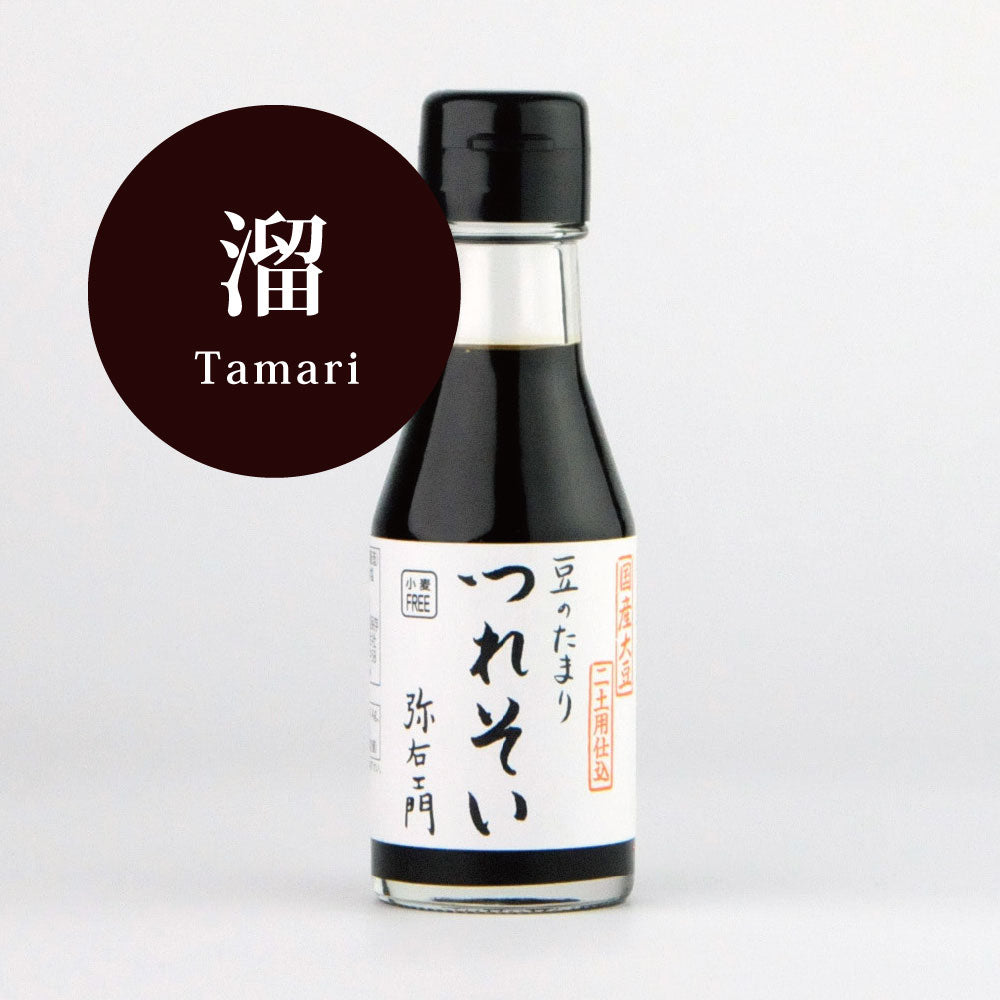
Tsuresoi / Minamizo Shoten (Aichi Prefecture)
The second soy sauce that pairs well with lean meat is tamari soy sauce.
Tamotsu soy sauce has a significantly different ratio of ingredients compared to light, dark, and re-brewed soy sauce. It uses a higher proportion of soybeans and less water. Furthermore, because it is slowly aged over a long period of time, it is dark in color, thick and rich, and boasts one of the best umami flavors among soy sauces. While it's often assumed that "Kyushu's sweet and creamy soy sauce = Tamotsu soy sauce," this is actually something completely different. Tamotsu soy sauce is primarily produced in the Chubu region, and its salt concentration is roughly the same as dark soy sauce. It's by no means a sweet soy sauce. However, some people perceive its rich umami as "sweet." This may be a mellowness that lies deep within the ingredients, rather than the sweetness of sugar.
"Tsuresoi" is a gluten-free soy sauce made with 100% whole soybeans from Aichi Prefecture. It is brewed using a "five-minute brewing" method, which uses only half the amount of water compared to soybeans. This results in a rich, flavor-packed finish. It is also a blend of the concentrated extract (namahiki) that drips from the bottom of the barrel and the pressed moromi. Rather than a thick, jet-black tamari, it has a reddish-brown color with a crisp, fruity aroma. The main difference between this soy sauce and re-brewed soy sauce is the blend of ingredients and the salt concentration. Because "Tsuresoi" is brewed with 100% soybeans, it has a very strong soy umami flavor and just the right amount of salt.
I recommend lean sashimi, which you can usually find at the supermarket. The moment you bite into it, the umami of the soy sauce spreads before the fish, completely eliminating the fishy smell of the lean meat. The rich aftertaste of the soy sauce lingers. However, Tsuresoi is not too strong. It is richer than re-brewed soy sauce, but not too thick, and has just the right strength to bring out the deliciousness of lean sashimi.

Whole Soybean Raw Soy Sauce / Morita Soy Sauce (Shimane Prefecture)
Lastly, we have a dark soy sauce that you can rely on when you're not sure what to use.
Koikuchi soy sauce is commonly known as standard soy sauce. Made with a 1:1 ratio of soybeans to wheat, it offers an exquisite balance of umami, sweetness, and aroma. It's a versatile type that can be used with anything. But there's one important thing to note here. Some people might think, "Aren't all koikuchi soy sauces the same?" However, there are roughly 40 types of koikuchi soy sauce made by artisans alone. Take, for example, koikuchi soy sauce brewed in wooden barrels. The types of microorganisms that live in those barrels vary greatly from brewery to brewery. These differences are clearly evident in the aroma and flavor. Some soy sauces are so unique that you can tell the difference just by opening the bottle. Furthermore, koikuchi soy sauce is aged for at least one year. Some can be aged for as long as three years, and the flavor changes significantly depending on the aging period.
Among them, when it comes to dark soy sauces recommended for sashimi, we would recommend without hesitation "Marudai Soybean Raw Soy Sauce." This Morita Soy Sauce is a popular choice among repeat customers and newcomers alike. The only ingredients are domestically produced soybeans, wheat, and sun-dried salt. As President Morita says, "I only use ingredients that I can see with my own eyes and be convinced of," he carefully prepares only ingredients that he can trust. Furthermore, this raw soy sauce is not pasteurized, but the yeast is removed through precise filtration, so it can be stored at room temperature before opening. It has a clear color, a refreshing taste, and a mild, unobtrusive aroma.
It gently envelops any type of fish, so if you're wondering, "Which soy sauce goes well with this fish?", be sure to try it. It's also perfect when a variety of fish are lined up at once, like in a seafood bowl. What's more, it pairs well with all kinds of fish, so just a drizzle of it on grilled fish will really bring out the fragrant flavor of the fish.
Text: Mori (Shokunin Soy Sauce)
| 地域 | 都道府県 | 送料 |
|---|---|---|
| 北海道 | 北海道 | 1,200円 |
| 東北 | 青森・岩手・秋田・宮城・山形・福島 | 900円 |
| 関東・中部 | 茨城・栃木・群馬・埼玉・千葉・東京・神奈川・新潟・富山・石川・福井・山梨・長野・岐阜・静岡・愛知・三重 | 800円 |
| 近畿・中国 | 滋賀・京都・大阪・兵庫・奈良・和歌山・鳥取・島根・岡山・広島・山口 | 900円 |
| 四国・九州 | 徳島・香川・愛媛・高知・福岡・佐賀・長崎・熊本・大分・宮崎・鹿児島 | 1,100円 |
| 沖縄 | 沖縄県 | 1,500円 ※6,000円以上で500円 |
ご注文を受けてから3営業日以内の発送を原則としています。海外への発送も承っています。
このセットは、本数に合ったギフトボックスに入れてお届けできます。熨斗は蝶結び・結切り・熨斗なしからお選びいただけます。
ご注文の際は、セットと一緒にギフトボックスをカートに入れてください。
ギフトの一覧を見る目的別・人気セット


醤油の世界を、もっと深く。
11,000人以上が読んでいます
蔵元訪問レポート、季節の使い分け、醤油をもっと深堀した内容を、代表の高橋万太郎が毎週金曜日にお届けします。
毎週金曜日に配信。いつでも解除できます。