
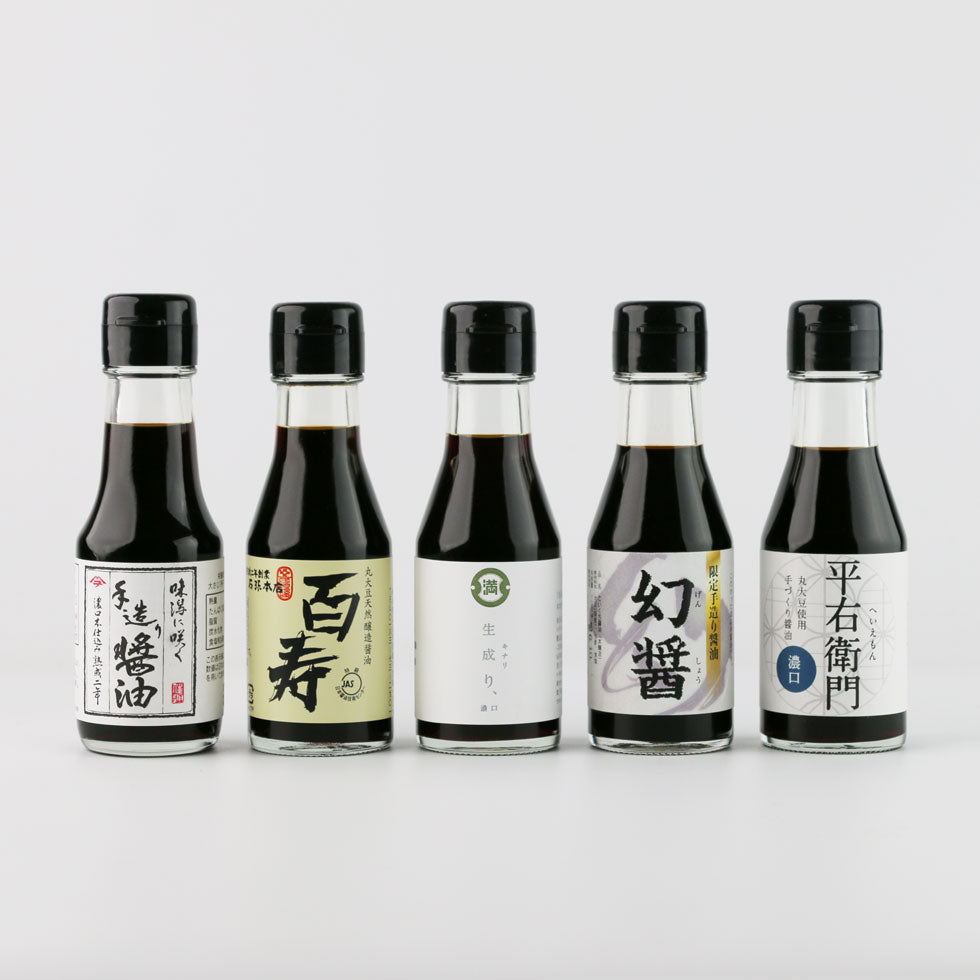


5 bottles still being made the same way as before
5 bottles still being made the same way as before
Shokunin Shoyu No.


Genuine handmade soy sauce
Founded in the early Meiji period, Suzuki Soy Sauce Shop brews soy sauce and miso by hand. Making koji is said to be the most important step in soy sauce production, and at Suzuki Soy Sauce Shop, they use koji lids. This is a rare method even nationwide. Many koji lids are stacked inside the stone room.
Suzuki Soy Sauce Shop also has a unique method for steaming soybeans. They use a unique method of slowly steaming soybeans without pressure in a homemade steamer made from a modified wooden barrel. By painstakingly steaming the soybeans for 3 to 5 hours, they are able to bring out the soybeans' natural sweetness and aroma. This is a genuine, handmade, naturally brewed soy sauce that values traditional tools and manual labor.
Making koji using a koji tray and stirring with a paddle. This naturally brewed soy sauce, made by a young couple in Tenei Village, Fukushima Prefecture, has a fragrant and gentle flavor. We recommend trying it first by pouring it directly over rice.


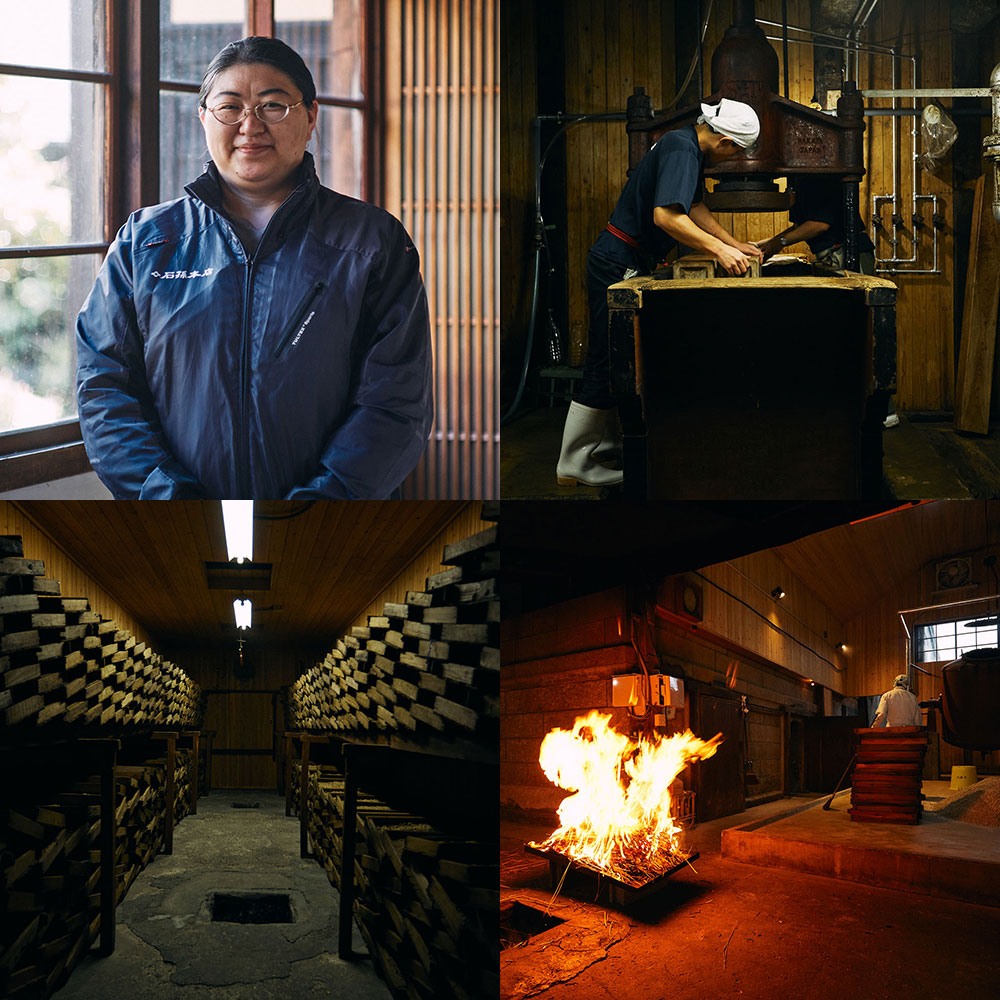
There are no machines at Ishimagoto Main Branch.
Ishimago Honten, a long-established brewery in Akita, has continued to preserve traditional methods to the amazement of its competitors, and continues to make soy sauce using only human eyes and hands. In winter, the koji making process is all done by hand, using hundreds of koji trays.
The mountains of koji lids are still in use, and visitors are amazed at the museum-like sight. The roaster that roasts the wheat needed to make koji is a brick-built machine that has been in use since the Taisho era, and the heat source is coal! The storehouse and tools have also become old and malfunctioning, but they are repaired and continue to be used with care.
Ishimagoto's "Hyakuju" is a versatile, traditional, dark soy sauce with a rich umami flavor and a refreshing taste, made with ingredients from Akita Prefecture and brewed in a huge wooden barrel with a capacity of 30 koku (approximately 5,000 liters). The soothing aroma is the same as that found inside Ishimagoto's main storehouse, and the rich umami flavor is refreshing, making it the ultimate traditional soy sauce! It's also recommended for those new to artisan soy sauce. Serve hot potatoes with butter and this soy sauce.


A taste that shows the maker's love for soy sauce
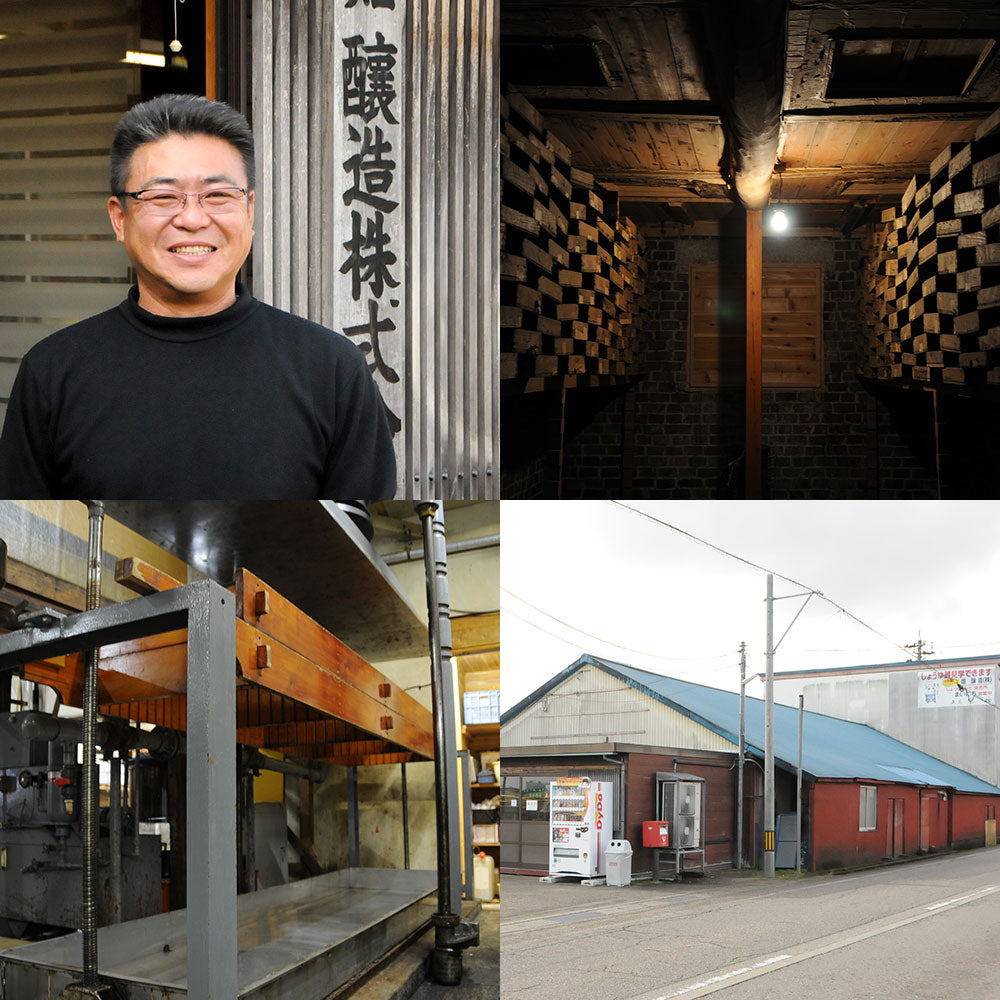
If you were asked who the soy sauce maker is who loves making soy sauce the most, you would have to mention the Okamoto family. Yoshihiro Okamoto, his wife, Yasushi, and Tetsuya are so passionate about soy sauce that they can't stop talking about it. This family is truly warm and you can feel their love for making soy sauce.
When the president, Yoshihiro, had just taken over the brewery, he was delivering soy sauce when he smelled the aroma of cooking and knew it was the aroma of our soy sauce. In this household it was simmered dishes, and in that household it was boiled fish.
"There are as many different flavors as there are households. That's why it's good to have soy sauce that anyone can enjoy," says Okamoto, a flavor that supports home cooking on the island. Okamoto's soy sauce subtly enhances the flavor of food, and it feels like he is overflowing with love for soy sauce.


A legendary soy sauce made using traditional koji brewing methods
In order to preserve the traditional method of soy sauce making, they use all domestic ingredients, including soybeans from Toyama Prefecture, domestic wheat, and salt from Okinawa, and brew in a koji lid. There are only a handful of breweries that still use koji lids. It is aged for three years to produce a rich, koikuchi flavor.
The farm brewery in Oyabe City, Toyama Prefecture, is located in a heavy snow area where the outside temperature drops below freezing in winter. The brick room, built in the early Showa period to accommodate the temperature changes of this extremely cold region, maintains the traditional koji brewing method using a koji lid, one of very few remaining in the country. The bricks allow the brewer to breathe, which apparently reduces the impact on the koji even in the chilly mornings or when the outside temperature drops below freezing.
The method of squeezing is unique, in that the juice is squeezed out naturally over a week under the weight of the moromi, and then just a little pressure is applied at the end. When used in cooking, it brings out the umami of the ingredients, and the resulting dish has a strong soy sauce flavor. The rich yet refreshing taste, born from the skilled handiwork, has earned it the nickname "phantom soy sauce."


A young brewer revives in-house brewing
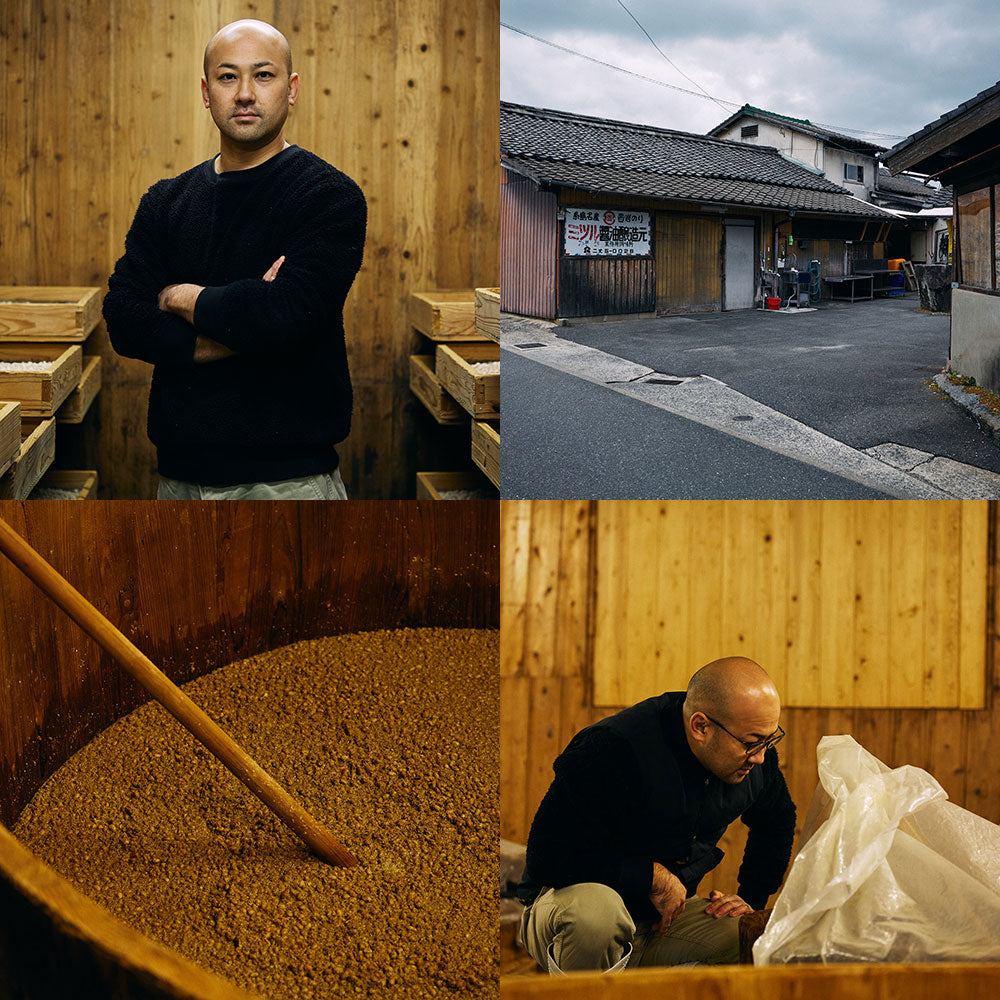
Mitsuru Soy Sauce stopped brewing in-house 40 years ago. Determined to "revive in-house brewing someday," Shiro went on to study at Tokyo University of Agriculture, and during every long vacation he would visit soy sauce breweries around the country to help with soy sauce production. In February 2013, the first pressing of soy sauce from the in-house brewery took place. He went through a process of trial and error to find the best method to suit the soil of his hometown, Itoshima. The brewery where he previously trained is also cooperative. In fact, he is a soy sauce maker that is supported by soy sauce makers all over the country, as if they were cheering on their own son's efforts.
This "Nama-ri" sake is made using 100% soybeans and wheat from the local Itoshima region, with the origins of all ingredients clearly stated on the label. While adhering to the traditional wooden barrel brewing method, brewer Yoshinori Shiro continues to improve and evolve the sake with each successive batch. The unique flavors of each year are exquisitely blended to create a simple yet profound taste that only Shiro could create.
Choose options

目的別・人気セット


NEWSLETTER│職人醤油通信
醤油の世界を、もっと深く。
蔵元訪問レポート・季節の使い方・新商品情報など、職人醤油 代表の高橋万太郎がお届けします。
- 蔵元訪問レポート・産地の話
- 季節の料理と醤油の使い分け
- 新着商品・限定セットのご案内
- 読者限定の先行情報
スパムメールは送りません。登録解除はいつでも可能です。