
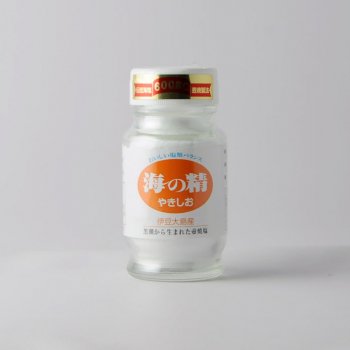
Sea Spirit Roasted Salt 60g
Traditional roasted salt that is smooth and easy to use
Shokunin Shoyu No. 3071
"Umi no Sei" sea salt from Izu Oshima, a tradition carried on by generations of people
"Umi no Sei" is a domestic sea salt from Izu Oshima that revives the traditional Japanese salt-making method that had once been lost. It is made using only clean seawater, the sun, the wind, and a traditional open-air pot, so it contains no chemical additives. However, it is not just salty, but also has a natural sweetness and mellowness that comes from being rich in sea minerals. It is made with the aim of creating a "truly delicious salt" that will make your everyday cooking just that little bit more special. It brings out the flavor of the ingredients, so the simpler the dish, the more noticeable the difference.
"Arashio" baked at 600℃
"Yakishio" is a rather unique salt made by baking "Arashio" (sea salt) made from 100% seawater from Izu Oshima at a high temperature of over 600°C. It is an elaborate process in which sea salt made in the sun and in a flat pot is baked again. By baking, all the moisture is removed, leaving a pure white, smooth powder. It is resistant to humidity and remains smooth even during the rainy season. The taste retains the mellowness of Arashio, but is easier to use.
This traditional method has been used for making miso and pickles since ancient times, and is essential for making preserved foods. I believe this salt is packed with the wisdom of our ancestors, designed to be easy to handle even in today's humid living environments.
A mellow, deep salty flavor that remains unchanged even when baked at high temperatures
The taste of Yakishio is basically almost the same as Arashio. It retains the minerals from the sea, and is not just salty, but has a mellow and gentle saltiness. The taste doesn't change just because it's baked at a high temperature. In fact, the moisture is completely removed by baking, and the flavor becomes more concentrated. It's powdery and smooth, so it feels smooth on the tongue and melts in your mouth.
Personally, I like how it has a deep salty flavor that is clearly different from regular refined salt, and how it brings out the flavor of ingredients when used in cooking. It also holds up well to humidity, so it's great to be able to use it without stress even during the rainy season.
Q. What is the difference between "Arashio Dry" and "Yakishio"?
Both Arashio Dry and Yakishio are made from the same "Arashio", but the way they are processed afterwards is very different.
Arashio Dry is slowly dried at low temperatures and has the same taste as Arashio. However, because it is smooth, it doesn't harden even when placed in a tabletop salt shaker, making it easy to sprinkle on dishes.
On the other hand, Yakishio is baked at high temperatures of over 600°C, turning it into a pure white powder. This salt is also resistant to moisture, but its finer particles make it melt in your mouth more easily.
In terms of how to use them, we recommend dry arashio for everyday use and seasoning at the dinner table, and roasted salt for making miso paste, pickles, and other preserved foods. Both salts are moisture-resistant and easy to use, and are packed with the wisdom of our ancestors to adapt to modern living environments.
\Recommended usage/

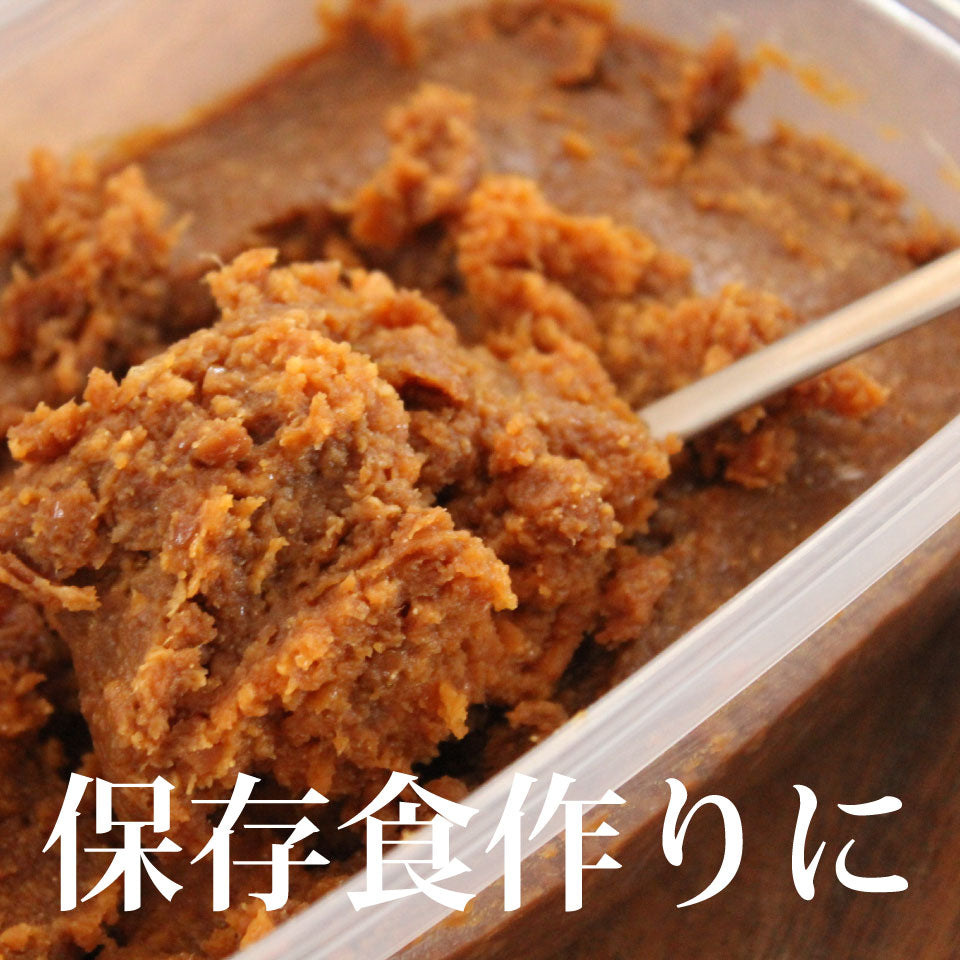
1. As salt for making miso and miso pickles
Yakishio has long been an essential ingredient in miso making. Its powder form makes it easy to mix evenly and is resistant to humidity, stabilizing the fermentation environment. It blends well with soybeans, reducing the risk of mold. It's also ideal for miso pickling, thoroughly removing moisture from vegetables and fish while allowing the mellow salty flavor to penetrate the ingredients. While regular salt has large grains and tends to be unevenly distributed, yakishio's fine grains allow it to be distributed evenly throughout the ingredients. This is the perfect ingredient for making preserved foods.

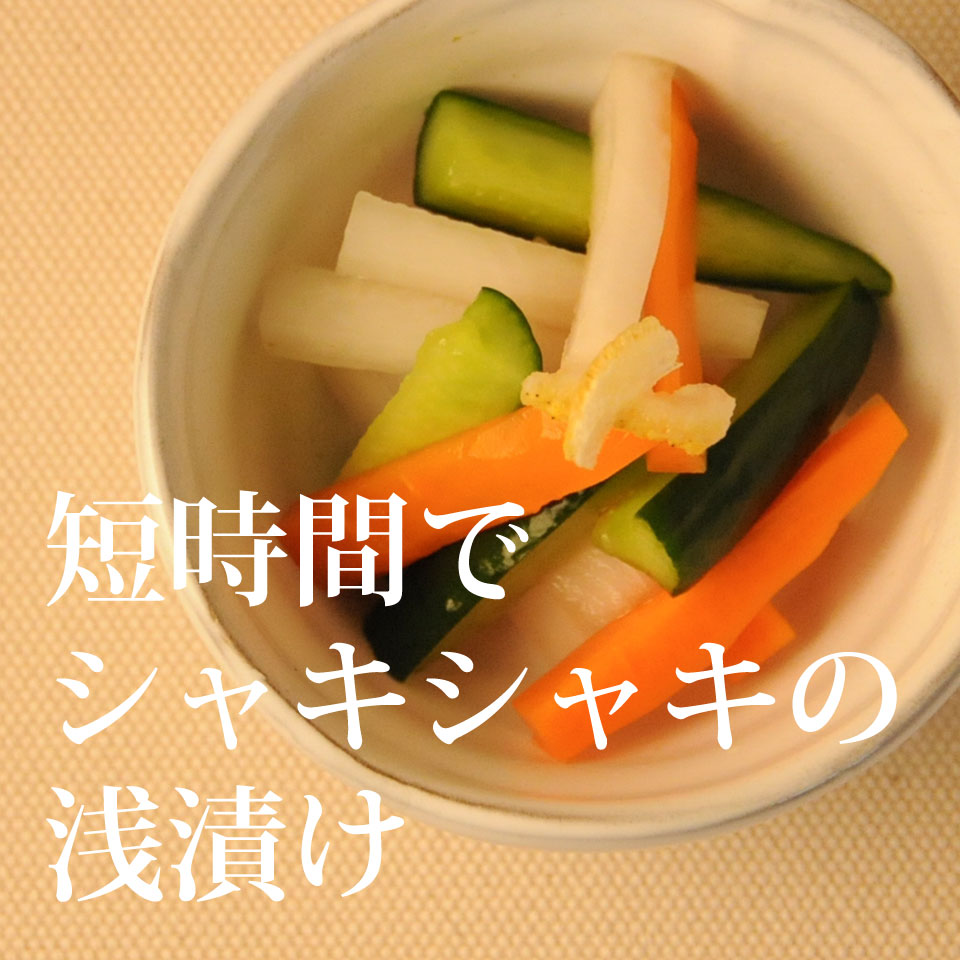
2. Preparation for pickles and lightly pickled vegetables
The power of roasted salt really comes into play when making lightly pickled cucumbers and cabbage. Because it's in powder form, it adheres evenly to the surface of the vegetables and quickly removes moisture. While regular salt takes a long time to dissolve, roasted salt blends in quickly, resulting in crisp, lightly pickled vegetables in no time. It's also great for making authentic pickles like Chinese cabbage and radish. When used to make umeboshi (pickled plums), it blends well with the plums, resulting in a delicious finish.

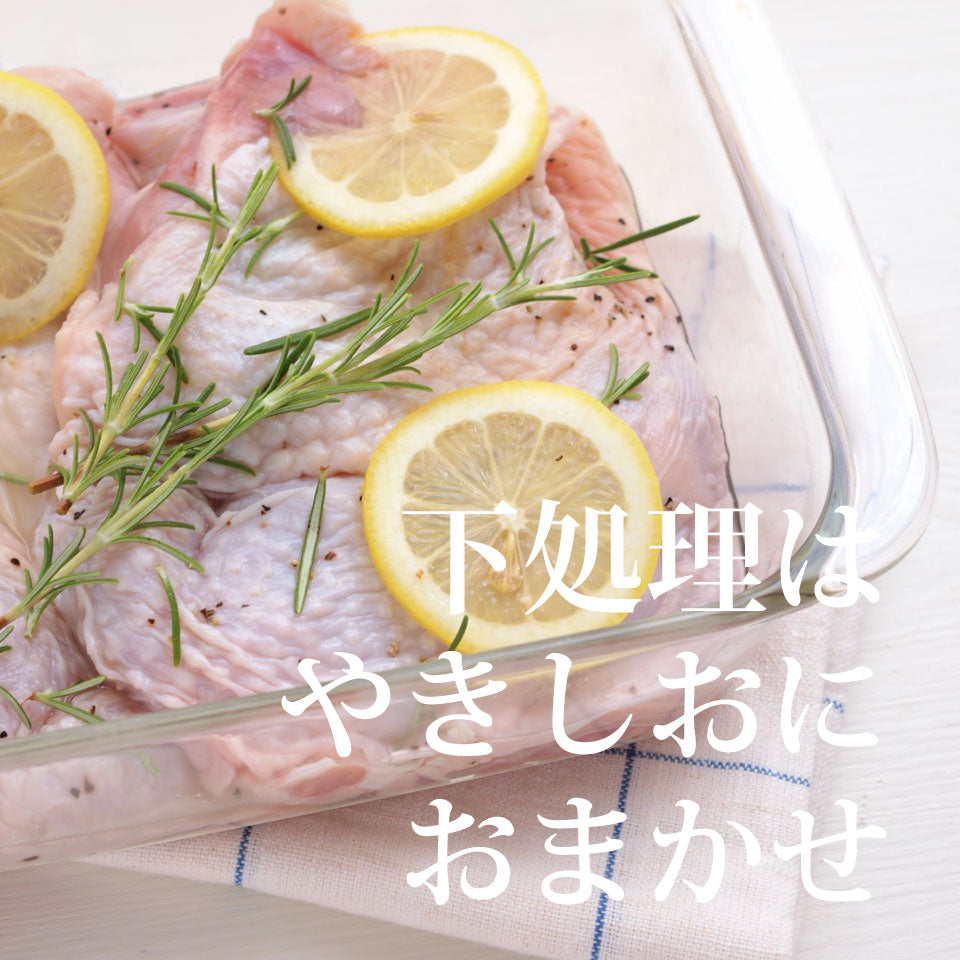
3. Marinating and salting meat and fish
Yakishio is extremely useful for preparing meat and fish. Its fine particles adhere evenly to the surface of the ingredients, removing odors and seasoning at the same time. When salting chicken in particular, it thoroughly removes excess moisture and odors, making a huge difference when grilled! Even when grilling salted fish, simply sprinkling it with yakishio and leaving it for a while makes the meat firmer and tastier.

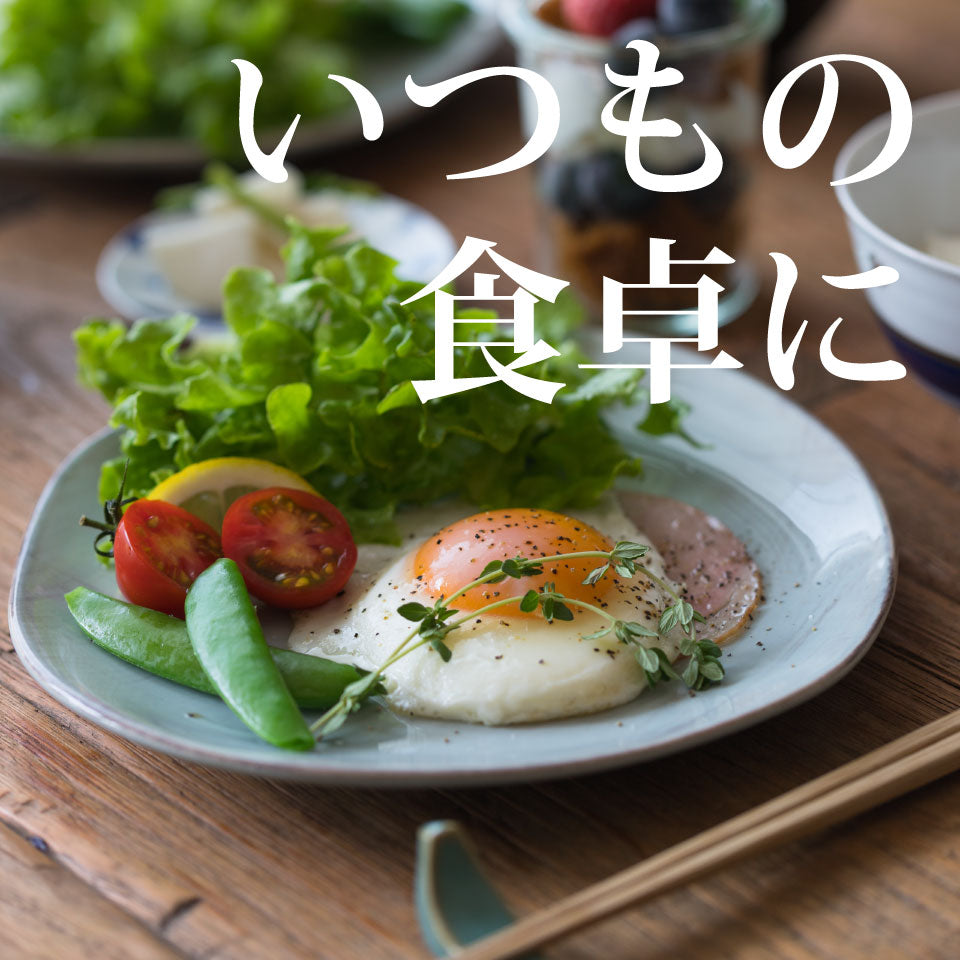
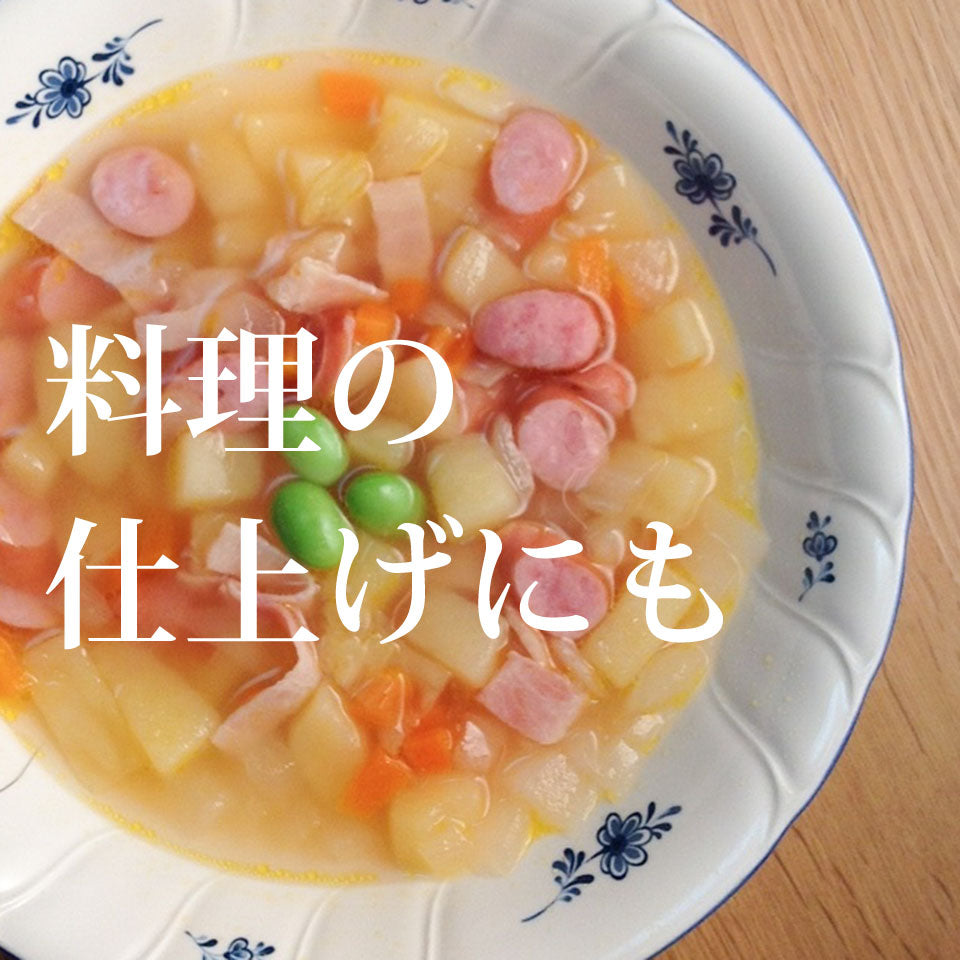
4. Finishing seasoning for soups and simmered dishes
Yakishio is also very useful as a final seasoning for cooking. Because it is in powder form, it dissolves easily and does not leave a rough texture when added to soups or simmered dishes. It is particularly useful in clear soups and clarified dishes, as it adds a refined salty flavor while maintaining transparency. Even in Western-style soups, if you find that consommé alone is not enough, adding a pinch of it will add depth to the flavor and make it much more delicious. I also use it to finish simmered dishes, as its mellow salty flavor, which soy sauce and sugar alone cannot achieve, brings out the sweetness of the ingredients.
Choose options
目的別・人気セット


NEWSLETTER│職人醤油通信
醤油の世界を、もっと深く。
蔵元訪問レポート・季節の使い方・新商品情報など、職人醤油 代表の高橋万太郎がお届けします。
- 蔵元訪問レポート・産地の話
- 季節の料理と醤油の使い分け
- 新着商品・限定セットのご案内
- 読者限定の先行情報
スパムメールは送りません。登録解除はいつでも可能です。