
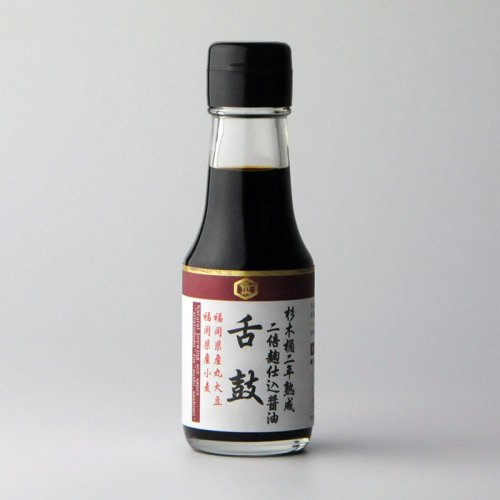
115. Lipstick 100ml
Re-brewed soy sauce made from soybeans and wheat from Fukuoka Prefecture
Shokunin Shoyu No. 115

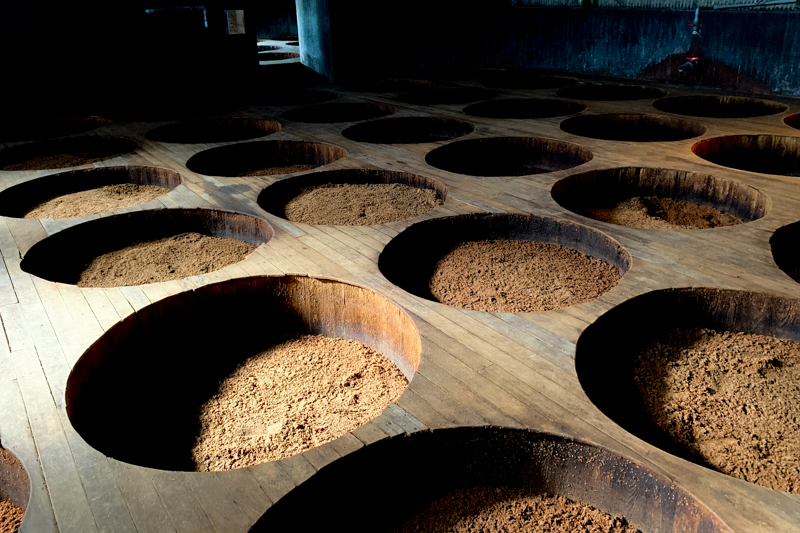
A soy sauce brewery in Fukuoka Prefecture with 200 wooden barrels
The brewery is located just a three-minute drive from the head office in Kurume City, Fukuoka Prefecture, a little way down the bank of the Chikugo River. The natural cedar wooden barrels that have been used since the company was founded in 1874 are deeply infused with yeast and lactic acid bacteria, giving the mash a unique, deep flavor.
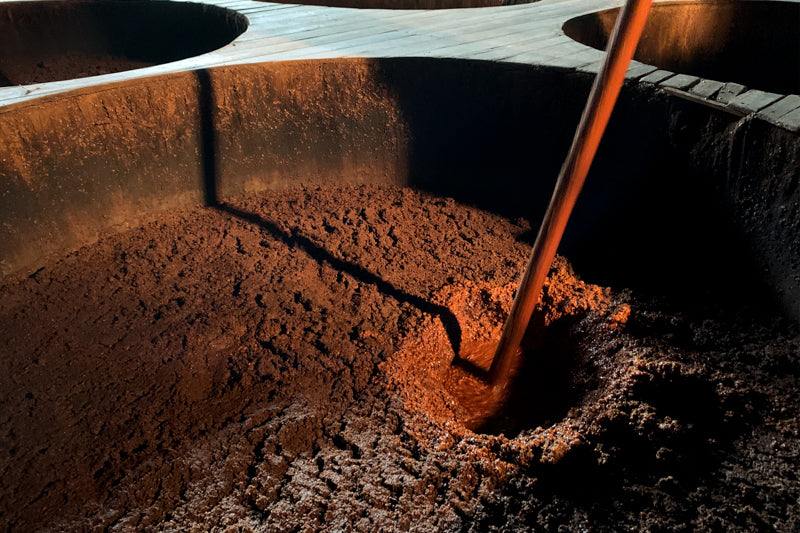
The first thing I noticed when I stepped into the brewery was the complete absence of any unpleasant smell. This is proof that there is no unwanted bacteria growing. Also, each wooden barrel shows that they are carefully cared for every day.
While many breweries use air to mix the moromi mash, Kurumekikko carefully mixes all 200 wooden barrels by hand with a paddle. They carefully assess the condition of the moromi mash and use a mixing method that is tailored to each individual barrel, ensuring that fresh air reaches the inside of the barrel.

Soy sauce production open all year round
Many soy sauce breweries only brew during the cold seasons and may stop brewing in the summer, but at Kurumekikko, brewing continues all year round. A regular rhythm is repeated every day, every week, and every month. Because of this, there are only a few empty wooden barrels at any one time, and new brewing begins within a week.
When I asked, "Isn't there a difference in the way the fermentation process takes place in summer and winter?", he replied, "It's true that the color changes depending on where it's exposed to sunlight, but the taste is relatively consistent. It's strange, isn't it?"
Because the soy sauce is pressed at a constant pace, new moromi mash is immediately added to any empty wooden barrels. I believe that keeping the number of empty wooden barrels to a minimum is the reason why there are no unpleasant odors in the brewery. And the entire brewery must be home to a solid population of high-quality microorganisms that are suitable for making soy sauce.

The secret of pressing and pasteurization
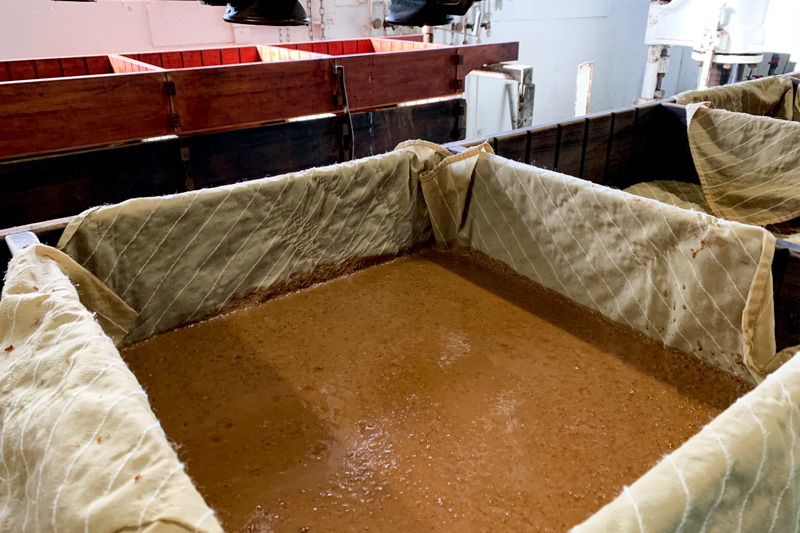
The matured moromi is spread with a spatula to a uniform thickness of about 1 to 1.5 cm and wrapped in a "filter furoshiki" (compressing cloth). By repeating this process of layering more moromi wrapped in "compressing cloth" on top of that, the raw soy sauce seeps out of the "filter furoshiki" under its own weight and is pressed out. Two units, each with 50 sheets stacked in four rows, can squeeze out the moromi equivalent of one wooden barrel.
The pasteurization process is also unique: to maximize the flavor and aroma of the soy sauce, it is done in two stages: at 60°C for one hour and then at 85°C for another hour. This two-stage pasteurization results in a mellow, fragrant soy sauce.

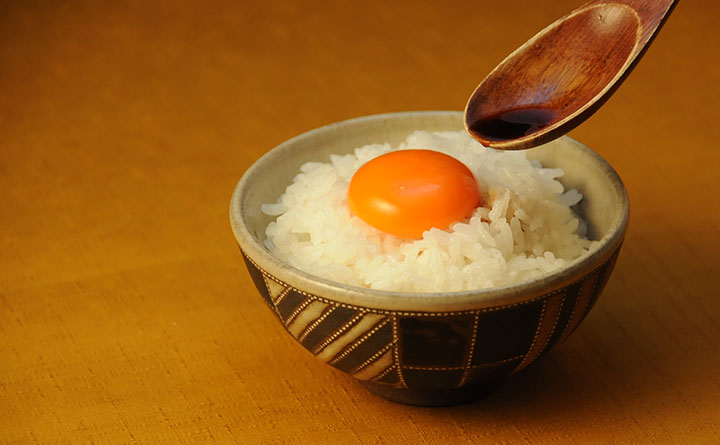
A special drop on rice with raw egg
Personally, I'm not a big fan of the combination of re-brewed soy sauce and raw egg on rice, but it's an exceptional combination. It has a slightly thick texture and a mellow richness, as well as a sharp finish, and is an exquisite richness that brings out the flavor of the egg.
The classic way to use re-brewed soy sauce is to pour it over strong-flavored ingredients such as lean sashimi and firm tofu. With its strong flavor and deep umami, Shitatomi soy sauce brings out the natural flavor of these ingredients.

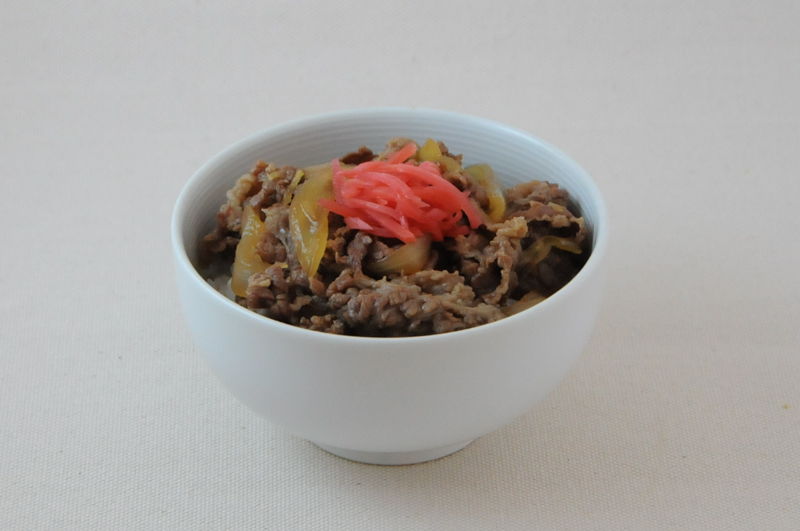
The perfect balance of beef and re-seasoned meat
There are many dishes that use beef, such as gyudon (beef bowl), sukiyaki, and beef wrapped in vegetables, and Saishikomi soy sauce is perfect for these occasions. Compared to regular dark soy sauce, it has a stronger flavor, but it blends perfectly with the umami of the beef, creating a deep flavor that makes you want to eat more rice.
While the flavor of the soy sauce is prominent, the dish also has a mellow richness and a sharp finish, creating an exquisite balance that goes beyond simply being a strong flavor.
Choose options

目的別・人気セット


NEWSLETTER│職人醤油通信
醤油の世界を、もっと深く。
蔵元訪問レポート・季節の使い方・新商品情報など、職人醤油 代表の高橋万太郎がお届けします。
- 蔵元訪問レポート・産地の話
- 季節の料理と醤油の使い分け
- 新着商品・限定セットのご案内
- 読者限定の先行情報
スパムメールは送りません。登録解除はいつでも可能です。