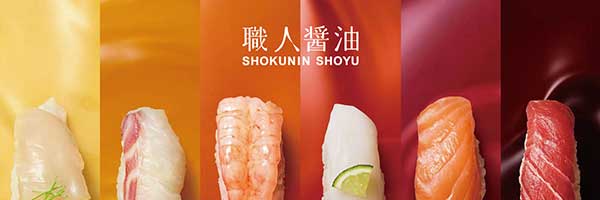



Try eating sashimi with soy sauce brewed in a wooden barrel
のし(無料)

What is a wooden barrel?
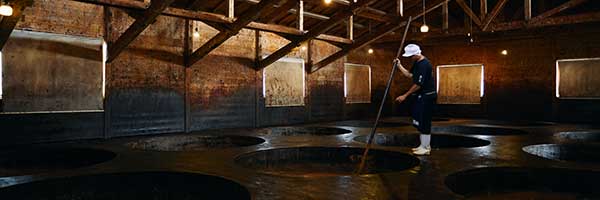
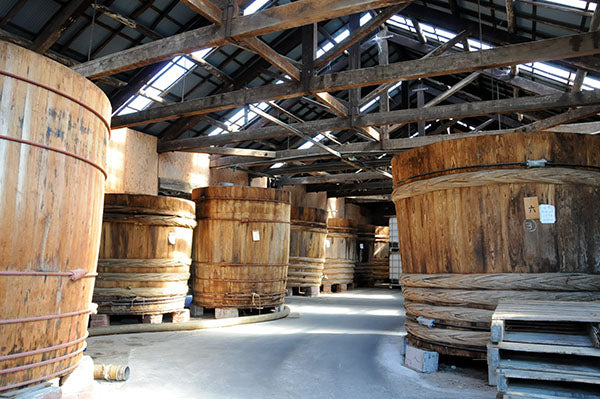
Until the Edo period, basic seasonings such as soy sauce, miso, vinegar, mirin, and sake, which form the base of Japanese cuisine, were made in wooden barrels. However, as time passed and Japan went through a period of rapid economic growth, wooden barrel brewing steadily declined due to concerns about production costs and efficiency. For example, in the soy sauce industry, by around 2010, soy sauce brewed in wooden barrels had fallen to just 1% of the total domestic distribution. Today, most soy sauce is brewed in concrete or stainless steel tanks, and there is only one barrel maker left in Japan that can manufacture wooden barrels. The wooden barrel culture is on the brink of being "extinct."
In recent years, however, attention has been drawn to wooden barrels once again. Old wooden barrels are being revived and new ones are being introduced, and production volume using wooden barrels is beginning to increase, especially among young brewers. Rather than simply a revival of tradition, wooden barrel culture is experiencing a new surge, symbolizing diversity and creativity.
Why wooden barrel brewing is so delicious
● Unique character like craft beer
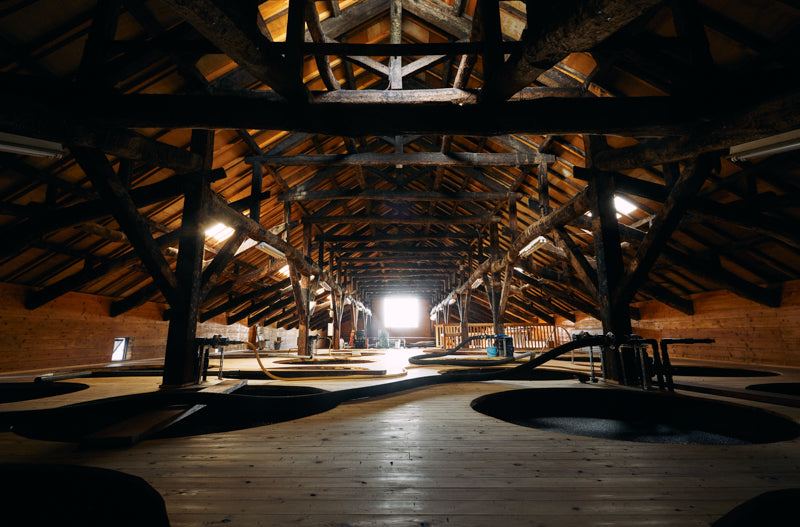
The wooden barrels used to make soy sauce are large containers, measuring 2-3m in height and 2-4m in diameter. They are durable enough to be used for over 100 years. Microorganisms live in the fine structure of the wood's surface, creating a unique ecosystem. This is the greatest feature of wooden barrel brewing, and it creates a flavor and taste that can only be produced by each brewery, depending on its more than 100-year history and the climate and environment of the area.
● A naturally created fermentation environment
The wooden barrels are made entirely from natural materials, without the use of iron nails or adhesives. The fermentation environment is not controlled by artificial temperature control, but rather by "natural fermentation" that varies with the seasons. Preparation takes place during the cold season, and fermentation begins in the summer. The wooden barrels change shape according to their environment, just like living creatures, absorbing moisture when it is humid and storing heat in the cold, creating the perfect environment for soy sauce.
● A deep flavor created over time
The lifespan of a wooden barrel is approximately 100 to 150 years. Barrels made from the Meiji period to the early Showa period are still in use today, passed down through generations. Wooden barrels are often made from cedar, which takes decades to cultivate. Furthermore, to cultivate high-quality timber like Yoshino cedar in Nara Prefecture, it is necessary to start from the cultivation of the mountains. When you think about it, the accumulated efforts of our ancestors over hundreds of years are embodied in a single barrel. And the more a wooden barrel is used over such a long period of time, the more flavor it develops, developing a deeper, richer soy sauce.
● The difference in taste created by human hands
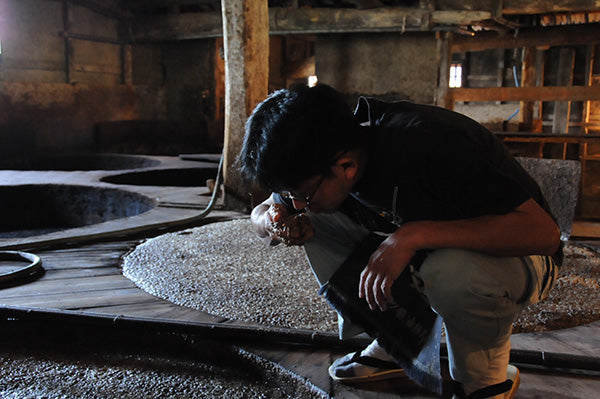
The "moromi" (mixtures) that form the base of soy sauce show different expressions every day, and the finished product also changes depending on the year. "It's always different, so I'm always worried..." "I trust the wooden barrels and leave it to them!" "It takes a lot of work, but it's all the more fun." The brewers have a variety of approaches to their work. The more delicate brewers tend to work more frequently, while the more daring brewers boldly try new production methods. It is said that the taste of soy sauce resembles the personality of the brewers. However, what they all have in common is that they make soy sauce that they themselves find delicious. The wooden barrels are being reconsidered to better bring out each individuality.

Sakae Light Soy Sauce / Sakae Soy Sauce (Shizuoka Prefecture)
This light soy sauce, with its low salt content, gentle umami flavor, and subtle sweetness, is perfect for white fish sashimi. Sakae Light Soy Sauce gently brings out the sweetness and umami of delicate seafood such as sea bream, flounder, sweet shrimp, and scallops.
The first is a light soy sauce from Sakae Soy Sauce Brewery, produced in Yokosuka, a castle town in Kakegawa City, Shizuoka Prefecture. Over 30 large wooden barrels, each with a capacity of 30 koku (approximately 5,400 liters), are still in use. It is aged in these barrels for approximately one year, a relatively long aging period for light soy sauce. Even so, it has a light color, a gentle umami flavor, a subtle sweetness, and a moderate salt content. The method of squeezing is also very particular. In recent years, the mainstream method has been to pour the moromi into a furoshiki wrapping cloth, stack it like a cushion, and apply pressure from above, but Sakae Soy Sauce uses the traditional method of squeezing the moromi in a bag. This method requires time-consuming processing of the lees, but it results in a soy sauce with a clean, clear flavor and less cloudiness.

Ki Soy Sauce/Shibanuma Soy Sauce (Ibaraki Prefecture)
Its vibrant color, lightness, and refreshing flavor make it the perfect accompaniment to a dish of various sashimi, such as a seafood bowl. It also pairs well with wasabi, gently bringing together the flavors of the seafood.
The second bottle is a dark soy sauce from Shibanuma Soy Sauce, located in Tsuchiura, Ibaraki Prefecture. Shibanuma Soy Sauce began as a "government brewery" producing soy sauce for the shogun family. It has been passed down through generations for over 330 years since the Edo period, making it one of Japan's oldest breweries. The brewery's two breweries, the "Oshingura" and "Tatsumigura," still use a total of 67 wooden barrels. In addition to preserving tradition, the brewery places a high priority on food safety, earning the international sanitation and quality control standard FSSC22000 certification. The brewery exports its wooden barrel-brewed soy sauce to approximately 70 countries, including Japan, Switzerland, the Netherlands, and the Middle East. Shibanuma Soy Sauce caters to a wide range of needs, from soy sauce for home and commercial use to small pouches. In fact, some people may have unknowingly used Shibanuma Soy Sauce in the small soy sauce pouches served with sashimi or sushi.
"Ki Shoyu" is a dark soy sauce made with defatted soybeans. Defatted soybeans are whole soybeans with the oil removed. They are flattened like corn flakes, which allows them to absorb moisture easily and break down quickly. This allows umami components such as amino acids to be extracted efficiently, and the soy sauce is aged in a short period of about six months. Because it contains less oil, it has a very clean flavor. Furthermore, "Ki Shoyu" is a raw soy sauce that is not pasteurized, and hygiene management is thorough, with sterilization using ceramic filtration and filling in a clean booth. The result is a soy sauce that is bright in color, light in color, and has a clean umami flavor.

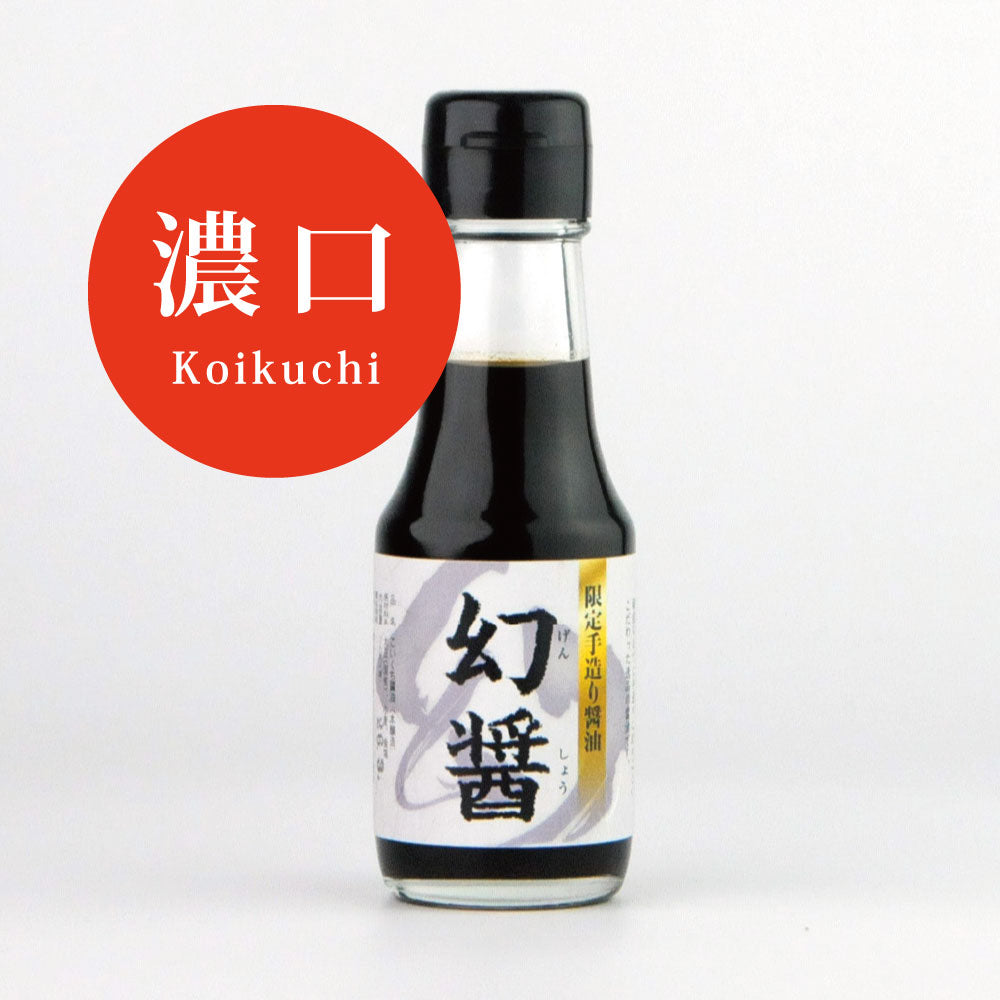
Gensho / Hata Brewery (Toyama Prefecture)
It combines concentrated umami with a refreshing taste, making it a great accompaniment to fatty blue fish sashimi such as horse mackerel, mackerel, and yellowtail. Adding a small amount to blue fish when it has a slightly fishy smell will tighten the flavor and harmonize the aroma with the aged flavor. It also pairs well with condiments, further enhancing the appeal of blue fish.
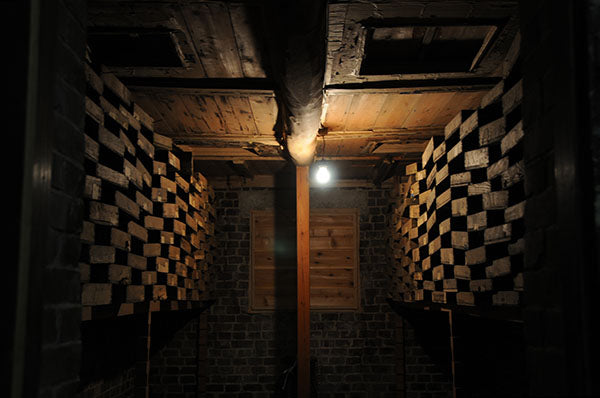
The third bottle is a dark soy sauce from Hata Brewery in Oyabe City, Toyama Prefecture. It is brewed in the harsh cold of the Hokuriku region, a region with heavy snowfall, where outside temperatures drop below freezing in winter. Koji production uses "koji lids," one of only a few left in the country. The koji room is made of brick, dating back to the early Showa period. The bricks allow the koji to breathe, minimizing the impact on the koji even in the chilly mornings or when the outside temperature drops below freezing.
"Gensho" is brewed only during the coldest months of the Hokuriku region, when the water and air are purest, from January to March. The ingredients are sourced exclusively from Toyama Prefecture, including soybeans from Oyabe City, wheat from Takaoka City, and Shima Mars salt from Okinawa. These ingredients are aged for three years in wooden barrels, slowly fermenting and aging in tune with the rhythm of the climate. Frequent stirring with a paddle carefully extracts the sweetness of the soybeans, the fragrant aroma of the wheat, and the umami of the salt. The pressing process is also meticulous. The mash is left to drip naturally under its own weight for over a week, and then pressed with just a little pressure. This is because squeezing the oils contained in the soybeans too hard can result in an oily smell. This meticulous process concentrates the umami flavor while leaving a clean aftertaste.

Tsurusho / Yamaroku Soy Sauce (Kagawa Prefecture)
When the rich red meat that makes you think "This is tuna!" and the deep flavor of "Tsurusho" come together perfectly, you'll find yourself exclaiming, "This is delicious!" It naturally masks the fishy smell and brings out the flavor of both the fish and the soy sauce, creating a unified, powerful yet well-balanced taste.
The fourth bottle is a re-brewed soy sauce from Yamaroku Soy Sauce, located on Shodoshima Island in Kagawa Prefecture. "Tsurusho" is synonymous with wooden barrel-brewed soy sauce, and is so popular that people come from all over the world just to buy it. "I want to preserve the barrel-brewed soy sauce for my grandchildren," says Yamamoto Yasuo, the fifth-generation owner of Yamaroku Soy Sauce. With this in mind, in 2012 he began working with local carpenters to create the wooden barrels in which to brew soy sauce. This marked the beginning of the "Wooden Barrel Craftsman Revival Project," which has since spread nationwide. At Yamaroku Soy Sauce, you can see a rare sight, even in Japan, of wooden barrels that are over 100 years old mixed with new barrels made every year.
"Tsurusho" is a four-year-aged soy sauce made by adding more flavors to a two-year-aged dark soy sauce and then aging it for another two years. It has been brewed to the utmost to achieve a deep richness and mellowness, with even a hint of sweetness. For this reason, it is a must-try for those who don't like the saltiness of soy sauce. Furthermore, the mellow aroma of "Tsurusho" is exceptional, and it has such an impact that it is said that "once you've tried it, you'll never go back to regular soy sauce."
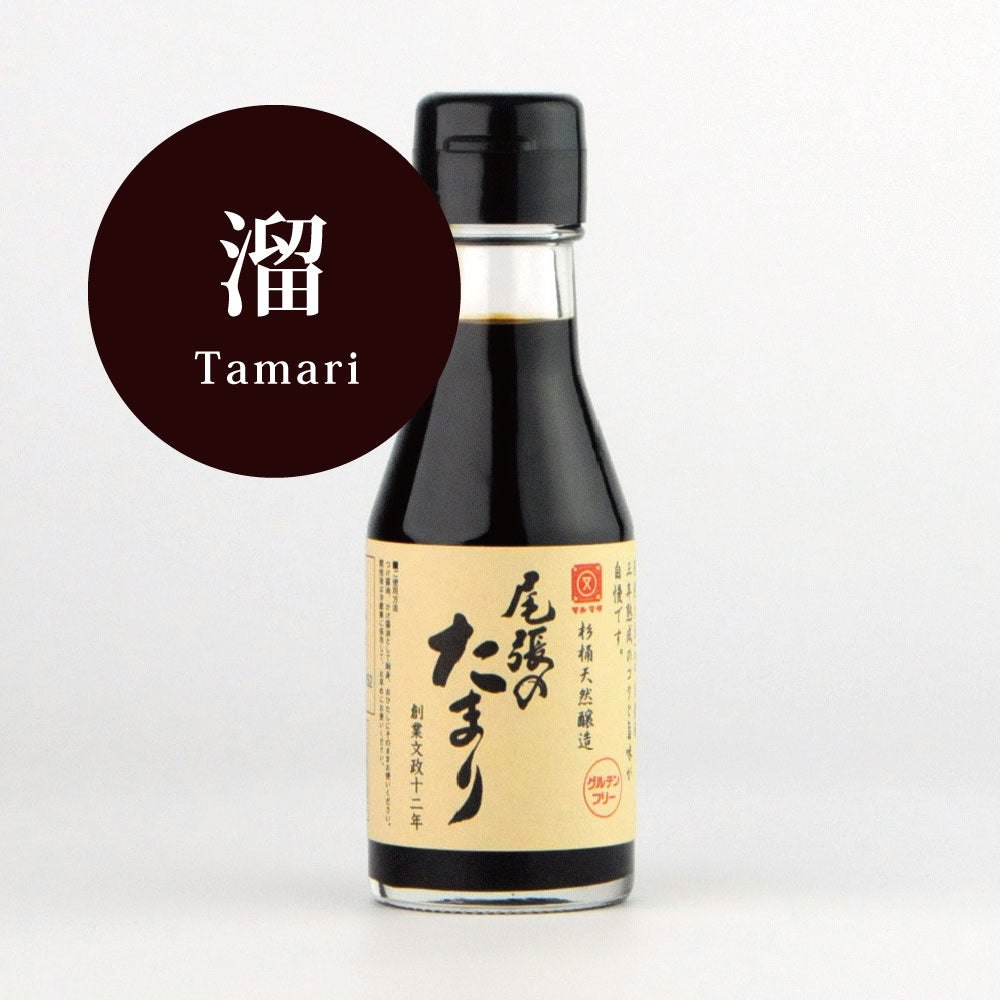
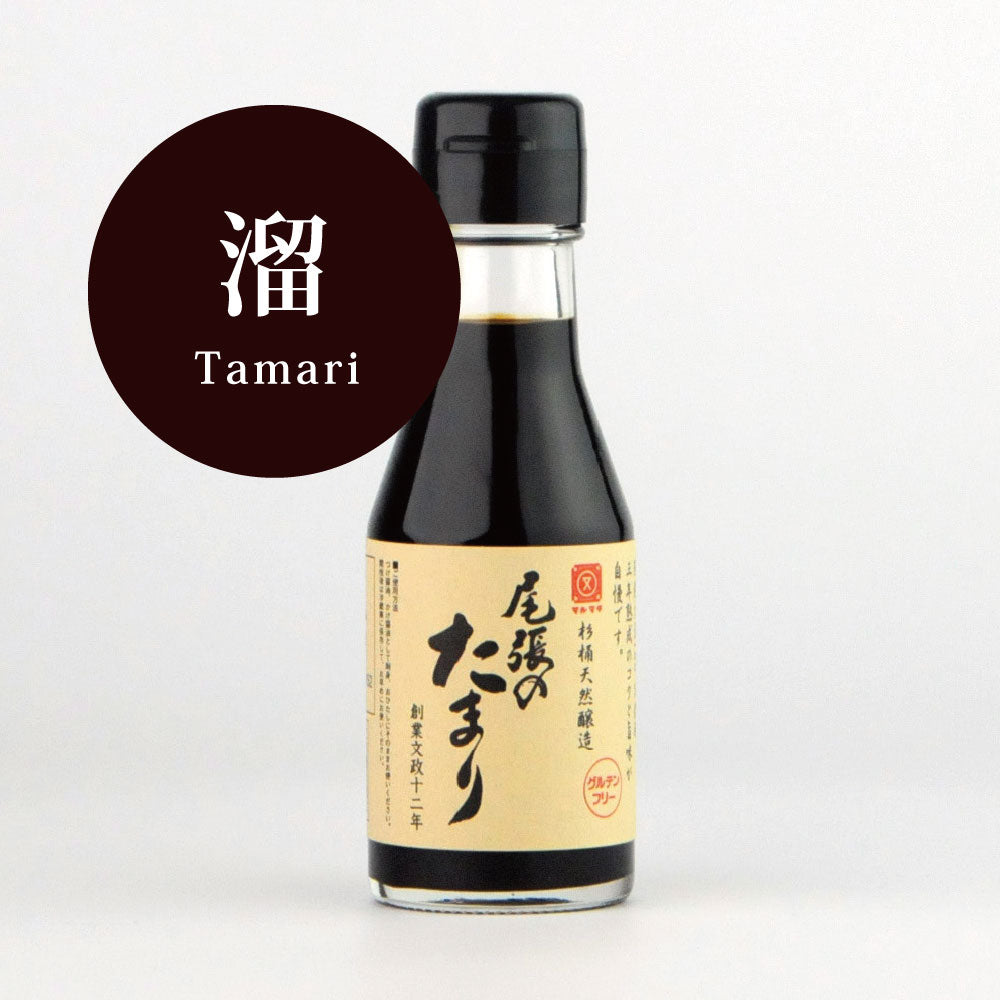
Owari Tamari / Marumata Shoten (Aichi Prefecture)
Recommended for those who want to enjoy lean sashimi at a leisurely pace. Its most distinctive feature is the rich umami flavor of soybeans, which hits you directly the moment you put it in your mouth. Even if you're using simple lean sashimi bought at the supermarket, just adding this "Owari no Tamari" will envelop the entire fish in a rich, creamy flavor, giving it a deep taste.
Our fifth bottle is tamari soy sauce from Marumata Shoten, located in Taketoyo Town on Aichi Prefecture's Chita Peninsula. Taketoyo Town on Aichi Prefecture's Chita Peninsula is known as a major producer of tamari soy sauce, and even today, many breweries are based there. Founded in this town in 1829, Marumata Shoten stubbornly adheres to the traditional method of brewing tamari soy sauce using 100% soybeans in wooden barrels. While tamari soy sauce is often mistaken for "Kyushu's sweet, thick soy sauce," it's actually quite different. Tamari soy sauce is primarily produced in the Chubu region, and its salt content is roughly the same as that of koikuchi soy sauce. It's by no means a sweet soy sauce. The difference lies in its rich umami flavor and thickness. Tamari soy sauce uses a higher proportion of soybeans and less water. Furthermore, because it's aged slowly over a long period of time, it's dark in color, thick and rich, and boasts some of the best umami flavors among soy sauces. However, some people perceive its rich umami as "sweet." This is different from the sweetness of sugar, but rather the mellowness and depth derived from soybeans, a sweetness that spreads deep within the palate.
"Owari no Tamari" is a gluten-free soy sauce made with 100% whole soybeans from Aichi Prefecture. It uses only a small amount of saltwater in the brewing process, which allows the umami flavor of the soybeans to be concentrated. The nitrogen content of the umami component is a whopping 3.0%. It has a rich, deep flavor, and the mellowness that comes from long-term aging.
Text: Mori (Shokunin Soy Sauce)
Choose options
| 地域 | 都道府県 | 送料 |
|---|---|---|
| 北海道 | 北海道 | 1,200円 |
| 東北 | 青森・岩手・秋田・宮城・山形・福島 | 900円 |
| 関東・中部 | 茨城・栃木・群馬・埼玉・千葉・東京・神奈川・新潟・富山・石川・福井・山梨・長野・岐阜・静岡・愛知・三重 | 800円 |
| 近畿・中国 | 滋賀・京都・大阪・兵庫・奈良・和歌山・鳥取・島根・岡山・広島・山口 | 900円 |
| 四国・九州 | 徳島・香川・愛媛・高知・福岡・佐賀・長崎・熊本・大分・宮崎・鹿児島 | 1,100円 |
| 沖縄 | 沖縄県 | 1,500円 ※6,000円以上で500円 |
ご注文を受けてから3営業日以内の発送を原則としています。海外への発送も承っています。
このセットは、本数に合ったギフトボックスに入れてお届けできます。熨斗は蝶結び・結切り・熨斗なしからお選びいただけます。
ご注文の際は、セットと一緒にギフトボックスをカートに入れてください。
ギフトの一覧を見る目的別・人気セット


醤油の世界を、もっと深く。
11,000人以上が読んでいます
蔵元訪問レポート、季節の使い分け、醤油をもっと深堀した内容を、代表の高橋万太郎が毎週金曜日にお届けします。
毎週金曜日に配信。いつでも解除できます。