
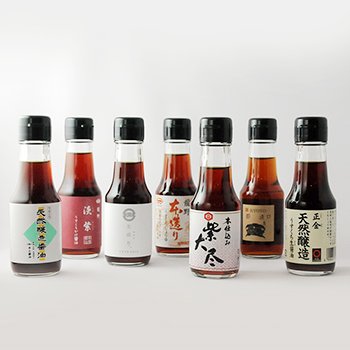

Seven bottles that will let you experience the unique characteristics of light sake
Shokunin Shoyu No.


The appeal of light soy sauce that brings out the flavor of ingredients

It also makes full use of delicate materials.
This unique soy sauce is created by Katagami, a self-proclaimed "foodie." It maintains the balance of light soy sauce color and aroma while pursuing the strongest umami flavor possible. It looks strong, but can also be used as a dipping sauce.
Be sure to try it on delicious silken tofu made by a tofu shop that specializes in soybeans. The refreshing saltiness brings out the sweetness of the tofu itself, allowing you to fully enjoy the umami of the tofu itself. Just like how salt brings out the sweetness of watermelon, soy sauce may taste salty if you lick it on its own, but it really brings out the sweetness of the tofu.

A familiar sight in western Japan, this light soy sauce can be used as a drizzle.
This naturally brewed light soy sauce is made with rice koji. It has less salt than regular dark soy sauce and a very mellow flavor. It also has a very mild aroma, which brings out the natural flavor and umami of the ingredients.
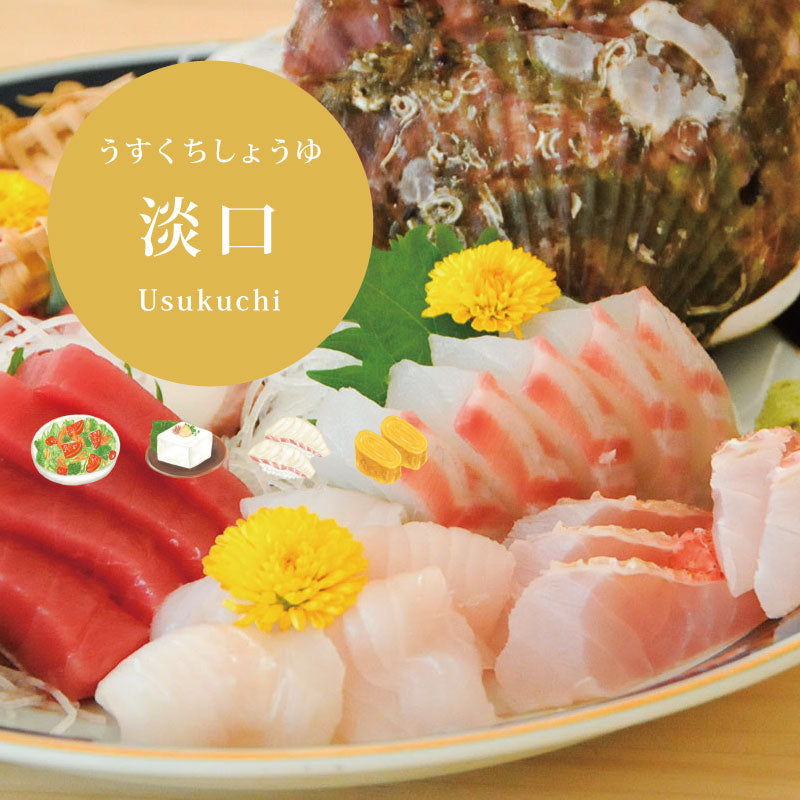
Uwamurasaki is a light sake that can be used instead of salt or lemon to bring out the flavor of the ingredients themselves. White fish sashimi is delicious when eaten with Uwamurasaki, which has a mild salty taste.

A young brewer's attempt at creating a light sake
Fresh moromi mash that has been aged all summer is blended with homemade amazake, then aged and pressed. The soybeans, wheat, and rice are from Itoshima City, Fukuoka Prefecture, and the salt is from the blue sea of Okinawa. Once opened, try diluting it with hot water.
Usukuchi rice, which can be used for both pouring and cooking, is perfect for soups and stir-fries. Using soy sauce instead of salt adds a subtle soy sauce aroma and a matured umami flavor. Of course, it also brings out the unique power of light soy sauce, so it's especially recommended for potage using seasonal vegetables.

It's a familiar sight in western Japan, and it really makes you realize how important appearance is when it comes to cooking.
This light soy sauce is perfect for anything. It is a classic light soy sauce from the Kansai region, with a beautiful pale color and a refreshing saltiness. It complements the ingredients without being overpowering, so it plays the role of a light soy sauce perfectly with anything.
A small amount is enough to bring out the salty flavor and beautiful color. It creates a refined dish that makes the most of the dashi and ingredients. If you've never tried light soy sauce, give it a try.

Enchanted by the noble fragrance and transparency
Murasaki Daijin is made from soybeans, wheat, salt, and sweet sake, and has a rich aroma with a hint of rice sweetness. Its clear fragrance is excellent, and when used in cooking, it brings out the flavor of the ingredients while still retaining the presence of soy sauce.
This is a must-try for those who say, "I don't use light red bean because it's too salty..." It's especially great in clear soups where color and aroma are important, as it brings out the flavor of the ingredients while still retaining their presence. You can also make a luxurious ochazuke by mixing it with white rice, bonito flakes, seaweed, soy sauce, and hot water.

Double the appeal of chawanmushi and clear soup
The umami and sweetness are skillfully balanced, and it is not too salty for a light soy sauce. With a beautiful brandy-like color, it is a soy sauce that is easy to use in general cooking.
When making chawanmushi, this is the perfect way to bring out the color of the eggs and the aroma and umami of the dashi stock. Miyako Amakuchi soy sauce skillfully balances the umami and sweetness, so if you want to be praised for your cooking skills, be sure to give it a try. It is slightly saltier than dark soy sauce, so please adjust the amount accordingly.

I'd like you to use it in Japanese cuisine.
This light soy sauce is made from domestically grown soybeans and wheat in wooden barrels. It's also a raw type that hasn't been pasteurized. The saltiness comes later, making it feel a little gentler. The balance of saltiness and umami is excellent!
The first thing we recommend you try is udon soup. You can easily make udon soup by diluting noodle soup, but if you try making it from scratch, you might find you like udon even more.
Choose options
目的別・人気セット


NEWSLETTER│職人醤油通信
醤油の世界を、もっと深く。
蔵元訪問レポート・季節の使い方・新商品情報など、職人醤油 代表の高橋万太郎がお届けします。
- 蔵元訪問レポート・産地の話
- 季節の料理と醤油の使い分け
- 新着商品・限定セットのご案内
- 読者限定の先行情報
スパムメールは送りません。登録解除はいつでも可能です。