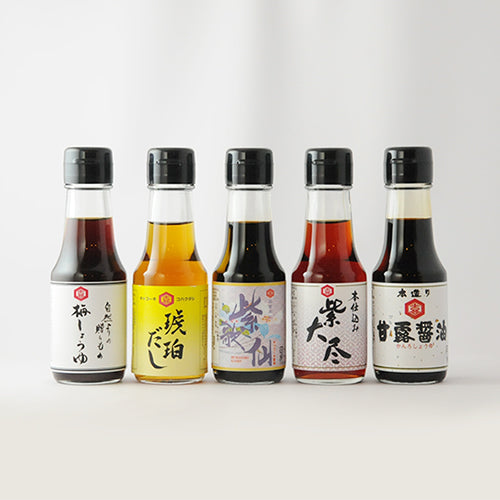
Okubo Brewery 5-bottle set
Five bottles from Okubo Brewery
Shokunin Shoyu No.
のし(無料)

A brewery full of commitment
Okubo Brewery in Matsumoto City, Nagano Prefecture is a small brewery that is packed with the utmost attention to detail.
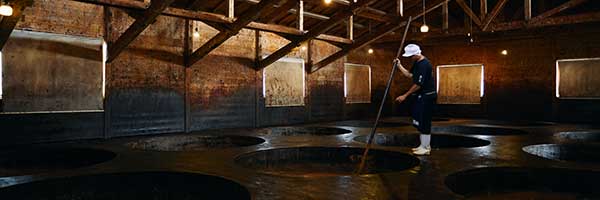
The raw materials area is piled high with soybeans, wheat, salt, and rice, all clearly labeled with their origin and grade. The store is packed with various grades of soybeans, including "Tsubuhomare," "Ginrei," and "Tachinagaha" from Nagano, "Okushirome" and "Ryuho" from Aomori, and "Enrei" from Niigata, as well as brands from Gifu, Ishikawa, Yamagata, and more. The salt is also domestically produced, and is "Shima Mars" from Okinawa.
Their commitment extends beyond just the ingredients. When I toured the brewery, I could tell at a glance that this was different from any other soy sauce brewery I had seen before. The outside of the barrels was a beautiful dark brown and gleamed brilliantly. This was apparently due to the lacquer coating, and the brewer explained, "Soy sauce is made by microorganisms. Some of them are harmful, so I want to cherish only the microorganisms that live inside the barrels." By coating the surface of the barrels with lacquer, they prevent the growth of germs, and by embedding several tons of charcoal in the floor and walls, they are thoroughly committed to preventing moisture from building up, so the musty smell that is common in old breweries is completely absent.


Limited quantity three-year aged dark soy sauce
Okubo-san is particular about both the ingredients and the manufacturing process when it comes to his dark soy sauce. It is pressed at specific times throughout the year, so it is a limited-time soy sauce. The addition of rice gives it a rich, yet not too salty, mellow flavor.


Enchanted by the noble fragrance and transparency
Murasaki Daijin is characterized by its clear color and fragrance. By adding amazake to soybeans, wheat, and salt, it has a rich aroma with a subtle sweetness of rice. This is a must-try for those who say, "I don't use light sake because it's too salty..." It is especially recommended for use in clear soups where color and fragrance are important, as it brings out the flavor of the ingredients while retaining its presence.
Okubo's recommended way to eat it is the very simple ochazuke. "Rice with bonito flakes and purple daijin. It's delicious just with this. This soy sauce removes all the impurities, so I think you can simply taste the ingredients," he said.
With freshly shaved bonito flakes and delicious nori seaweed, you'll realize that simplicity can have profound effects. Purple has long been considered a noble color in Japan, and in some regions, soy sauce is also called purple. "Murasaki Daijin" means to dedicate oneself to the color purple. Enjoy the miracle of purple!


Sweet soy sauce that clings to the tuna sashimi
This sake is aged for three years, with soy sauce koji added to the mash brewed for one year, resulting in a rich, fragrant sake with a deep fermentation process. The addition of amazake (sweet rice drink) adds a subtle sweetness from the rice, creating a unique, rich, and creamy flavor.
It goes especially well with tuna sashimi! It brings out the umami of the tuna while still allowing you to feel the richness of the soy sauce, eliminating the fishy smell. Once you've tasted this richness, you might never be able to eat tuna with any other soy sauce again...


Made with red plum vinegar from Ryujin plums produced in Wakayama Prefecture
The only ingredients are red plum vinegar, soy sauce, and mirin. The red plum vinegar used is made from Ryujin plums from Wakayama Prefecture, a member of the "Association for Creating Reliable Tastes," and is characteristic of Okubo's dedication to quality ingredients. The umeboshi are made from green plums grown without pesticides or chemical fertilizers, resulting in a traditionally sour umeboshi with plenty of citric acid. No food additives or chemical seasonings are used.
It's made with Okubo Brewery's soy sauce (Kodai no Hishio) and seasoned with red plum vinegar and mirin, so it's not too salty or sour, and has a gentle taste that simply retains the flavor of the ingredients.It also has a nice aroma, so it can be used as a dressing for salads or on grilled fish.


Golden dashi soy sauce made with simple ingredients
This concentrated dashi soy sauce is made with a base of white soy sauce and light soy sauce, and is seasoned with bonito flakes, bonito flakes, and mackerel flakes, along with mirin and sugar. The simple ingredients give it a mild, mellow flavor. Unlike white dashi, it contains light soy sauce, giving it a subtle soy sauce flavor. When used in simmered dishes, it creates a beautiful color and brings out the umami of the soy sauce, creating a deep flavor. It's also recommended as a simple and delicious dashi soy sauce, and is also great for seasoning rice and soups.
One dish we particularly recommend is the oily somen noodles made with amber dashi. Oily somen noodles have been passed down as a local dish on the Amami Islands, including Amami Oshima and Tokunoshima. They are said to be an essential part of the island's milestones and gatherings, such as the August Dance, celebrations, rice planting and harvesting. The chewy somen noodles infused with the aroma of oak are combined with the richness of the oil for a simple yet addictively delicious dish.
Choose options
| 地域 | 都道府県 | 送料 |
|---|---|---|
| 北海道 | 北海道 | 1,200円 |
| 東北 | 青森・岩手・秋田・宮城・山形・福島 | 900円 |
| 関東・中部 | 茨城・栃木・群馬・埼玉・千葉・東京・神奈川・新潟・富山・石川・福井・山梨・長野・岐阜・静岡・愛知・三重 | 800円 |
| 近畿・中国 | 滋賀・京都・大阪・兵庫・奈良・和歌山・鳥取・島根・岡山・広島・山口 | 900円 |
| 四国・九州 | 徳島・香川・愛媛・高知・福岡・佐賀・長崎・熊本・大分・宮崎・鹿児島 | 1,100円 |
| 沖縄 | 沖縄県 | 1,500円 ※6,000円以上で500円 |
ご注文を受けてから3営業日以内の発送を原則としています。海外への発送も承っています。
このセットは、本数に合ったギフトボックスに入れてお届けできます。熨斗は蝶結び・結切り・熨斗なしからお選びいただけます。
ご注文の際は、セットと一緒にギフトボックスをカートに入れてください。
ギフトの一覧を見る目的別・人気セット


醤油の世界を、もっと深く。
11,000人以上が読んでいます
蔵元訪問レポート、季節の使い分け、醤油をもっと深堀した内容を、代表の高橋万太郎が毎週金曜日にお届けします。
毎週金曜日に配信。いつでも解除できます。